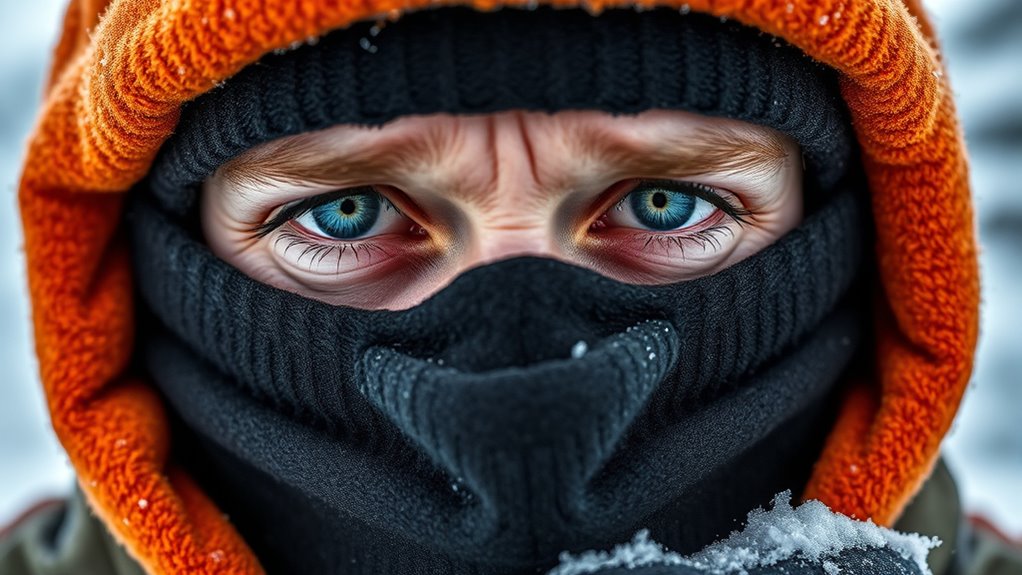

When choosing cold-weather face protection like balaclavas and buffs, focus on materials that offer insulation, wind resistance, and moisture-wicking qualities. Balaclavas cover your entire face, neck, and head, providing maximum warmth and protection from harsh elements, while buffs are versatile tubes that can be worn as neck warmers, face masks, or headbands. To stay comfortable and safe during outdoor winter activities, selecting gear with the right fit and features is key—more tips will help you stay prepared.
Key Takeaways
- Balaclavas provide full coverage of face, neck, and head, offering comprehensive protection against cold and wind.
- Buffs are versatile tubular accessories that can be worn as face masks, neck warmers, or headbands, adaptable to various conditions.
- Both are made from insulating, wind-resistant materials like fleece or technical fabrics to retain body heat in extreme cold.
- Proper fit and material quality are essential for maximizing warmth, moisture-wicking, and comfort during outdoor winter activities.
- Choosing gear designed for winter conditions ensures effective protection against frostbite, windburn, and cold-related injuries.
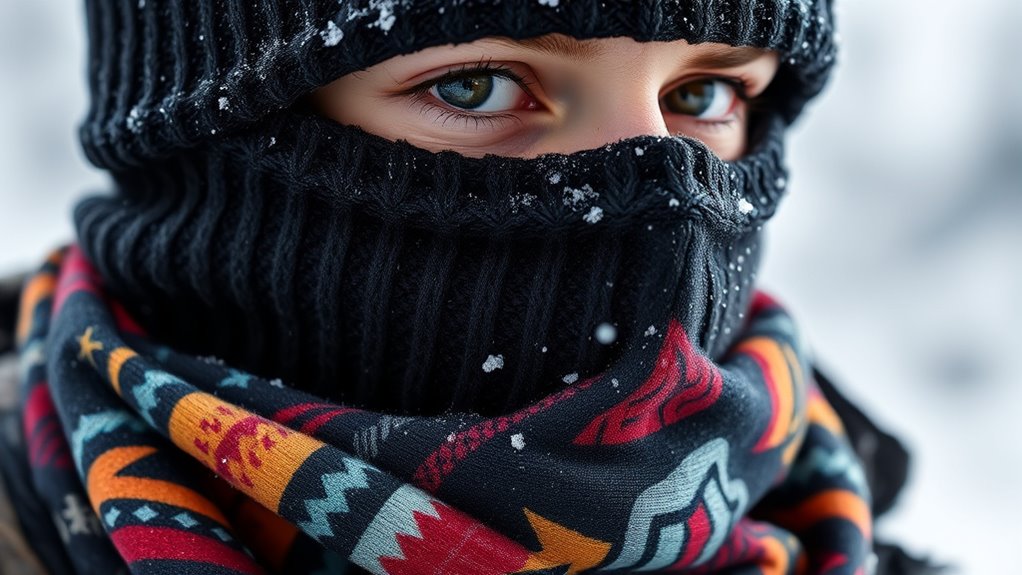
When the temperatures drop, protecting your face from cold weather becomes essential to prevent frostbite, windburn, and discomfort. In chilly conditions, your skin is vulnerable to harsh elements that can cause more than just discomfort; they can lead to serious cold-related injuries. To stay warm, you need gear that offers both thermal insulation and wind resistance. This is where options like balaclavas and buffs come into play, providing effective barriers against the biting cold while maintaining comfort during your outdoor activities.
Balaclavas are designed to cover your entire face, neck, and head, trapping heat close to your skin. Their layered construction often includes insulating materials like fleece or wool, which enhance thermal insulation, helping you retain body heat even in the coldest conditions. The snug fit also minimizes air gaps, preventing cold drafts from reaching your skin. Many balaclavas incorporate wind-resistant fabrics, making them especially useful in windy environments where the chill can penetrate even the warmest gear. By blocking the wind, these masks considerably reduce heat loss, keeping your face protected and comfortable for extended periods.
Balaclavas trap heat with insulating layers and wind-resistant fabrics for all-day cold protection.
Buffs, on the other hand, are versatile tubular pieces of fabric that you can wear in various ways—around your neck, as a face mask, or even as a headband. When choosing a buff for cold weather, look for ones made from technical materials that offer thermal insulation. Some buffs feature a fleece lining or a heat-reflective surface, which helps trap body heat and block cold air. Their lightweight design makes them easy to layer under other gear, increasing your overall wind resistance without adding bulk. The flexibility of buffs allows you to adjust coverage quickly based on changing conditions, which is crucial when you’re moving through different environments or engaging in activities like skiing, snowboarding, or hiking.
Both balaclavas and buffs excel at providing a barrier against wind and cold, but their effectiveness depends on the materials used. Opt for products specifically designed for winter conditions, with a focus on thermal insulation and wind resistance. High-quality fabrics will help you stay warm without overheating, and their moisture-wicking properties keep sweat away from your skin, preventing chills caused by moisture. Incorporating lifestyle considerations such as comfort and durability can further enhance your experience. Remember, the key to effective cold-weather face protection is choosing gear that fits well, covers all vulnerable areas, and incorporates insulating and wind-resistant materials. When you do, you’ll find it much easier to enjoy outdoor adventures despite the freezing temperatures.
Frequently Asked Questions
How Do I Choose the Right Size for a Balaclava?
To choose the right size for a balaclava, measure your face around the forehead, cheeks, and chin using a tape measure. Check the sizing charts provided by the manufacturer, as sizes can vary. Make certain the balaclava fits snugly without being too tight, allowing for comfortable movement and breathability. If you’re between sizes, opt for the larger one for better comfort and coverage.
Can Buffs Be Used as Neck Gaiters?
Think of buffs as Swiss Army knives for cold weather—they’re versatile multifunctional accessories. Yes, you can definitely use buffs as neck gaiters; I’ve worn mine during snowy hikes, and it kept me warm and protected. Thanks to their material versatility, buffs adapt easily. Just pull it up over your neck and face when needed, then fold or roll it down for cooler moments. It’s like having an all-in-one piece in your gear bag.
Are There Any Health Risks With Prolonged Mask Use?
Prolonged mask use can cause skin irritation from constant contact, especially if the material isn’t breathable. You might also experience breathing difficulties if the mask fits too tightly or isn’t ventilated properly. To reduce risks, choose masks made of soft, breathable fabrics, take regular breaks, and guarantee a comfortable fit. If irritation or breathing issues persist, consult a healthcare professional to prevent long-term health problems.
How Do I Clean and Maintain My Face Protection Gear?
To keep your face protection gear in top condition, follow the care instructions specific to its material. Usually, you should hand wash or machine wash on gentle cycles with mild detergent, then air dry to prevent damage. Avoid bleach or fabric softeners. Regular cleaning guarantees hygiene and extends the gear’s lifespan, so check labels for detailed material care tips and store it in a dry, clean place when not in use.
What Materials Are Best for Extreme Cold Conditions?
For extreme cold conditions, you want face protection made from thermal insulation materials like wool or fleece, which trap heat effectively. Look for moisture-wicking fabrics such as synthetic blends or merino wool, as they keep sweat away and dry quickly. These materials guarantee you stay warm and comfortable, even in harsh weather. Combining thermal insulation with moisture-wicking fabrics offers the best protection against the cold and helps prevent frostbite.
Conclusion
When choosing between balaclavas and buffs, you’re equipping yourself with armor against winter’s chill. Think of them as your shield, turning the biting cold from an enemy into just a whisper. With the right face protection, you’ll stay warm, comfortable, and ready to conquer your outdoor adventures. So, don’t let the cold weather steal your spirit—embrace it with gear that keeps you as resilient as a mountain in winter’s embrace.