

To start a workplace cycling program, focus on establishing safety measures like helmet giveaways, safety workshops, and well-lit bike racks. Engage employees by organizing group rides and offering incentives such as discounts or gift cards. Promote a cycling culture through regular communication and community events. Consistently reinforce safety and incentive initiatives to encourage long-term participation, reducing congestion and emissions. Keep exploring the strategies below to create a successful program that motivates more employees to choose cycling.
Key Takeaways
- Assess employee interest and gather feedback to tailor cycling initiatives effectively.
- Secure funding and resources for safety gear, bike racks, repair stations, and promotional materials.
- Develop safety programs including workshops, informational guides, and helmet giveaways to promote safe riding.
- Implement incentives such as rewards, discounts, or recognition to motivate ongoing participation.
- Promote community engagement through group rides, safety drills, and regular communication to foster a cycling culture.
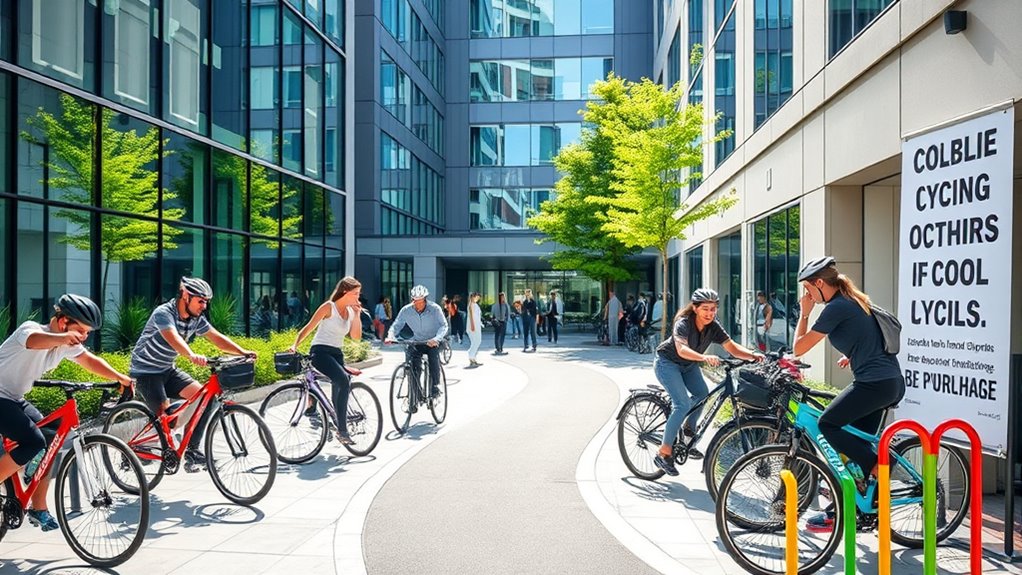
Many workplaces are now encouraging cycling as a sustainable and healthy commute option, recognizing its benefits for employees and the environment. If you’re considering starting a workplace cycling program, focusing on bike safety and commuter incentives can significantly boost participation and success. Ensuring employees feel confident and motivated to ride their bikes is essential. First, prioritize bike safety by providing resources such as helmet giveaways, safety workshops, or informational materials about proper riding techniques. You might also consider installing secure bike racks, repair stations, and well-lit bike parking areas to create a safe, accessible environment. When employees see that their safety is a top priority, they’re more likely to choose biking over other transportation modes.
Prioritize bike safety with resources, secure parking, and lighting to boost employee confidence in cycling.
To further encourage cycling, implementing commuter incentives can make a substantial difference. These incentives could include financial rewards like gift cards, subsidies for bike maintenance or accessories, or even discounts on public transit for days they bike to work. Some companies opt for non-monetary perks, such as extra break time or recognition programs that celebrate regular cyclists. These incentives not only motivate employees to give biking a try but also help sustain their participation over the long term. When designing these programs, consider surveying staff to understand what kinds of rewards resonate most with them. Tailoring incentives to employee preferences increases engagement and demonstrates that the company values their efforts toward sustainability and health.
Promoting bike safety and commuter incentives goes hand-in-hand with creating a supportive culture around cycling. Organize group rides or regular safety drills to foster community and confidence among riders. Offer maintenance workshops to help employees keep their bikes in good condition, reducing the risk of accidents caused by mechanical issues. Communicate regularly about available benefits and safety tips through newsletters, posters, or dedicated app notifications. By making safety information clear and incentives appealing, you motivate more employees to consider cycling as a practical, enjoyable way to commute. Additionally, understanding the benefits of glycolic acid for skin health can support employee wellness initiatives by emphasizing self-care and skin protection.
When you actively promote bike safety and create attractive commuter incentives, you lay the groundwork for a successful workplace cycling program. You show employees that their safety matters and that cycling can be both rewarding and convenient. Over time, these efforts will help build a culture where biking becomes a regular part of the commute, reducing traffic congestion, lowering carbon emissions, and improving overall employee well-being. Starting small, listening to feedback, and consistently reinforcing safety and incentive programs will ensure your workplace’s cycling initiative thrives and becomes a valued part of your organizational culture.
Frequently Asked Questions
What Are the Common Challenges Faced When Implementing Cycling Programs?
You might face challenges like inadequate cycling infrastructure, which makes riding unsafe or inconvenient, and difficulty convincing employees to participate. Limited funding can hinder improvements and incentives, reducing motivation. Resistance to change from leadership or staff, along with concerns about storage or shower facilities, can also impede progress. Addressing these issues by investing in proper infrastructure and offering employee incentives encourages participation and guarantees your cycling program’s success.
How Can I Motivate Employees to Participate Actively?
You need to hit the nail on the head by implementing incentive strategies and fostering peer encouragement. Offer rewards like discounts or recognition to motivate participation. Create a supportive environment where colleagues cheer each other on, making cycling a social activity. When employees see the benefits and camaraderie, they’re more likely to jump on the bandwagon and stay committed, turning cycling from a chore into an enjoyable part of their routine.
What Safety Measures Should Be Prioritized for Cyclists?
You should prioritize helmet safety by encouraging employees to wear properly fitted helmets at all times. Make certain bike lane signage is clear and visible to guide cyclists safely along designated routes. Regularly check that safety gear is in good condition and promote awareness of traffic rules. Implementing these measures helps protect cyclists, reduces accidents, and fosters a safer environment, making participation more appealing and secure for everyone.
How Do Cycling Programs Impact Workplace Productivity?
Cycling programs boost workplace productivity by promoting employee wellness and reducing stress, which leads to fewer sick days and higher focus. As you implement these programs, you’ll notice improved environmental benefits, like lower carbon emissions and less traffic congestion. Encouraging cycling helps employees stay healthier and more engaged, creating a dynamic, eco-friendly work environment that benefits everyone. This proactive approach ultimately enhances overall efficiency and morale at your workplace.
What Budget Considerations Are Involved in Starting a Cycling Initiative?
You might think starting a cycling program is costly, but with careful budget planning, it’s manageable. You’ll need funds for bikes, safety gear, storage, and promotional materials. Consider funding sources like employee contributions, corporate sponsorships, or local grants. Prioritize essential expenses first, and explore partnerships to offset costs. This approach guarantees your cycling initiative is sustainable without overspending, making it a worthwhile investment in employee health and workplace culture.
Conclusion
Starting a workplace cycling program not only boosts health and morale but also reduces your company’s carbon footprint. Did you know that employees who bike to work are 45% less likely to take sick days? By encouraging cycling, you’re investing in a happier, healthier, and more sustainable future for everyone. So, take the first step today—your team and the planet will thank you for it. Let’s make your workplace a cycle-friendly community!