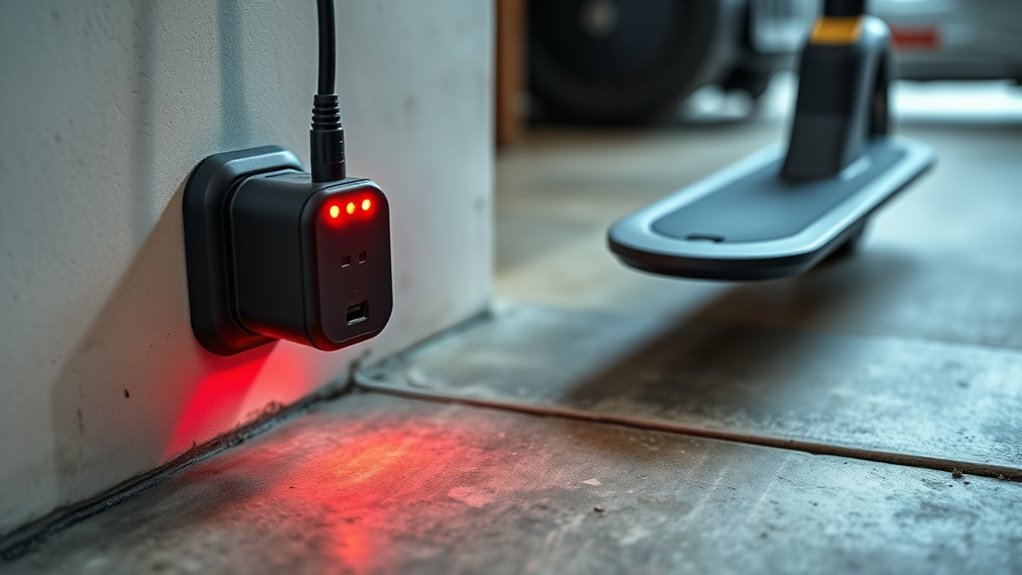

To prevent overheating when charging your scooter, always use the original or certified chargers and avoid overcharging by unplugging once fully charged. Keep the scooter in a dry, well-ventilated area away from extreme heat or cold. Regularly check the charger and cables for damage and ensure a secure connection. Never leave your scooter unattended during charging, especially overnight. Staying mindful of these tips will help you stay safe — continue on to learn even more.
Key Takeaways
- Use only original or certified chargers compatible with your scooter to ensure proper voltage and prevent overheating.
- Avoid charging in extreme temperatures; prefer cool, well-ventilated indoor areas to maintain optimal battery temperature.
- Unplug the charger once the battery reaches full capacity to prevent overcharging and overheating.
- Regularly inspect charging cords and connectors for damage, replacing any worn or damaged parts promptly.
- Never leave the scooter unattended during charging, especially overnight, to monitor for signs of overheating or issues.
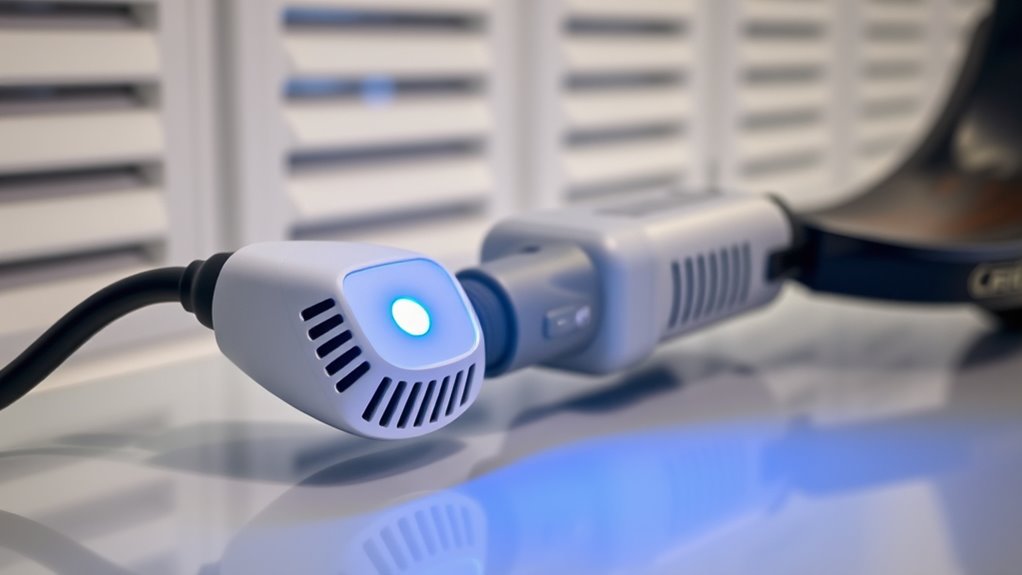
Charging your scooter safely is essential to prevent accidents and prolong the lifespan of your battery. Proper battery management plays a vital role here, guaranteeing that your scooter’s battery remains in good condition and performs reliably over time. One of the key aspects of battery management is avoiding overcharging, which can lead to overheating and damage. Always use the charger that comes with your scooter or a compatible, certified alternative. Using incompatible chargers can cause improper voltage delivery, increasing the risk of overheating and reducing your battery’s lifespan. It’s important to monitor your charging process and unplug the charger once the battery reaches full capacity. Leaving it plugged in for extended periods can cause unnecessary stress on the battery, leading to potential overheating issues.
Proper battery management and using certified chargers prevent overheating and extend your scooter’s lifespan.
Equally important is paying attention to charging station safety. If you charge your scooter at public or shared stations, make sure the area is dry, well-ventilated, and free of debris or combustible materials. Overcrowded or poorly maintained charging stations can pose safety risks, including electrical faults that may cause sparks or fires. Before connecting your scooter, inspect the charging port and cord for any damage. Damaged cords or connectors should never be used, as they can create short circuits or produce excessive heat. When plugging in, ensure a secure connection to prevent accidental disconnections or arcing, which can also cause overheating.
It’s also wise to avoid charging your scooter in extreme temperatures. High heat can accelerate battery degradation and increase the risk of overheating during charging, while cold temperatures can impede proper charging and reduce battery efficiency. Ideally, charge your scooter indoors or in shaded, temperature-controlled environments. If you notice your battery or charger becoming unusually warm during charging, disconnect immediately and allow everything to cool down. Overheating is a clear sign that something isn’t right and needs your attention.
In addition, regularly checking for signs of battery deterioration can help prevent potential hazards. To maximize safety, never leave your scooter unattended while charging, especially overnight or in high-traffic areas. Always stay nearby and keep an eye on the process. Regularly check your battery and charger for signs of wear or damage, and replace any faulty components promptly. Good battery management combined with charging station safety helps prevent overheating, extends your scooter’s battery life, and keeps you safe. By following these practices, you’ll enjoy reliable rides without the worry of unexpected thermal issues or electrical hazards.
Frequently Asked Questions
Can Using an Incompatible Charger Cause Scooter Overheating?
Yes, using an incompatible charger can cause your scooter to overheat. When the charger isn’t compatible, it may deliver the wrong voltage or current, increasing overheating risks. This can damage your scooter’s battery and other components, potentially leading to safety hazards. Always check charger compatibility before plugging in, and use the recommended charger to prevent overheating and guarantee safe, efficient charging.
How Often Should I Replace My Scooter Charger?
You should replace your scooter charger when it shows signs of wear, damage, or if it no longer charges your scooter properly. Typically, a charger’s lifespan is around 1 to 2 years, but replacement frequency depends on usage and care. Regularly inspect your charger for frayed cords or overheating, and don’t hesitate to replace it if you notice issues to guarantee safety and maximum performance.
What Signs Indicate My Charger Is Malfunctioning?
You’ll notice signs like the charger overheating, strange noises, or a burning smell, which indicate it’s malfunctioning. If your charger’s lifespan seems shorter than usual or if it doesn’t match your scooter’s voltage compatibility, it might be failing. Always check for frayed cables or loose connections. If any issues appear, replace the charger promptly to guarantee safety and proper charging performance.
Is It Safe to Leave My Scooter Charging Overnight?
It’s generally safe to leave your scooter charging overnight if you follow proper battery maintenance and charging best practices. Make sure your charger and scooter are in good condition, and avoid leaving it on for extended periods if you notice signs of overheating or malfunction. Using the right charger and charging in a cool, dry place helps prevent overheating. Always monitor your scooter during charging to ensure safety and peak battery health.
Are There Specific Chargers Recommended for Different Scooter Brands?
Think of your scooter as a puzzle piece that fits perfectly with its charger. You should always use brand-specific chargers for your scooter to guarantee compatibility and safety. Not all chargers are created equal, and using the wrong one can lead to overheating or damage. Check your scooter’s manual or manufacturer recommendations to find the right charger. This way, you protect your ride and keep it running smoothly.
Conclusion
To keep your scooter journey smooth and worry-free, always treat your charger with gentle care. Think of it as a silent guardian that keeps your ride alive, quietly working behind the scenes. When you give it the respect it deserves—avoiding overuse and ensuring proper handling—you’re nurturing a quiet partnership built on trust. Remember, a little mindfulness now guarantees many joyful miles ahead. Listen to the subtle signals, and your scooter will thank you with dependable performance.