Using a multimeter on your e-bike is a quick way to troubleshoot electrical issues and save hours of guesswork. Start by setting it to measure volts DC, then connect the probes to the battery terminals to check its voltage. You can also test wiring, connections, and other components by switching to resistance or diode modes. Always turn off the bike before testing for safety. Keep going to discover more essential tips to keep your e-bike running smoothly.
Key Takeaways
- Set the multimeter to DC volts, connect probes correctly, and measure battery voltage to identify health issues early.
- Turn off the e-bike before testing to prevent shorts and ensure safe, accurate readings.
- Use resistance or diode mode to check wiring, connectors, and controller for continuity and faults.
- Compare voltage readings to factory specs to detect weakened or faulty batteries.
- Regular testing helps diagnose problems quickly, saving hours on troubleshooting and avoiding unnecessary repairs.
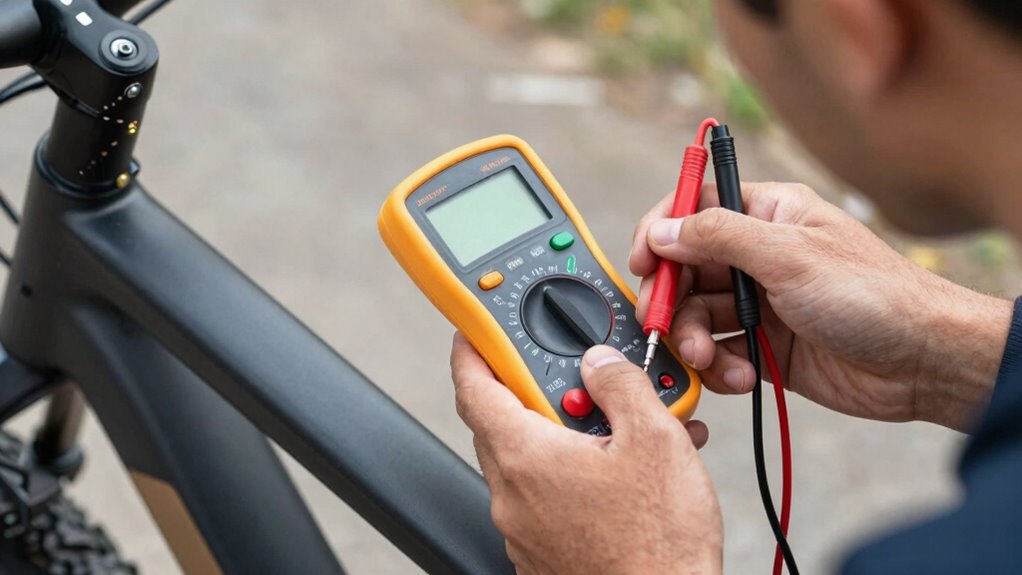
If you own an e-bike, understanding how to use a multimeter can be a valuable skill for diagnosing electrical issues and ensuring your bike runs smoothly. One of the most common problems you might face involves the battery, so mastering battery troubleshooting is essential. A multimeter allows you to quickly assess whether your battery is holding a proper charge or if it’s time for a replacement. To do this, you’ll need to learn voltage measurement techniques, which involve setting your multimeter to the appropriate voltage range. Typically, for e-bike batteries, you’ll set the multimeter to measure volts DC, often denoted as V with a straight line and dashed line underneath. Once set, you can connect the multimeter leads to the battery terminals—red to the positive terminal and black to the negative. This simple step reveals the current voltage and helps you determine if the battery is functioning properly. If the reading is markedly lower than the factory-specified voltage, your battery may be weak, degraded, or in need of repair.
Using your multimeter for voltage measurement techniques isn’t just limited to the battery. You can also test other electrical components like the controller, wiring, and connectors. When troubleshooting, always guarantee your e-bike is turned off before connecting the multimeter to avoid accidental shorts or damage. For wiring, you can check continuity by setting your multimeter to the resistance or diode test mode. This helps identify broken wires or loose connections that could cause power loss or erratic behavior. If your bike isn’t powering on or if you notice inconsistent performance, these checks can identify the root cause swiftly, saving you hours of guesswork. Incorporating proper safety precautions when working with electrical systems ensures you avoid potential hazards.
Battery troubleshooting with a multimeter is straightforward once you get used to the voltage measurement techniques. Remember, safety is key—avoid touching the metal parts of the probes when testing live circuits, and always double-check your multimeter settings before taking measurements. If you find that your battery voltage is within the normal range but your e-bike still isn’t performing well, it might be time to inspect other components or seek professional help. By regularly using your multimeter for these tests, you’ll catch potential issues early, extend your e-bike’s lifespan, and keep your rides smooth and reliable. Overall, learning to use a multimeter isn’t just about fixing problems; it’s about gaining confidence in maintaining your e-bike and understanding its electrical system better.

INSDRGN 14" Folding Electric Bike for Adults, Peak 1500W Motor,20MPH Max Speed,48V 16Ah Removable Battery Electric Bike, 35/62Miles Max Range, UL 2849 Certified E Bike
🔋48V 16Ah Removable Battery: This adult electric bicycle features a high-capacity 48V 16AH removable lithium battery. Charging takes...
As an affiliate, we earn on qualifying purchases.
Frequently Asked Questions
Can I Use a Multimeter on All Types of E-Bike Batteries?
You can’t use a multimeter on all types of e-bike batteries because of battery compatibility and multimeter limitations. While most lithium-ion batteries work well with a multimeter, some specialized batteries or high-voltage packs might require different testing methods or equipment. Always check your battery’s specifications first. If you’re unsure, consult your e-bike’s manual or a professional to avoid damaging the battery or getting inaccurate readings.
What’s the Safest Way to Handle High-Voltage Components?
When handling high-voltage components, always wear safety gear like insulated gloves and eye protection. Before working, take voltage precautions by disconnecting the battery and ensuring it’s fully powered down. Use a multimeter carefully, keeping your hands steady and avoiding contact with live parts. Follow manufacturer instructions and work in a dry, well-ventilated area. These steps protect you from electric shocks and help you manage high-voltage safely.
How Often Should I Test My E-Bike’s Electrical System?
Have you checked your e-bike’s electrical system recently? It’s a good idea to test it every few months to monitor battery lifespan and make certain of safe operation. Regular testing helps identify issues early, especially if you notice reduced range or charging frequency changes. By staying proactive, you keep your e-bike running smoothly and extend its life. Don’t wait for a problem—testing now saves you time and money later.
Are There Specific Multimeter Settings for E-Bike Diagnostics?
Yes, there are specific multimeter settings for e-bike diagnostics. You should set your multimeter to measure voltage for battery testing and voltage measurement. When testing the battery, select the DC voltage setting and check the voltage at the terminals. For other components like the motor or controller, use the same setting to guarantee accurate readings. Always verify the correct voltage range and handle the multimeter carefully to avoid damage or inaccurate results.
What Are Common Signs of Electrical Issues Detectable With a Multimeter?
Did you know that over 60% of e-bike malfunctions relate to electrical issues? You can spot these early by testing voltages and wiring continuity with your multimeter. Common signs include inconsistent power, dead batteries, or erratic motor response. If voltage readings are off or wiring connections are broken, it indicates a problem. Regular testing helps you catch issues before they cause major breakdowns, saving you time and money.
ESKUTE E Trike Electric Bike, Peak 1200W Brushless Motor Folding Trike 18X3.0 Fat Tire Ebike, 624Wh Battery, Step-Thru 3 Wheel Electric Bicycle, 55 Miles, 18MPH+ Tricycle for Adults Black Classic
18 x 3.0 inch tires - Comfort and Stability with 3-Wheel Design - Ride with confidence on this...
As an affiliate, we earn on qualifying purchases.
Conclusion
Mastering your multimeter makes maintenance manageable and mistakes minimal. By boldly benchmarking batteries, circuits, and connectors, you boost your bike’s performance and prolong its lifespan. Don’t delay—dive into DIY diagnostics and develop a dependable, detailed diagnosis. With consistent caution and clever checks, you can confidently conquer common e-bike challenges. Remember, mastering minor measurements means mastering miles of smooth, stress-free rides. Your e-bike’s excellence depends on your expertise—so start, stay steady, and stay savvy!

WERHY Electric Bike for Adults, 500W Motor, 22 MPH Max Speed Folding Ebike, 14" Electric Bicycles, Max 30/40/50 Miles Range (Pedal Assist Mode), Mini E Bikes
🚲Powerful Performance: Experience the thrill of riding with our electric bike featuring a robust 500W motor, ensuring a...
As an affiliate, we earn on qualifying purchases.

14-inch Folding Electric Bicycle, 330 Pound Load-bearing Capacity, 19 Mph, 18-28mile Range, 48V Lithium Battery, Front Headlight & Disc Brake, Alloy Steel Frame, City Commuting, Sturdy Structure,
Brushless high-power high-speed motor and 20MPH speed - This electric bicycle is equipped with a high torque brushless...
As an affiliate, we earn on qualifying purchases.