Mirrors give you a broad, continuous view of traffic behind and beside your vehicle, helping you monitor overall surroundings. Shoulder checks, on the other hand, provide quick, precise glimpses into blind spots that mirrors may miss due to distortions or obstructions. While mirrors are great for constant awareness, shoulder checks confirm whether the lane is clear before changing lanes. Combining both tools enhances your safety and confidence on the road—keep going to discover how to master their use together.

Get bike and ride gear delivered free with Prime
- Fast, free delivery on millions of items
- Prime Video, Amazon Music and more included
- Member-only deals all year
Key Takeaways
- Mirrors provide a broad, continuous view of traffic behind and beside the vehicle, aiding in overall awareness.
- Shoulder checks quickly reveal blind spots that mirrors might not cover or may distort.
- Mirrors are best for monitoring traffic flow and lane positioning over extended periods.
- Shoulder checks confirm the safety of lane changes or turns by inspecting areas outside mirror view.
- Proper road positioning enhances the effectiveness of both mirrors and shoulder checks for safer driving.
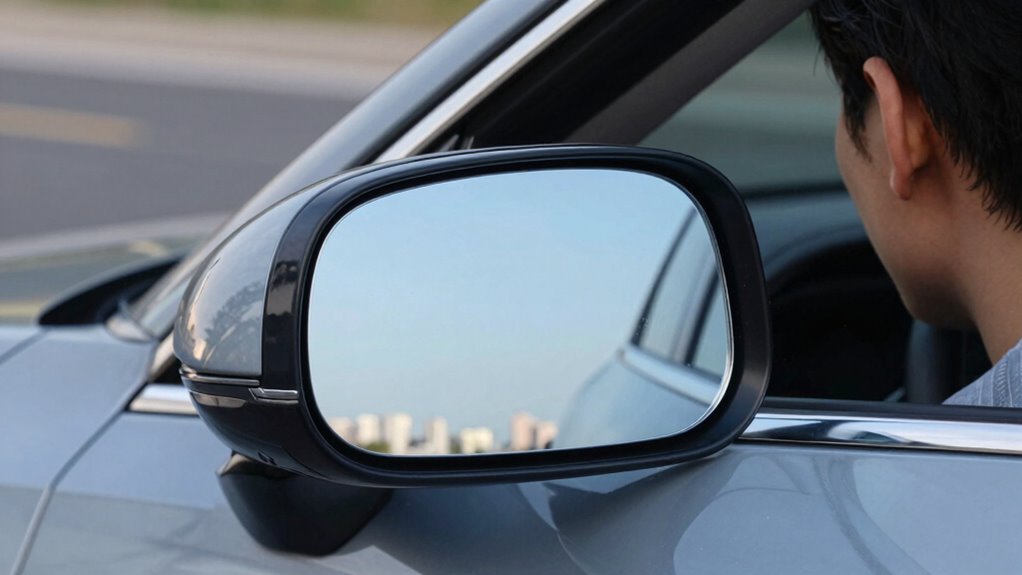
Have you ever wondered why shoulder checks and mirrors are indispensable for safe driving? They work together to help you see what’s around your vehicle, especially in areas you can’t easily see directly. The main goal is to eliminate blind spots, those tricky zones just outside your line of sight that can hide other vehicles or pedestrians. By understanding what each tool does best, you become a more confident, safer driver.
Mirrors are your primary tools for maintaining awareness of vehicles behind and beside you. Your rearview mirror gives you a broad view of traffic behind your car, which is especially useful when changing lanes or reversing. Side mirrors, on the other hand, are designed to extend your field of vision to the sides, allowing you to see approaching vehicles in adjacent lanes. Properly adjusted mirrors minimize blind spots, but they rarely eliminate them entirely. That’s why relying solely on mirrors can be risky, especially when you’re preparing to make a lane change or turn.
This is where shoulder checks come in. A shoulder check involves quickly turning your head to look over your shoulder in the direction you plan to move. This action helps you catch anything your mirrors might have missed, particularly in blind spots. When you’re preparing to merge or switch lanes, a quick shoulder check confirms whether the lane is clear. It’s an essential step because mirrors can sometimes distort distances or be obstructed by objects like headrests or car pillars. A shoulder check allows you to verify what’s happening outside your vehicle’s mirror view, giving you a more complete picture of your surroundings. Additionally, proper mirror adjustment enhances your ability to spot potential hazards before making a move, especially when combined with effective road positioning**. Being aware of your blind spots** through both mirrors and shoulder checks ensures a comprehensive understanding of your environment.
Road positioning also plays a critical role in safe driving. Proper road positioning involves placing your vehicle in the correct part of your lane to maximize visibility and safety. For example, staying centered in your lane when driving straight helps keep your vehicle predictable to others and ensures your mirrors are correctly aligned. When preparing to turn or change lanes, adjusting your position slightly can improve your view of blind spots and make shoulder checks more effective. Good road positioning complements the use of mirrors and shoulder checks, making your decisions more precise and your driving safer.
Together, mirrors and shoulder checks form a thorough system for awareness. Mirrors provide continuous information about what’s behind and beside you, but their limitations mean shoulder checks are indispensable for confirming your blind spots. Proper road positioning enhances all these tools, making your decisions more precise and your driving safer. Mastering how each does its job ensures you’re always aware of your surroundings, reducing risks and boosting your confidence on the road.
Popular right now

Dyson Car+Boat Cordless Handheld Vacuum

KitchenAid Artisan Series 5-Quart Tilt-Head Stand Mixer, Dried Rose (KSM150PS)

Roborock F25 GT Set Cordless Wet Dry Vacuum Cleaner and Mop with 2 Brushes
As an affiliate, we earn on qualifying purchases.
Frequently Asked Questions
How Often Should I Perform Shoulder Checks While Driving?
You should perform shoulder checks every time you change lanes, merge, or make a turn to effectively check your blind spots. Keep your mirrors properly adjusted to minimize blind spots, but remember they don’t eliminate them. Regular shoulder checks help you catch vehicles hidden in your blind spots, ensuring safer driving. Make it a habit to glance over your shoulder quickly, especially in busy traffic or unfamiliar roads.
When Is It Better to Use Mirrors Instead of Shoulder Checks?
You should use mirrors instead of shoulder checks when checking your blind spots is unnecessary or limited by mirror design. Mirrors offer a quick, broad view of traffic behind you, but they have limitations like blind spots. Use them for routine lane changes, but always perform shoulder checks in situations where mirrors might miss vehicles or obstacles, especially in blind spots, to guarantee maximum safety.
Do Mirrors Need to Be Adjusted Regularly for Accuracy?
Yes, mirrors need to be adjusted regularly for accuracy. Over time, vibrations and changes in your vehicle’s positioning can affect mirror calibration, reducing visibility enhancement. If you notice blind spots or distorted images, it’s time to check and fine-tune your mirrors. Properly aligned mirrors improve safety, giving you a clear view of your surroundings. Don’t wait for a close call—regular adjustments guarantee your visibility stays sharp and reliable.
Can Relying Solely on Mirrors Cause Blind Spots?
Relying solely on mirrors can definitely cause blind spots because of their limitations. Mirrors can’t show everything around your vehicle, especially in the blind spots, where your view is obstructed. That’s why shoulder checks are essential—they help you see areas mirrors might miss. Always combine mirror checks with shoulder checks for the best safety, ensuring you’re aware of your surroundings and reducing the risk of accidents.
Are There Specific Mirror Types That Improve Visibility?
Ironically, some mirror types promise better visibility but often leave your blind spot untouched. Wide-angle or convex mirrors are designed to reduce blind spots, offering a broader view and enhancing safety. These mirrors help you see more of your surroundings, especially in tricky areas. While they improve visibility, remember that no mirror replaces a proper shoulder check. Combining mirror types with active awareness keeps you safest on the road.
Conclusion
Shoulder checks and mirrors each serve unique roles on the road, like two sides of the same coin. While mirrors provide a broad, constant view of your surroundings, shoulder checks give you a quick, precise glance behind your blind spot. Think of mirrors as your steady overview, and shoulder checks as your sharp focus. Together, they create an extensive safety net—each better at what the other can’t do alone—making your driving safer and more confident.