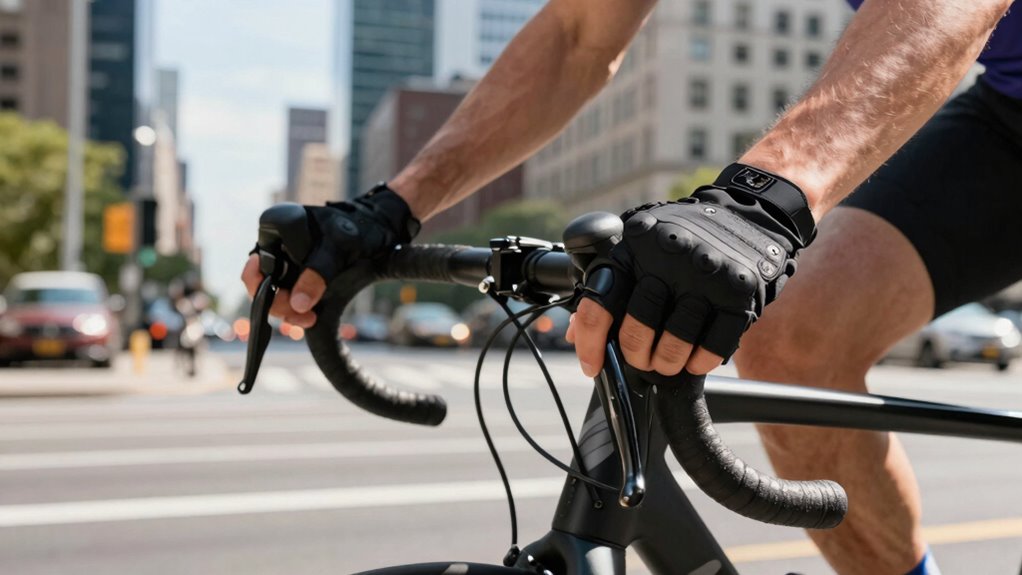

To protect your hands on long urban rides, choose breathable gloves with padding on palms and knuckles for added comfort and shock absorption. Maintain proper hand positioning by shifting grips regularly and keeping your wrists neutral to reduce strain. Adjust your handlebar height and use ergonomic grips to improve posture, while taking breaks and stretching to prevent fatigue. Keep an eye on your overall riding setup—if you want to learn more tips, there’s plenty to explore.
Listen free for 30 days with Audible
Thousands of audiobooks and originals — cancel anytime.
As an affiliate, we earn on qualifying purchases.
Key Takeaways
- Wear breathable, padded gloves with textured palms for comfort, grip, and shock absorption during long rides.
- Regularly shift hand positions and adjust handlebar height to prevent fatigue and maintain natural wrist alignment.
- Maintain an upright, relaxed riding posture with slightly bent elbows to distribute pressure evenly.
- Take frequent breaks to stretch hands, fingers, and wrists to improve circulation and reduce discomfort.
- Use ergonomic grips and proper handlebar setups to support natural hand positioning and reduce long-term strain.
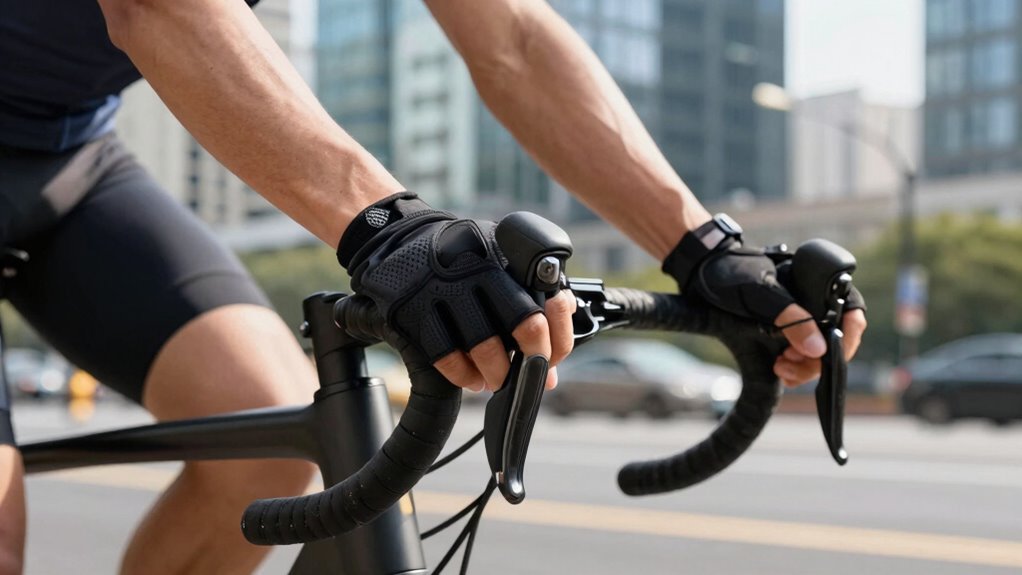
Long urban rides can be exhilarating, but they also put your hands through a lot—constant gripping, vibrations, and pressure that can lead to discomfort or even injury over time. To protect your hands, paying attention to the right gear and riding technique is vital. One of the most effective ways to safeguard your hands is by choosing gloves made from appropriate materials. Look for gloves with a combination of breathable fabrics like mesh or knit for ventilation, paired with padding in key areas such as the palms and knuckles. Materials like gel padding or foam can absorb shocks from rough pavement, reducing vibrations that cause fatigue. Additionally, gloves with silicone or textured palms improve grip, preventing slips and unnecessary strain. The right glove material guarantees your hands stay comfortable and protected, especially during long rides.
But gear alone isn’t enough—how you position your hands on the handlebars makes a significant difference. Hand position techniques are essential for minimizing fatigue and preventing numbness or pain. Shift your grip regularly; don’t keep your hands in one position for too long. Alternate between the tops, drops, and flat parts of the handlebars, which helps distribute pressure evenly across different muscles and nerves. When riding, keep your wrists in a neutral position rather than bent at awkward angles, which can cause strain and limit circulation. Lightening your grip also reduces tension, allowing your hands to rest naturally against the handlebars rather than clutching tightly. If you’re cruising for extended periods, consider adjusting your handlebar height or using ergonomic grips designed to support a more natural hand position. These small adjustments can make a big difference in comfort and injury prevention. Paying attention to biodiversity and choosing eco-friendly gear can also contribute to a more sustainable riding experience. Incorporating ergonomic grips can further enhance comfort and reduce fatigue during long rides. Maintaining proper riding posture is equally important, as it helps distribute body weight evenly and reduces unnecessary strain on your hands and arms. Proper hand positioning techniques can also help improve overall control and stability on the bike, making long rides safer and more comfortable. Additionally, selecting ergonomic handlebar setups can optimize comfort and reduce long-term strain on your hands and wrists. You should also pay attention to your overall riding posture. Keep your elbows slightly bent and relaxed, avoiding stiff or locked arms, which can transfer more shock to your hands. Regularly shifting your hand position and maintaining a comfortable, upright posture prevents numbness and reduces fatigue. Remember to take breaks and stretch your hands, fingers, and wrists during long rides. Stretching helps restore circulation and relieves tension accumulated from gripping the handlebars for extended periods.
breathable padded cycling gloves
As an affiliate, we earn on qualifying purchases.
As an affiliate, we earn on qualifying purchases.
Frequently Asked Questions
What Are the Best Gloves for Extreme Weather Conditions?
For extreme weather, you need gloves with excellent material durability and insulation. Look for gloves made from tough, waterproof materials like Gore-Tex or leather, which resist tearing and keep water out. Insulation effectiveness is key, so choose gloves with thermal linings or layered insulation to stay warm in cold conditions. Touchscreen compatibility can also be helpful, letting you operate devices without exposing your hands to the elements.
How Often Should I Replace My Cycling Gloves?
You should replace your cycling gloves every 6 to 12 months, depending on glove material and proper fit. If your gloves show signs of wear, tears, or lose their grip, it’s time for a new pair. Proper fit is essential for comfort and protection, so replace gloves if they become too tight or loose. Regular replacement ensures your hands stay protected, comfortable, and responsive during long urban rides.
Can Hand Exercises Improve Grip and Endurance?
Yes, hand exercises can definitely improve your grip and endurance. By strengthening your hand muscles, you enhance your hand strength, making it easier to hold onto the handlebars longer. Improving your grip endurance means you won’t tire as quickly during long rides. Consistently practicing targeted hand exercises boosts both your hand strength and grip endurance, helping you stay comfortable, focused, and in control on every urban adventure.
What Are Signs of Hand Fatigue During Rides?
You’ll notice signs of hand fatigue during rides like numbness, tingling, or a constant ache. Your hand posture might feel awkward, and grip techniques could become too tight or shaky. You may also experience cramps or difficulty maintaining control. Pay attention to these signals, and adjust your hand position regularly, use ergonomic grips, or loosen your grip to prevent further fatigue and keep your ride comfortable and safe.
How Do I Prevent Numbness in My Fingers?
To prevent numbness in your fingers, focus on improving bike handlebar ergonomics and using proper cycling grip techniques. Adjust your handlebars to a comfortable height and angle, reducing strain. Keep a relaxed grip, avoiding excessive pressure, and switch hand positions frequently during your ride. Regularly stretching your hands and fingers before and after riding also helps. These steps guarantee better circulation and minimize numbness, making your urban rides more comfortable.
As an affiliate, we earn on qualifying purchases.
Conclusion
Next time you’re cruising through the city, remember that protecting your hands isn’t just about safety—it’s about enjoying the ride. Sometimes, a simple pair of gloves or a quick stretch can make all the difference, especially when you least expect it. Just like catching a perfect sunset or finding that hidden coffee shop, good hand protection feels like a small coincidence that keeps your ride smooth and your smile wide. Enjoy every mile!
As an affiliate, we earn on qualifying purchases.
adjustable handlebar height for bikes
As an affiliate, we earn on qualifying purchases.
As an affiliate, we earn on qualifying purchases.
NFL season / tailgating Picks
team gear
As an affiliate, we earn on qualifying purchases.