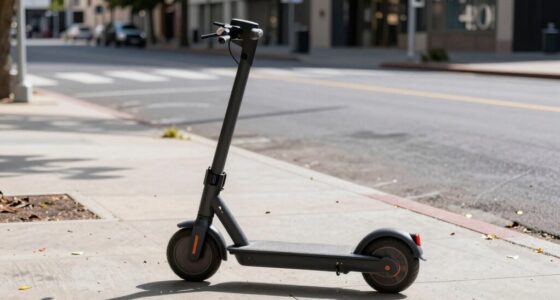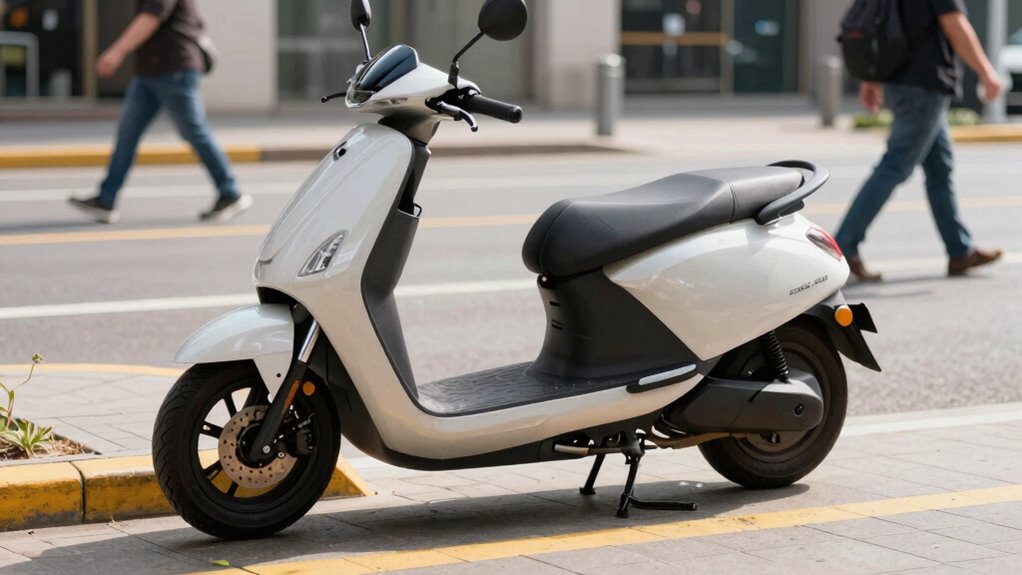

When parking your scooter, always choose designated zones or discreet spots near the curb, avoiding walkways, stairs, or entrances. Make certain it’s stable, upright, and on even surfaces to prevent tipping. Lock it to a fixed object if possible and guarantee it doesn’t block pedestrian paths or create tripping hazards. Being mindful of local rules and securing the scooter properly helps keep everyone safe. Stay tuned, as there are more tips to help you park safely.

Get bike and ride gear delivered free with Prime
- Fast, free delivery on millions of items
- Prime Video, Amazon Music and more included
- Member-only deals all year
Key Takeaways
- Park on flat, even surfaces away from walkways and entrances.
- Use designated parking zones or curbside spots to avoid obstructing pedestrian paths.
- Ensure the scooter is upright and stable to prevent tipping or rolling.
- Lock the scooter to a fixed object in high-traffic areas for security.
- Avoid blocking stairs, ramps, or pathways to maintain safe pedestrian flow.

Parking a scooter properly is essential to prevent accidents and keep walkways safe. When you leave your scooter in a way that blocks pathways or creates obstacles, you not only put yourself at risk but also endanger pedestrians. To guarantee scooter safety and follow parking regulations, you need to be mindful of where and how you park. The first step is always to choose a designated parking area whenever possible. Many cities have specific spots for scooters, which helps keep walkways clear and reduces the chance of someone tripping over your vehicle. If a designated area isn’t available, look for a spot that’s out of the way but still accessible, such as near the curb or against a wall, where it won’t obstruct foot traffic.
Choose designated or discreet parking spots to keep walkways safe and clear for pedestrians.
When parking, avoid placing your scooter in the middle of busy walkways, staircases, or entrances. A badly parked scooter can be a trip hazard, especially in low-light conditions or for people with visual impairments. Make sure your scooter is stable and upright, using the kickstand if it has one, so it doesn’t tip over onto pedestrians. If you’re parking on uneven surfaces or slopes, double-check that your scooter won’t roll into someone or block a pathway. It’s important to be considerate of others and always think about the flow of foot traffic around you. Proper parking also involves understanding and adhering to local regulations that govern scooter use and parking practices. Being aware of parking regulations can help you avoid unintentional violations and fines. Additionally, some areas may have specific requirements for secure parking, such as locking your scooter to a fixed object, to prevent theft or accidental movement. Knowing how to identify designated parking zones can help you choose the best spot and avoid parking in restricted areas.
Pay attention to parking regulations, which vary by city or property. Some places have specific rules about scooter parking, and ignoring these can lead to fines or your scooter being removed. Always look for signs or markings that indicate where you can and cannot park. Avoid parking in areas that are marked as no-parking zones or reserved for other vehicles. Properly parking your scooter within designated lines or marked zones helps maintain order and ensures you’re complying with local laws. Additionally, securing your scooter if necessary, especially in high-traffic areas, can prevent it from being moved or stolen. Locking it to a bike rack or other fixed object not only prevents theft but also keeps it from falling over into a pedestrian pathway. Being aware of scooter parking tips and best practices can further help you avoid common mistakes that create hazards. When you take these steps, you contribute to overall scooter safety and help prevent trip hazards. Remember, the goal is to keep walkways clear, safe, and accessible for everyone. By following parking regulations and choosing appropriate spots, you make sure your scooter doesn’t become a hazard, and you help foster a safer environment for all pedestrians.
Popular right now

Samsung 85-Inch QN70F Neo QLED 4K Smart TV (2025)

eufy C28 Robot Vacuum and Mop with 15,000 Pa Suction

Roborock Q10 S5+ Robot Vacuum and Mop with 10,000 Pa Suction
As an affiliate, we earn on qualifying purchases.
Frequently Asked Questions
What Are the Best Locations for Scooter Parking?
You should park your scooter in designated areas that follow parking etiquette, ensuring you’re not blocking pathways or entrances. Look for spots with good scooter visibility, so you’re easy to spot and less likely to cause hazards. Avoid crowded or narrow spaces, and always check local regulations. By choosing appropriate locations, you help keep pathways clear and safe for everyone, making your scooter parking responsible and considerate.
How to Secure a Scooter to Prevent Theft?
Think of your scooter as a treasure needing protection. You lock it with sturdy locking mechanisms, like a U-lock or chain lock, ensuring it’s secure. Use theft deterrents like alarms or wheel locks to make stealing less appealing. Always park in well-lit, busy areas where witnesses can deter thieves. By combining strong locking mechanisms with visible theft deterrents, you make it much harder for anyone to steal your scooter.
Are There Legal Regulations for Scooter Parking?
Yes, there are legal regulations for scooter parking. You need to guarantee your scooter is properly registered, which can vary by city or state. Parking in designated areas helps you avoid parking fines and penalties. Always check local rules before leaving your scooter, as improper parking—like blocking sidewalks or crosswalks—can lead to fines or even towing. Following these regulations keeps you compliant and respectful of public spaces.
How to Handle Uneven or Sloped Surfaces?
Uneven surfaces can turn a simple scooter park into a safety nightmare. To handle sloped areas, you should consider scooter ramping, which creates a gentle incline for easy access. Additionally, surface leveling helps guarantee your scooter sits stably without tipping. By combining ramping with surface leveling, you prevent accidents and make parking safer for everyone, transforming potential hazards into secure spots that promote confidence and safety.
What Accessories Help Prevent Trip Hazards?
You can use accessories like scooter ramps with textured surfaces, wheel chocks, and storage covers to enhance scooter storage and prevent trip hazards. Ramps make it easier to access and park your scooter smoothly, while wheel chocks keep it stable. Storage covers or mats can be placed around the scooter to mark the area clearly and reduce the risk of tripping. These accessories promote trip prevention and safer parking.
Conclusion
So, next time you park your scooter perfectly—away from walkways and with clear signage—remember, it’s all about safety. Ironically, the best way to avoid causing a trip hazard is to do less—less obstruction, less risk. After all, the real trick isn’t just parking right, but ensuring no one trips over your handy work. Because in the end, a well-placed scooter is worth more than a quick, careless park that causes chaos.