Finding the best portable power station for e bike charging involves balancing power capacity, portability, and charging versatility. The Jackery Explorer 1000 v2 stands out for its reliable performance and user-friendly design, while the BLUETTI AC180 offers a large capacity with advanced battery chemistry. Smaller options like the VTOMan FlashSpeed 300 excel for lightweight needs but lack long runtime. The main tradeoffs include balancing size and weight against power capacity and output options. Continue reading for a detailed breakdown of these top choices and what to consider before buying.
Complete the kit


Key Takeaways
- High-capacity models like the BLUETTI AC180 and Anker SOLIX S2000 provide extensive runtime but are heavier and bulkier.
- For portability, smaller units like the VTOMan FlashSpeed 300 are easier to carry but may lack sufficient power for extended rides.
- Battery chemistry matters: LiFePO4 options offer longer lifespan and safety compared to traditional lithium-ion cells.
- Output versatility, including AC, USB, and DC ports, influences compatibility with different e bike chargers and accessories.
- Price varies widely, with premium models offering more features and durability, while budget options focus on basic charging needs.
| Librids Portable Power Station 640Wh, 1200W Surge, Solar Generator |  | Best Compact Indoor Power Backup | Capacity: 640Wh | Surge Power: 1200W | Charging Time: 1.5 hours | VIEW LATEST PRICE | See Our Full Breakdown |
| BLUETTI AC180 Portable Power Station 1152Wh 1800W LiFePO4 Solar Generator |  | Best High-Capacity Expandable Power Station | Battery Capacity: 1152Wh | Battery Type: LiFePO₄ | Charging Time: 1 hour | VIEW LATEST PRICE | See Our Full Breakdown |
| Jackery Explorer 1000 v2 Portable Power Station, 1070Wh, 1500W |  | Best for Versatile Outdoor Use | Capacity: 1070Wh | AC Output: 1500W | Surge Peak: 3000W | VIEW LATEST PRICE | See Our Full Breakdown |
| EF ECOFLOW Delta 3 Portable Power Station, 1024Wh, 1800W |  | Best for Large-Scale Multi-Device Power | Capacity: 1024Wh | Power Output: 1800W | Surge Power: 3600W | VIEW LATEST PRICE | See Our Full Breakdown |
| EBL 2400W Portable Power Station LiFePO4 Battery for Home Use |  | Best High-Wattage Heavy-Duty Power | Capacity: 1843.2Wh | Output Power: 2400W | Battery Type: LiFePO₄ | VIEW LATEST PRICE | See Our Full Breakdown |
| VTOMAN FlashSpeed 300 Portable Power Station, 300W 230Wh LiFePO4 Battery |  | Best for Lightweight Outdoor Use | Power Output: 300W | Capacity: 230Wh | Battery Type: LiFePO4 | VIEW LATEST PRICE | See Our Full Breakdown |
| 1000W Portable Power Station 1024Wh LiFePO4 for Outdoor & Home |  | Best for Extended Outdoor or Emergency Power | Power Output: 1000W | Capacity: 1024Wh | Battery Type: LiFePO4 | VIEW LATEST PRICE | See Our Full Breakdown |
| Jackery Explorer 300 Portable Power Station, 292Wh |  | Best for Light, Portable Power on the Go | Capacity: 292Wh | Weight: 7.5 lbs | Outlets: 2 AC, 1 USB-C PD, 2 USB-A, 1 car port | VIEW LATEST PRICE | See Our Full Breakdown |
| Anker SOLIX S2000 Portable Power Station, 2010Wh, 3000W Peak |  | Best for Heavy-Duty Home and Outdoor Power | Capacity: 2010Wh | Peak Power: 3000W | Continuous Power: 1500W | VIEW LATEST PRICE | See Our Full Breakdown |
| portable power station for e bike charging | Capacity | Battery Type | Weight |
|---|---|---|---|
| Librids Portable Power Station | 640Wh | LiFePO₄ | — |
| BLUETTI AC180 Portable Power S | — | LiFePO₄ | Not specified |
| Jackery Explorer 1000 v2 Porta | 1070Wh | LFP | — |
| EF ECOFLOW Delta 3 Portable Po | 1024Wh | — | — |
| EBL 2400W Portable Power Stati | 1843.2Wh | LiFePO₄ | 55 pounds |
| VTOMAN FlashSpeed 300 Portable | 230Wh | LiFePO4 | 7.4 lbs |
| 1000W Portable Power Station 1 | 1024Wh | LiFePO4 | 27.73 lbs |
| Jackery Explorer 300 Portable | 292Wh | — | 7.5 lbs |
| Anker SOLIX S2000 Portable Pow | 2010Wh | LiFePO4 (LFP) | — |
More Details on Our Top Picks
Librids Portable Power Station 640Wh, 1200W Surge, Solar Generator
The Librids Portable Power Station stands out for its fast 1.5-hour charging time and a durable LiFePO₄ battery rated for over 4000 cycles, making it ideal for indoor use where quick recharge and long-term reliability matter. Compared with larger options like the BLUETTI AC180, it offers less capacity but shines in portability and ease of handling. Its limited suitability to dry, indoor environments means it isn’t the best choice for outdoor or wet conditions. The device includes multiple outlets, including AC and USB ports, ensuring versatility for various devices, but its safety features like pure sine wave inverter make it safer for sensitive electronics. The tradeoff is its lower capacity, which might not satisfy those needing extended power for heavier e-bike charging sessions.
Pros:- Fast charging in just 1.5 hours
- Long-lasting LiFePO₄ battery with 4000+ cycles
- Multiple output ports for versatile device charging
- Pure sine wave inverter for clean power
Cons:- Indoor use only limits outdoor deployment
- Not suitable for wet or outdoor environments
- Limited capacity for larger or multiple e-bikes
Best for: Indoor users who need a quick, reliable backup for e-bike charging in dry environments
Not ideal for: Outdoor enthusiasts or wet weather users who require weatherproofing and higher capacity
- Capacity:640Wh
- Surge Power:1200W
- Charging Time:1.5 hours
- Battery Type:LiFePO₄
- Number of Outlets:4 AC outlets, USB ports
- Warranty:5 years
Our verdict“This power station is best suited for indoor, dry environments where quick recharge and longevity are priorities.”
BLUETTI AC180 Portable Power Station 1152Wh 1800W LiFePO4 Solar Generator
The BLUETTI AC180 offers a substantial 1152Wh capacity with rapid 1-hour charging, making it a strong contender for those needing extended power for multiple e-bikes or high-demand devices. Its ability to expand output power to 2700W via app control sets it apart from more static units like the Jackery Explorer 1000. Designed for versatility, it supports solar input up to 500W, enabling renewable charging, which appeals to eco-conscious users. However, the weight isn’t specified, which could be a concern for portability, especially compared to the lighter Explorer 1000. Its high power and expandability make it ideal for heavier-duty applications, but setup complexity and weight might be barriers for casual users or those seeking lightweight solutions.
Pros:- Fast charging in just 1 hour
- Expandable power output up to 2700W
- Supports solar charging for renewable energy
- High capacity suitable for multiple devices
Cons:- Weight not specified, may be heavy
- Requires specific cables and setup
- Potentially complex operation for casual users
Best for: Eco-conscious users needing high capacity and expandability for multiple e-bikes
Not ideal for: Lightweight travelers or users prioritizing portability over capacity
- Battery Capacity:1152Wh
- Battery Type:LiFePO₄
- Charging Time:1 hour
- Output Power:1800W (expandable to 2700W)
- Solar Input:500W
- Weight:Not specified
Our verdict“Ideal for users who prioritize high capacity and expandability over lightweight portability.”
Jackery Explorer 1000 v2 Portable Power Station, 1070Wh, 1500W
The Jackery Explorer 1000 v2 provides a reliable 1070Wh capacity with a 1500W AC output, making it suitable for outdoor adventures and emergency backup. It includes fast charging, reaching full capacity in one hour, and features multiple ports, including USB-C and AC outlets, for versatility. Its durable lithium iron phosphate (LFP) battery ensures over 10 years of use, surpassing many competitors like the EF ECOFLOW Delta 3 in longevity. However, it requires a separate solar panel (not included), limiting immediate solar flexibility, and relies on Jackery-specific panels for solar input. Its lighter weight of 23.8 lbs makes it more portable but less suitable for very heavy-duty or high-capacity needs.
Pros:- High capacity with 1070Wh
- Fast charging in just one hour
- Long lifespan over 10 years
- Multiple versatile ports
Cons:- Solar panel not included
- Limited to Jackery solar panels
- Requires app for optimal fast charging
Best for: Outdoor enthusiasts and emergency prepper who want a portable, long-lasting power source
Not ideal for: Heavy-duty or multi-e-bike charging needs where larger capacity is required
- Capacity:1070Wh
- AC Output:1500W
- Surge Peak:3000W
- Charging Time:1 hour
- Battery Type:LFP
- Ports:2 USB-C, 1 USB-A, 1 DC car, 3 AC
Our verdict“This model suits outdoor users who value longevity, portability, and reliability for e-bike charging.”
EF ECOFLOW Delta 3 Portable Power Station, 1024Wh, 1800W
The ECOFLOW Delta 3 excels in powering multiple devices simultaneously, with its 1024Wh capacity and 13 outlets, making it a flexible choice for extended camping trips or emergency home backup. Its ability to expand capacity up to 5kWh with additional batteries is a major advantage over smaller units like the Jackery Explorer 1000. The 1800W output supports heavier loads, ideal for charging e-bikes and other high-wattage devices. Its rapid 56-minute charging time is impressive, but at 12.5 kg, it’s somewhat heavy for portable use, and its higher price point might deter casual users. This unit is best for those needing robust power and expandability rather than ultra-light portability.
Pros:- Fast charging in just 56 minutes
- Expandable capacity up to 5kWh
- Supports multiple appliances simultaneously
- Durable LiFePO₄ batteries with 10-year lifespan
Cons:- Relatively heavy at 12.5 kg
- Higher price point
- Requires multiple input sources for full capacity
Best for: Home backup and camping users needing high power and multi-device support
Not ideal for: Lightweight travelers or those with limited budget
- Capacity:1024Wh
- Power Output:1800W
- Surge Power:3600W
- Cycle Life:4000 cycles
- Charge Time:56 minutes
- Expansion Capacity:Up to 5kWh
Our verdict“This power station is ideal for users needing high power, multi-device support, and expandability over portability.”
EBL 2400W Portable Power Station LiFePO4 Battery for Home Use
The EBL 2400W Portable Power Station offers a substantial 1843.2Wh capacity with a 2400W output, making it suitable for demanding applications like high-wattage e-bike charging and home backup. Its heavy weight of 55 pounds is a clear tradeoff, limiting portability for casual users but providing a reliable, high-capacity solution for dedicated setups. The multiple ports, including USB-C PD 100W and wireless charging, add to its versatility. Compared to lighter models like the Explorer 1000, it is less portable but excels in handling larger power loads. Its size and weight mean it’s less suited for frequent transport but perfect for stationary use in a more permanent setup.
Pros:- High capacity with 1843.2Wh
- Supports high-wattage devices with 2400W output
- Long lifespan over 3500 cycles
- Multiple charging ports including wireless charging
Cons:- Heavy at 55 pounds makes portability difficult
- Large size limits mobility
- Price not specified, likely premium
Best for: Home users or garage setups needing high wattage and long-lasting power for multiple devices
Not ideal for: Travelers or those needing lightweight, portable options
- Capacity:1843.2Wh
- Output Power:2400W
- Battery Type:LiFePO₄
- Weight:55 pounds
- Dimensions:16.9 x 11.8 x 11 inches
- Charging Cycles:Over 3500
Our verdict“Best suited for stationary, high-demand power needs where portability is less critical.”
VTOMAN FlashSpeed 300 Portable Power Station, 300W 230Wh LiFePO4 Battery
The VTOMAN FlashSpeed 300 stands out for its ultra-lightweight design, weighing just 7.4 pounds, making it perfect for outdoor adventures and emergency situations where portability is key. Its 300W output and 230Wh capacity are suitable for charging small e-bike accessories and gadgets, but it can’t power larger or high-wattage components. Compared to the Jackery Explorer 300, it offers faster recharge via USB-C, yet its lower capacity limits extended use. This model excels for users prioritizing portability and quick recharging, but those needing to run larger devices will find it lacking. Its LiFePO4 battery supports over 3000 cycles, promising durability, yet the limited capacity may require frequent recharges for long trips. Best for outdoor enthusiasts and emergency prep, who need a compact, reliable power source for small devices.
Pros:- Extremely lightweight and portable at just 7.4 lbs
- Fast recharge via USB-C with 100W Power Delivery
- Supports multiple devices simultaneously with various outlets
- Long-lasting LiFePO4 battery with over 3000 cycles
Cons:- Limited to 300W output, unsuitable for high-power appliances
- No built-in solar panel, requires separate purchase
- Capacity may be insufficient for extended power needs
Best for: Hikers, campers, or emergency kits requiring lightweight, portable charging for small devices and accessories.
Not ideal for: Users needing to power larger e-bike batteries or high-wattage tools, due to its limited 300W output and capacity.
- Power Output:300W
- Capacity:230Wh
- Battery Type:LiFePO4
- Weight:7.4 lbs
- Recharge Time (Wall):2.5 hours
- Outputs:2x AC, 1x USB-C 100W, 3x USB-A, 1x DC
Our verdict“This pick is ideal for lightweight, portable power for small devices during outdoor activities or emergencies.”
1000W Portable Power Station 1024Wh LiFePO4 for Outdoor & Home
The 1000W Portable Power Station 1024Wh offers a substantial 1024Wh capacity and 1000W continuous output, making it a strong choice for powering e-bike chargers alongside other small appliances during longer trips or outages. Its multiple AC outlets and USB-C port provide versatile charging options, and its solar compatibility up to 300W allows for off-grid recharging. Compared with the Anker SOLIX S2000, it is less powerful overall but significantly lighter at just 27.73 pounds, enhancing portability for outdoor use. This unit is better suited for those who need more capacity without the bulk of larger batteries, but the 300W solar input can be slow in cloudy conditions. Its long cycle life and safety features make it a dependable choice for off-grid living or emergency backup. Best for campers, off-grid homes, or emergency preparedness requiring a higher capacity system that balances portability with power.
Pros:- High capacity with 1024Wh and 1000W output for multiple devices
- Supports fast charging and multiple device connections at once
- Long cycle life with over 3000 cycles and safety features
- Solar compatibility for off-grid recharging
Cons:- Heavier at nearly 28 pounds, less ideal for frequent portability
- Limited to 300W solar input, slower in cloudy conditions
- Bulkier design compared to smaller units like Jackery 300
Best for: Campers and homeowners seeking reliable, high-capacity power in a manageable size for extended use or emergencies.
Not ideal for: Users needing to run high-wattage appliances continuously or expecting fast solar recharging, due to the 300W input limit.
- Power Output:1000W
- Capacity:1024Wh
- Battery Type:LiFePO4
- AC Ports:2×110V
- USB-C Port:1×60W PD
- Weight:27.73 lbs
Our verdict“This model makes sense for users who need a sizable, reliable power source that remains portable enough for outdoor or emergency use.”
Jackery Explorer 300 Portable Power Station, 292Wh
The Jackery Explorer 300 is a lightweight, easy-to-carry option at only 7.5 pounds, with a 292Wh capacity that makes it suitable for quick recharges of small e-bike accessories and gadgets. Its versatile outlets, including a USB-C PD port, provide flexibility for multiple device types, and its fast solar charging (about 2.8 hours to 80%) makes it appealing for camping or short outdoor trips. Compared to the larger 1000W Portable Power Station, it sacrifices capacity for portability, making it less suited to powering larger devices or running longer durations. It is ideal for users who prioritize ease of transport but may find it inadequate for extended or high-power needs. Its over 4,000 charge cycles and built-in safety features contribute to durability, though solar panel purchase is separate. Best for outdoor enthusiasts and light use who need a compact, reliable power backup for small devices.
Pros:- Very lightweight and portable at 7.5 lbs
- Multiple outlets including USB-C PD for fast charging
- Over 4,000 charge cycles ensures long-term durability
- Fast solar charging for quick replenishment
Cons:- Limited capacity at 292Wh, not suitable for long-term use
- No solar panel included, increasing initial cost
- Rated for only 300W, restricting high-wattage device use
Best for: Campers, travelers, or emergency kits needing a highly portable power source for small devices and short-term use.
Not ideal for: Those requiring to power e-bike batteries or high-wattage appliances for extended periods, due to limited capacity and power output.
- Capacity:292Wh
- Weight:7.5 lbs
- Outlets:2 AC, 1 USB-C PD, 2 USB-A, 1 car port
- Rated Power:300W
- Charge Cycles:over 4,000
- Charging Time:80% in 2.8 hours with 100W solar panel
Our verdict“This model suits those who need a compact, lightweight portable power station for short trips or emergency backup of small devices.”
Anker SOLIX S2000 Portable Power Station, 2010Wh, 3000W Peak
The Anker SOLIX S2000 offers a massive 2010Wh capacity and a peak power of 3000W, making it capable of supporting high-wattage devices and essential appliances during outages or off-grid adventures. Its compact, roughly 36-pound design is surprisingly manageable considering its power output, but it remains less portable than smaller units like the Jackery Explorer 300 or the VTOMAN FlashSpeed 300. Unlike the 1000W Portable Power Station, it provides almost double the capacity and significantly higher continuous power, which makes it a better choice for running larger e-bike chargers or multiple devices simultaneously. The 400W solar input allows faster recharging under optimal sunlight, although it’s still a larger investment and less ideal for quick, casual outings. This model is best for users needing dependable, high-capacity power for prolonged use or backup, but the weight and price could be barriers for casual users. Best for backup power, off-grid living, or powering multiple high-wattage devices.
Pros:- Massive 2010Wh capacity supports many devices simultaneously
- High 3000W peak power handles high-wattage appliances
- Supports multiple recharging methods including solar and AC
- Long lifespan with 10,000 cycles
Cons:- Relatively heavy at 35.7 lbs, less portable for frequent moving
- No 12V DC port, limiting certain device compatibility
- Higher price point may be prohibitive for casual users
Best for: Homeowners, off-grid dwellers, or serious outdoor users needing high-capacity, high-power support for multiple devices or appliances.
Not ideal for: People seeking ultra-lightweight portable options or those with limited budgets, due to its weight and higher cost.
- Capacity:2010Wh
- Peak Power:3000W
- Continuous Power:1500W
- Battery Type:LiFePO4 (LFP)
- Battery Cycle Life:10,000 cycles
- Dimensions:8.2 x 11.1 x 12.7 inches
Our verdict“This unit is best suited for users who need substantial, reliable power for home backup or heavy-duty outdoor use, despite its bulk and cost.”
How We Picked
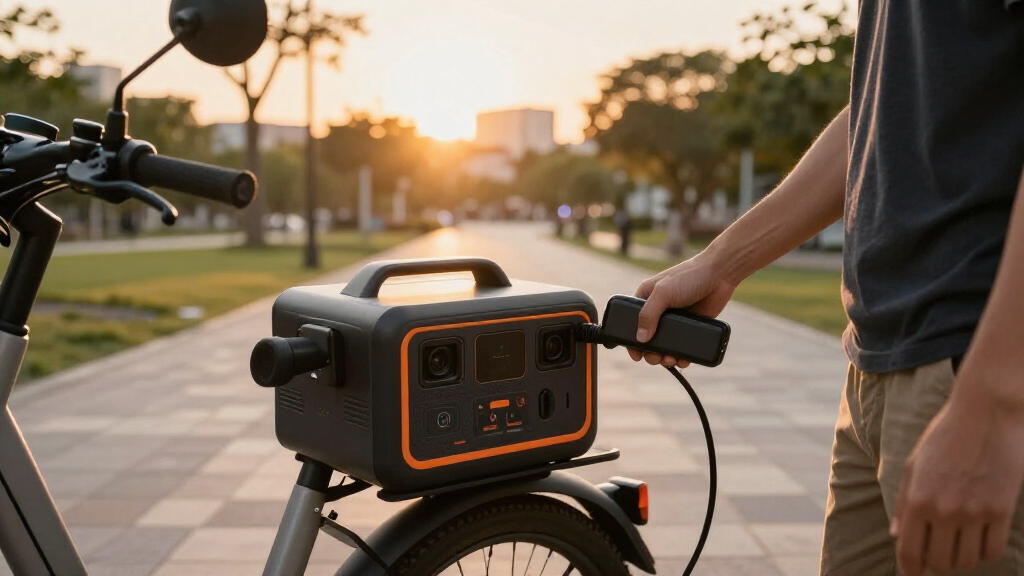
I evaluated these portable power stations based on several key criteria: total capacity (Wh), maximum output wattage, battery chemistry for longevity, size and weight for portability, and the variety of charging ports. Reliability and build quality also played roles, as well as user reviews highlighting real-world performance. Products were ranked to balance power delivery with ease of transport, ensuring each option caters to different user needs—whether for casual riding, long-distance trips, or daily commuting. This approach ensures the lineup covers a broad spectrum of requirements without sacrificing core performance metrics.| portable power station for e bike charging | Battery Type |
|---|---|
| Librids Portable Power Station | LiFePO₄ |
| BLUETTI AC180 Portable Power S | LiFePO₄ |
| Jackery Explorer 1000 v2 Porta | LFP |
| EF ECOFLOW Delta 3 Portable Po | — |
| EBL 2400W Portable Power Stati | LiFePO₄ |
| VTOMAN FlashSpeed 300 Portable | LiFePO4 |
| 1000W Portable Power Station 1 | LiFePO4 |
| Jackery Explorer 300 Portable | — |
| Anker SOLIX S2000 Portable Pow | LiFePO4 (LFP) |
Factors to Consider When Choosing Best Portable Power Station For E Bike Charging
Choosing the best portable power station for e bike charging requires understanding your specific riding habits, charging needs, and portability preferences. Beyond specs, consider how the device integrates with your existing gear and the conditions you’ll face. Making informed decisions helps avoid common pitfalls such as underestimating capacity or selecting bulky models that hinder mobility. Here are key factors to guide your selection:Capacity and Runtime
Capacity, measured in watt-hours (Wh), directly impacts how many charges you can get from a single unit. Larger capacities support longer rides or multiple charges but add weight and size. Consider your typical riding distance and whether you need a power station that can fully recharge your e bike’s battery multiple times or just top it off occasionally. Balancing capacity with portability is crucial to avoid lugging around an unwieldy device or running out of power mid-ride.
Power Output and Charging Speed
The maximum output wattage determines how quickly your e bike’s battery can be charged. Look for units with at least 1500W to match most e bike chargers, which often require substantial power. Faster charging times mean less downtime but may come with higher costs or larger sizes. Check if the power station can deliver sustained output rather than peak wattage only, as this affects real-world performance and safety.
Port Selection and Compatibility
A versatile array of ports (AC outlets, USB-C, USB-A, DC) ensures compatibility with various charging cables and accessories. Some e bikes use specific connectors or require higher power levels, so a power station with multiple outputs offers flexibility. Consider whether you need additional charging options for other devices like phones or GPS units. This can streamline your gear setup and reduce the need for multiple chargers.
Size, Weight, and Portability
If portability is a priority, focus on compact, lightweight models that still meet your power needs. Larger units tend to offer more capacity but can be cumbersome to carry, especially during long rides or outdoor adventures. Think about how you’ll transport the power station—backpack, bike rack, or hand carry—and whether the added weight affects your riding comfort. Balance size with capacity to avoid sacrificing mobility for power.
Battery Chemistry and Durability
LiFePO4 batteries are becoming increasingly popular because they last longer and are safer under repeated charge cycles. Traditional lithium-ion batteries may degrade faster over time, leading to reduced capacity. Investing in a power station with advanced chemistry can provide peace of mind and lower long-term replacement costs. However, these units often come at a higher initial price, so weigh durability against your budget.
Price and Overall Value
Price varies significantly based on capacity, features, and brand reputation. While budget options may suffice for occasional use, frequent riders or long-distance e bike enthusiasts should consider investing in higher-capacity, more durable models. Assess the long-term value by examining warranty, build quality, and user reviews. Sometimes paying a premium upfront results in better reliability and fewer replacement costs down the line.
Frequently Asked Questions
Can I charge my e bike directly from a portable power station?
Yes, most e bikes can be charged directly from a portable power station if it has the appropriate AC or DC output ports matching your bike’s charger. Ensure the power station provides enough wattage to meet your bike’s charging requirements, which are usually listed on the battery or charger label. Using a station with stable output and multiple ports can help streamline the process, especially if you need to charge multiple devices simultaneously.
How long will a portable power station typically last during a long ride?
The runtime depends on the station’s capacity and your e bike’s charging needs. For example, a 1000Wh unit could recharge a typical e bike battery (around 500Wh) once or twice, depending on efficiency and draw. Smaller units may only top off your battery or provide partial charge, making them better suited for short rides. Always consider your typical energy consumption to select a capacity that meets your needs without excessive weight.
Are LiFePO4 batteries worth the extra cost for bike charging?
LiFePO4 batteries offer longer cycle life, improved safety, and better thermal stability compared to traditional lithium-ion cells. This translates to more charge cycles and less degradation over time, making them a smart investment for frequent riders. Although they tend to be pricier upfront, the durability and safety benefits can save money in the long run by reducing replacement frequency and risks of overheating or fires.
What should I consider regarding portability for outdoor e bike trips?
Portability is key when planning outdoor trips; select a power station that balances capacity with weight and size. Look for units with handles, compact form factors, and lightweight construction, especially if you’ll be carrying it on your bike or backpack. Also, consider whether the device is ruggedized or weather-resistant, as outdoor conditions can be unpredictable and demand more durable equipment.
Is it better to get a solar-compatible power station for e bike charging?
Solar compatibility extends the usability of your power station by allowing recharging in remote locations via solar panels. This is particularly valuable for long outdoor adventures where grid access isn’t available. Ensure the station supports standard solar inputs and matches the wattage of your solar panels for efficient charging. Keep in mind that solar recharging is weather-dependent and slower than grid charging, so plan accordingly.
Conclusion
For most riders seeking a reliable, all-around solution, the Jackery Explorer 1000 v2 offers a strong balance of capacity, portability, and user-friendliness, making it the best overall choice. If you prioritize long-term durability and high capacity, the BLUETTI AC180 or Anker SOLIX S2000 stand out for their longevity and power. Beginners or casual riders will find the VTOMan FlashSpeed 300 sufficient, thanks to its compact size and lower price. For those venturing into remote areas, models with solar compatibility and rugged features are worth considering. Ultimately, your choice hinges on how much power you need versus how portable you want it to be.