
TL;DR
Electric bike accessories fall into six key categories: security, safety lighting, storage, battery care, comfort, and maintenance. Buy a quality lock first — e-bikes cost $1,000–$12,000+ and are prime theft targets — then add a high-lumen light with rear radar, a UL 2849-certified charger, and puncture-resistant tires. Comfort upgrades like suspension seatposts should come last.
Your e-bike cost more than your first car probably did. And you’re about to lock it to a bike rack with a $20 cable lock that a thief can cut with bolt cutters in under 10 seconds. That math doesn’t work.

Get bike and ride gear delivered free with Prime
- Fast, free delivery on millions of items
- Prime Video, Amazon Music and more included
- Member-only deals all year
Electric bike accessories aren’t optional extras — they’re what stands between you and a stolen bike, a dead battery in January, or a flat tire on a 60-pound machine eight miles from home. The right gear keeps you riding; the wrong gear (or no gear) ends rides early.
In this guide, you’ll learn the six key categories of accessories, exactly what to buy first on a budget, and the smart upgrades that are genuinely worth the money. Let’s get into it.
Spend 10–15% of your e-bike’s value on security: a Sold Secure Gold/Diamond or ART 3–4 rated U-lock plus a GPS tracker and the removable-battery habit.
Only charge batteries and chargers with UL 2849 certification unattended — uncertified lithium batteries are the leading fire risk in the category.
Class 3 riders (28 mph) should choose helmets with NTA 8776 certification or at minimum MIPS rotational protection.
A spare battery ($400–$900) only pays off for long-distance or cargo riders; storing your existing battery at 40–60% charge and above freezing extends life for…
Buy in this order: lock → helmet → lights → fenders → puncture-resistant tires → comfort upgrades.
What to Buy First: The Essential Accessories Ranked by Priority
If you only have $200 to spend on electric bike accessories, spend it on security and lighting first. The logic is about downside risk, not preference. A stolen bike makes every other accessory pointless — that $120 pannier becomes worthless the day the bike it attaches to disappears. And riding an e-bike at 20–28 mph in traffic without proper lights isn’t just risky; drivers judge your speed assuming you’re a 12-mph cyclist, which means they pull out in front of you because they think they have time. Everything else can wait a paycheck or two.
Here’s the priority order I’d recommend after talking to commuters and reading what bike shops push hardest:
- A quality lock ($80–$150) — Sold Secure Gold or Diamond rated U-lock or chain lock
- A helmet ($60–$150) — e-bike-specific if you ride a Class 3 bike
- Lights ($50–$200) — 500+ lumens front, bright rear light
- Fenders ($30–$80) — if you commute at all
- Puncture-resistant tires or sealant ($40–$100)
- A phone mount ($20–$60) — get one with charging for navigation
Notice what’s missing: the fun stuff. Suspension seatposts, baskets, and GPS trackers are great, but they’re upgrades — not foundations. The tradeoff this list forces is deliberate: cheap versions of the first three items don’t just save less money, they fail differently. A $30 helmet still protects you; a $30 lock protects almost nothing.
The rule of thumb from bike shops: spend 10–15% of your bike’s value on security gear alone. A $2,500 e-bike deserves a $150 lock, not a $20 cable. Insurance companies increasingly agree — some e-bike insurance policies require proof of a certified lock or they won’t pay out on a theft claim.
Popular right now

Roborock Qrevo 2 Pro Robot Vacuum and Mop

Vitamix 5-Speed Immersion Blender, 625-Watt, Stainless Steel/Black

Sony BRAVIA XR8B 65-Inch OLED 4K HDR Smart Google TV (K-65XR8B)
As an affiliate, we earn on qualifying purchases.
Security Gear That Actually Stops Thieves (Not Just Slows Them Down)
E-bike security is the accessory category where under-spending costs you everything. E-bikes range from $1,000 to $12,000+, and thieves know it. They also know something you might not: e-bikes are harder to recover than regular bikes because they’re often resold stripped — battery gone, motor swapped — within hours. A determined professional with an angle grinder can beat any lock, but here’s the key insight: most thefts aren’t professional jobs. They’re opportunists looking for the easiest target on the rack. Your goal isn’t an unbeatable lock; it’s making your bike the second-easiest target.
Look for locks rated Sold Secure Gold or Diamond (UK standard) or ART 3–4 (Dutch standard). These ratings mean the lock survived sustained attacks with bolt cutters and leverage tools for a set testing duration — which matters because opportunists give up after a couple of minutes of visible struggle. Pair a U-lock with a cable or second lock so you can secure both wheels and the frame. The reasoning: quick-release wheels are the cheapest parts to steal individually, and a bike missing a wheel is often a total loss for the owner anyway.
Then add layers, because security works like an onion — each layer buys the thief more time and more visibility:
- GPS trackers — Apple AirTags work surprisingly well for the price, though dedicated units like Sherlock or Boomerang offer better battery and hidden mounting. The tradeoff: AirTags are cheap and leverage a huge network, but thieves with phones get anti-stalking alerts that reveal them
- Alarms — some locks and bikes now include 100+ dB alarms that trigger on movement; the value isn’t stopping the theft, it’s drawing attention at the exact moment the thief wants it least
- Removeable battery practice — take the battery with you when parked; a battery-less bike is a harder sell and costs the thief $300–$800 in replacement value, which drops the bike down the desirability list
- Wheel locks — AXA-style frame locks, common on European commuter bikes, stop ride-away theft, which is exactly how many e-bikes vanish: a thief doesn’t cut anything, they just ride off on a bike that wasn’t locked to anything
Real scenario: my neighbor’s Rad Power commuter sat outside a coffee shop for two years untouched — locked with a Gold-rated chain through the frame and a wheel lock engaged. The cable-locked bike next to it vanished in month three. Same rack, same neighborhood, same thieves. The only difference was about $130 of gear and two minutes of habit.
Lights and Radar: The Tech That Watches the Road Behind You
E-bike lighting needs to be brighter than regular bike lighting, and the reason is closing speed. At 20–28 mph you’re covering 30–40 feet per second — which means you outrun a dim light’s useful throw distance. A 200-lumen light that feels fine at 12 mph leaves you with a two-second view of the pothole ahead at 25 mph. A 500-lumen front light is the realistic minimum for night riding; 1,000–1,500 lumens is better for unlit paths. Brightness also works in reverse: drivers sizing up a pass see a bright front light and give more room, because a visible light reads as “vehicle” rather than “barely-moving cyclist.”
The breakout accessory of the last few years is rear-view radar, like the Garmin Varia. It mounts under your saddle, flashes as a taillight, and beams an alert to your phone or bike computer when a car approaches from behind — showing its speed and distance. Prices have dropped from $200+ to well under $150 for some units, and riders who try one rarely go back. Why it matters more on an e-bike: you’re fast enough to hold a traffic lane but slow enough that closing speeds from cars are high, and the constant glance-over-your-shoulder that regular cyclists do is riskier at 25 mph — a slight wobble at that speed is a real drift.
Think of radar like a rearview mirror for a car, except it also yells at you when someone’s closing in fast at 45 mph while you’re drifting toward a turn lane. On rural roads with no shoulder, it genuinely changes how you ride — you can hold your line confidently instead of guessing when it’s safe to look back.
Add a helmet or handlebar mirror ($15–$40) as backup — cheap, zero battery, and it catches what radar occasionally misses in heavy traffic, where multiple cars can confuse detection algorithms. The tradeoff between them: radar costs more but works in the dark and in rain; mirrors are nearly free but vibrate at speed and need a glance that radar doesn’t.
Helmets: Why E-Bike-Specific Certification Matters at Higher Speeds
A regular bike helmet is designed for impacts at cycling speeds around 12–15 mph. Class 3 e-bikes assist up to 28 mph, and that speed change matters more than most riders realize — impact energy scales with the square of velocity, so a 28-mph crash delivers roughly three to four times the energy of a 14-mph one. That’s why Europe created a separate standard: NTA 8776, rated for the higher speeds of speed pedelecs. It’s not marketing; it’s a helmet tested against crash forces your bike can actually produce.
You don’t legally need an NTA 8776 helmet in most of the US, but the physics argument is real. More speed means harder impacts and more coverage matters — e-bike-specific helmets extend lower over the back of your head because at higher speeds, riders go over the handlebars and land differently than slow-speed tumbles. Many also include integrated lighting.
What to look for:
- NTA 8776 certification — the European e-bike standard, available on helmets from ABUS, Bell, and others. Expect to pay a modest premium over equivalent standard helmets — worth it if you ride a Class 3 bike, arguably optional for a Class 1 commuter you ride at moderate speeds
- MIPS or rotational protection — now standard on quality helmets at every price; it addresses the rotational forces of glancing impacts, which are common when a car clips you rather than hitting you head-on
- Integrated rear light — a genuinely useful bonus, not a gimmick, since your head moves with your body and keeps the light visible through turns where a seatpost light gets blocked
Expect to pay $70–$200 for a good one. That’s cheap relative to what a head injury costs — a single ER visit typically runs several times that before you count recovery time. And if you’re riding with kids on a cargo bike, everyone gets a helmet — no exceptions, including the passengers. Cargo bikes compound the risk: more weight means longer stopping distances and tippier low-speed handling, and kids can’t brace themselves in a fall the way an adult can.
Battery and Charging Accessories: What’s Safe and What Shortens Battery Life
The most important battery accessory isn’t a gadget — it’s a UL 2849-certified charger and battery system. After a string of e-bike battery fires made national headlines, especially in New York City, UL certification became the single biggest safety differentiator in the market. Here’s why it matters technically: lithium battery fires aren’t like normal fires. When a damaged or defective cell goes into thermal runaway, it releases its own oxygen, which means it can’t be smothered — it burns until the chemistry is spent, and it can ignite neighboring cells in a chain reaction. That’s why the failure mode is so severe, and why a certification that tests overcharge, short-circuit, and thermal scenarios changes the actual risk profile. If your bike’s battery isn’t UL 2849 certified, don’t charge it unattended or overnight. Period.
Second batteries are the most common question: should you buy one? A spare battery typically runs $400–$900, which buys a lot of charging discipline instead. Most commuters can top up at work or home — and here’s the counterintuitive part: riding with two batteries means carrying 6–10 extra pounds, which itself costs you range. The spare makes sense for long-distance riders and cargo-bike parents hauling kids and groceries, where range anxiety is structural, not occasional.
A few things that genuinely extend battery life, and why they work:
- Store the battery at 40–60% charge if the bike sits for weeks — lithium cells degrade fastest at full charge and high voltage, so parking at 100% for a month does more damage than a year of normal riding
- Keep it above freezing — cold weather temporarily cuts range by 20–30% (slowed chemistry), and charging a very cold battery causes permanent lithium plating on the anode
- Skip fast chargers for daily use — they’re fine occasionally, but heat is the true enemy of lithium cells; sustained fast charging keeps the battery in the temperature band where degradation accelerates
- Use a battery storage bag for transporting or winter storage indoors — it buys you minutes of containment in the unlikely worst case, and prevents minor knocks that damage cells invisibly
A friend in Minneapolis kept her battery in an insulated bag indoors all winter and lost maybe 5% capacity after three seasons. Her riding partner left his on the bike in an unheated garage — his range dropped noticeably after one winter. Same bikes, same climate, opposite outcomes. The difference wasn’t luck; it was about $30 of care.
Storage, Comfort, and Maintenance: The Upgrades Worth the Money
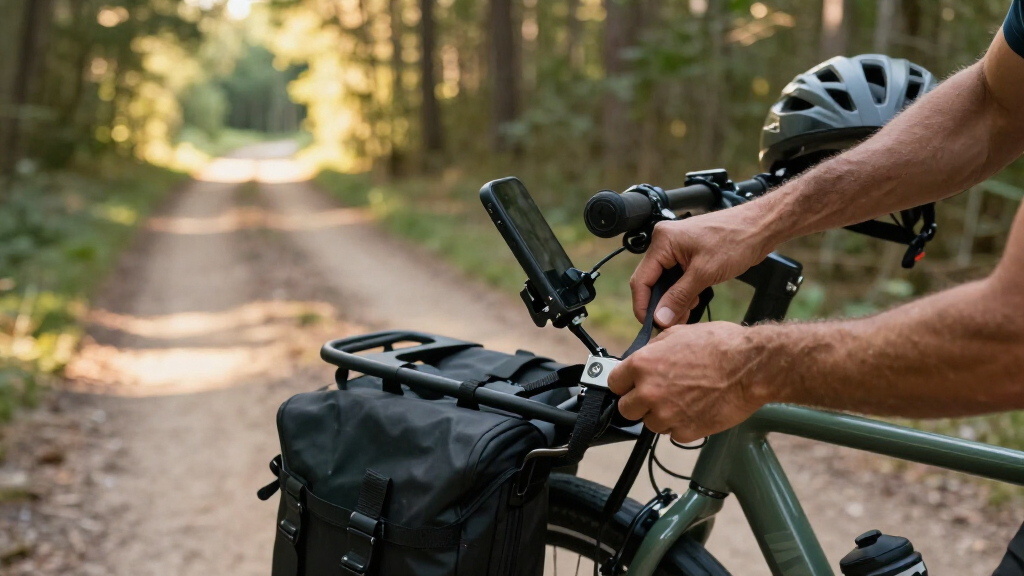
Storage and comfort accessories are where e-bike ownership gets genuinely fun — and where most e-bikes have a head start, since many ship with integrated rear racks rated for 25–55 kg. That’s enough for two stuffed panniers, a trunk bag, and a week of groceries. The deeper reason this matters: an e-bike that can haul cargo replaces car trips, and every accessory that makes hauling easier makes that substitution more likely. Comfort gear is the same story — discomfort is the quiet reason people stop riding, and riders who stop riding stop saving money.
The standouts that earn their price:
| Accessory | Typical Price | Why It’s Worth It |
|---|---|---|
| Waterproof panniers | $80–$200 | Commuters’ #1 upgrade — a wet laptop costs more than the panniers, and off-your-back carrying eliminates the sweaty-backpack problem |
| Suspension seatpost (Cane Creek Thudbuster) | $100–$180 | Absorbs potholes and curb hits your back otherwise absorbs; matters more on e-bikes because you can’t stand and coast the way cyclists do — the motor keeps pulling you into bumps |
| Fenders | $30–$80 | Skunk stripe prevention; the difference between riding in rain and driving — a bike you’ll only ride dry is a bike you’ll ride half as often |
| Ergonomic grips | $20–$50 | Fixes numb hands on rides over 45 minutes; e-bikes amplify this because higher speed means more road vibration transmitted through the bar |
| Charging phone mount | $30–$70 | Navigation without a dead battery at mile 20 — GPS navigation drains a phone in about 90 minutes, faster than most e-bike rides |
Don’t skip maintenance items either — this is where e-bike economics diverge most from regular bikes. E-bikes are heavy — often 50–70 pounds — and the motor torque chews through chains and tires faster: a mid-drive motor torques the chain at motor output, not just rider output, which is why an e-bike chain can wear out in a single season of hard use. Budget for e-bike-rated tires with puncture protection, quality chain lube, and a torque wrench if you do your own work, since motor mounting bolts need specific torque settings — under-torqued bolts loosen under motor vibration, and over-torqued ones can crack frames. Neither failure is repairable cheaply.
One compatibility note: if you’re hauling the bike on a car rack, check the rack’s weight limit. Many car racks max out at 50–60 lbs per bike, and a cargo e-bike can double that — exceeding the rating isn’t a gradual-wear issue, it’s a sudden-failure one: rack arms fatigue and let go at highway speed. You need a heavy-duty rack — or a hitch-mounted one rated for e-bikes specifically.
Frequently Asked Questions
Are AirTags effective for tracking stolen e-bikes?
Yes, with limits. AirTags leverage Apple’s massive Find My network, so in any urban area with iPhone users nearby, tracking usually works. The catch: they’re easy for thieves to detect, and a professional can find and toss one in seconds. Dedicated trackers like Sherlock or Boomerang hide inside the frame or seatpost and have their own GPS and battery. Use an AirTag as one layer — never your only theft defense.
Is it safe to charge my e-bike battery overnight?
Only if your battery and charger are UL 2849 certified. UL certification means the system passed fire-safety testing, including overcharge scenarios. Uncertified batteries and cheap third-party chargers are the root cause of most e-bike fires. If your system isn’t certified, charge while you’re home and awake, on a hard surface away from exits.
Do e-bikes need special tires?
Mostly, yes. E-bikes are heavier (50–70 lbs) and faster than regular bikes, so they generate more heat and wear in the tire casing. Look for tires marked e-bike rated (E-25 or E-50 in Europe), which have reinforced casings and puncture protection. A standard lightweight tire on an e-bike wears out roughly twice as fast.
Can I use a fast charger without damaging my battery?
Occasionally, yes — regularly, no. Fast charging pushes more current into lithium cells, generating heat that accelerates chemical degradation. Use the standard charger for daily charging and save the fast charger for time-critical top-ups. Your battery will thank you with an extra year or two of usable range.
Should I buy a second battery or a bigger one?
If your bike allows swapping, a second battery gives you flexibility — charge one while riding with the other, and carry it on long rides. A single bigger battery means less swapping but adds weight permanently. For commuters under 20 miles round trip, neither is necessary; just charge at work if you can.
Conclusion
Start with the lock. Then the lights. Everything else is gravy on a bike that’s still yours six months from now. The accessory hierarchy is simple: protect the bike, protect yourself, then make riding more comfortable.
Before your next ride, check one thing — is your battery UL 2849 certified, and are you charging it unattended? That five-second label check is the cheapest safety upgrade you’ll ever make.