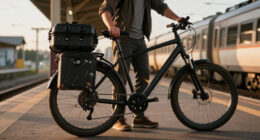
The best cyclist alert GPS devices depend on what you need alerted: the Garmin Varia RVR315 focuses on approaching vehicles, while a tracker such as the Orbit Velo is aimed at locating a bike through Apple Find My. For an all-around riding computer, the Garmin Edge 850 adds GPS ride functions and a compact format; the Edge 1050 and 1060 suit riders who want larger, premium computers. These devices are not interchangeable: radar, ride computers, and theft trackers solve different problems, with different battery, phone, and subscription tradeoffs. I compare all nine by their alert purpose, usability, mounting needs, and fit for common riding situations. Read on for the full breakdown and help matching a device to your priority.

Get bike and ride gear delivered free with Prime
- Fast, free delivery on millions of items
- Prime Video, Amazon Music and more included
- Member-only deals all year
Key Takeaways
- Radar and location tracking solve different problems: the Garmin Varia RVR315 alerts riders to approaching traffic, while Apple Find My trackers are designed to help locate a misplaced or stolen bike.
- The Garmin Edge computers are the most versatile ride-focused options: the Edge 850 balances compactness and premium functions, while the 1050 and 1060 prioritize a larger, higher-end computer experience.
- The CYCPLUS G1 is the simpler value-minded computer: it provides GPS ride data without matching the feature breadth of Garmin’s Edge models.
- Tracker battery and connectivity shape ownership: the Orbit Velo’s stated long battery life and IP67 protection favor low-maintenance location tracking, while the VITALGLOW hardwired 4G unit brings installation and cellular-service considerations.
- A tail-light tracker has a distinct two-job role: it combines visibility with Apple Find My compatibility, but a light-and-tracker combination is not a substitute for a dedicated rear radar or full-featured cycling computer.
| Bike GPS Tracker with Tail Light, Apple Find My Compatible, 5 Light Modes |  | Best Light-and-Locator Combo | Brand: Nilone | Compatibility: Apple Find My on iOS; Android not supported | Light modes: 5: steady, slow flash, quick flash, pulse, eco | VIEW LATEST PRICE | See Our Full Breakdown |
| Garmin Edge 850 Compact GPS Cycling Computer |  | Best Compact Navigation and Alert Computer | Display: 2.7-inch LCD touchscreen | Controls: Touchscreen and buttons | Battery life: Up to 12 hours in demanding use; up to 36 hours in battery saver mode | VIEW LATEST PRICE | See Our Full Breakdown |
| CYCPLUS G1 Wireless GPS Bike Computer | 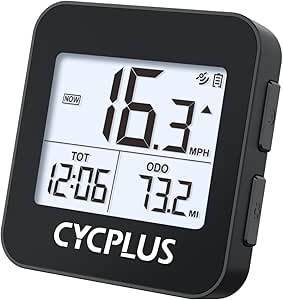 | Best for Basic, Long-Runtime Ride Tracking | Display: 2-inch FSTN LED | Battery capacity: 1,200 mAh lithium polymer | Battery life: More than 55 hours advertised; 50 hours listed average | VIEW LATEST PRICE | See Our Full Breakdown |
| Garmin Edge 1050 Premium Cycling Computer |  | Best Premium Ride Guidance | Screen: 3.5-inch capacitive LCD touchscreen | Battery life: Up to 20 hours in demanding use; up to 60 hours in battery saver mode | Navigation systems: GPS, GLONASS, and Galileo | VIEW LATEST PRICE | See Our Full Breakdown |
| Orbit Velo Bike Tracker with Apple Find My, IP67 Waterproofing, and 3-Year Battery |  | Best Low-Maintenance Apple Find My Tracker | Brand and model: Orbit ORB633 | Connectivity: Bluetooth | Compatible app and devices: Apple Find My; iPhone, iPad, Mac, and Apple Watch | VIEW LATEST PRICE | See Our Full Breakdown |
| VITALGLOW Hardwired 4G GPS Tracker for Vehicles |  | Best for Monitoring a Support Vehicle | Connectivity: 4G LTE | Power input: 9–95V direct vehicle power | SIM and data: Included | VIEW LATEST PRICE | See Our Full Breakdown |
| Garmin Varia RVR315 Cycling Rearview Radar |  | Best for Rear-Traffic Alerts | Sensor technology: Radar | Maximum detection range: 140 meters (153 yards) | Battery life: Up to 8 hours | VIEW LATEST PRICE | See Our Full Breakdown |
| Garmin Edge 540 Compact GPS Cycling Computer |  | Best for Long-Ride Navigation | Screen: 2.6-inch LCD, 246 x 322 resolution | Controls: Buttons | Mounting: Handlebar mount | VIEW LATEST PRICE | See Our Full Breakdown |
| Garmin Edge 1060 Premium GPS Cycling Computer |  | Best Premium GPS Computer | Display and controls: Color touchscreen and physical buttons | Battery life: Up to 20 hours in demanding use; up to 60 hours in battery saver mode | Navigation: Preloaded bike-specific maps and advanced route planning | VIEW LATEST PRICE | See Our Full Breakdown |
| cyclist alert GPS device | Battery life | Weight | Connectivity | Mounting |
|---|---|---|---|---|
| Bike GPS Tracker with Tail Lig | Up to 60 hours | 30 g | — | — |
| Garmin Edge 850 Compact GPS Cy | Up to 12 hours in demanding use; up to 36 hours in battery saver mode | 3.9 ounces | Bluetooth, Wi-Fi, and USB | Handlebar mount |
| CYCPLUS G1 Wireless GPS Bike C | More than 55 hours advertised; 50 hours listed average | 70 g | Wireless | Handlebar mount |
| Garmin Edge 1050 Premium Cycli | Up to 20 hours in demanding use; up to 60 hours in battery saver mode | 5.7 ounces | Bluetooth, USB, and Wi-Fi | Handlebar mount |
| Orbit Velo Bike Tracker with A | Up to 3 years | 60 g | Bluetooth | — |
| VITALGLOW Hardwired 4G GPS Tra | — | 2 ounces | 4G LTE | — |
| Garmin Varia RVR315 Cycling Re | Up to 8 hours | 1.76 ounces | — | Seatpost mount |
| Garmin Edge 540 Compact GPS Cy | Up to 26 hours; up to 42 hours in battery saver mode | 2.8 ounces | Bluetooth, Wi-Fi, and USB | Handlebar mount |
| Garmin Edge 1060 Premium GPS C | Up to 20 hours in demanding use; up to 60 hours in battery saver mode | — | Compatible smartphone connection; Garmin Messenger and Garmin Connect app features | — |
More Details on Our Top Picks
Bike GPS Tracker with Tail Light, Apple Find My Compatible, 5 Light Modes
I’d choose the Nilone Bike GPS Tracker with Tail Light when a rider wants a locator built into something useful on every ride. Its Apple Find My compatibility adds a way to locate the bike through Apple devices, while the five rear-light modes and visibility up to 215 meters serve a separate, immediate safety purpose. Compared with the Orbit Velo, Nilone also works as a rechargeable tail light, but its battery life is measured in hours rather than Orbit’s stated multi-year span. The tradeoff is platform restriction: Android is not supported, and Find My is not the same as a dedicated live cellular GPS tracker. Its IPX6 rating suits wet rides but does not claim protection against submersion. I’d pick it for an Apple user who wants one compact rear-mounted accessory, not for cross-platform households.
Pros:- Combines a tail light with Apple Find My compatibility.
- Five lighting modes and visibility up to 215 meters in low-light conditions.
- Up to 60 hours of battery life with USB-C recharging.
- Lightweight 30 g body includes a seatpost mount and silicone strap.
Cons:- Locator does not support Android devices.
- Find My compatibility does not provide dedicated cellular GPS tracking.
- IPX6 water resistance is not a submersion rating.
Best for: Apple-device riders who want a rechargeable tail light and a Find My-compatible bike locator in one compact seatpost-mounted unit.
Not ideal for: Android users, or riders who need continuous cellular GPS tracking or protection rated for submersion.
- Brand:Nilone
- Compatibility:Apple Find My on iOS; Android not supported
- Light modes:5: steady, slow flash, quick flash, pulse, eco
- Light visibility:Up to 215 meters in low-light conditions
- Battery life:Up to 60 hours
- Charging port:USB Type-C
- Water resistance:IPX6
- Weight:30 g
- SIM card / monthly fee:Not required / none
Our verdict“Choose Nilone if you use Apple devices and want a locator that doubles as a rechargeable rear light, but skip it if you need Android support or live cellular tracking.”
Garmin Edge 850 Compact GPS Cycling Computer
The Garmin Edge 850 is my pick for riders who want a compact cycling computer that combines route guidance with on-ride alerts. Its preloaded road, gravel, and trail maps, multi-band GPS, and weather and road-hazard alerts give it a broader navigation role than the CYCPLUS G1, which focuses on basic ride metrics. A 2.7-inch touchscreen is backed by buttons, giving riders an alternative way to operate it when touch controls are inconvenient. The built-in speaker adds navigation prompts and a bike bell. The tradeoff is that some connected functions need a smartphone and Garmin Connect, while fueling guidance depends on compatible sensors. Its battery reaches up to 12 hours in demanding use, shorter than the CYCPLUS’s advertised runtime; battery saver extends the Edge 850 to 36 hours. This is a capable alert-and-navigation choice, not a simple, long-runtime metrics display.
Pros:- Preloaded road, gravel, and trail maps support varied routes.
- Multi-band GPS supports positioning across GPS, GLONASS, and Galileo.
- Touchscreen and physical buttons offer two control methods.
- Weather and road-hazard alerts, navigation prompts, and a bike bell add ride context.
Cons:- Battery life is up to 12 hours in demanding use, below the CYCPLUS G1’s advertised runtime.
- Some connected features require a compatible smartphone and Garmin Connect.
- Fueling guidance requires compatible power and heart rate sensors.
Best for: Road, gravel, and trail riders who want mapped navigation, connected hazard alerts, and training guidance in a compact handlebar computer.
Not ideal for: Riders who mainly need basic distance and time tracking, want minimal setup, or prioritize long runtime in demanding use.
- Display:2.7-inch LCD touchscreen
- Controls:Touchscreen and buttons
- Battery life:Up to 12 hours in demanding use; up to 36 hours in battery saver mode
- GPS:Multi-band; supports GPS, GLONASS, and Galileo
- Maps:Preloaded road, gravel, and trail maps, including Trailforks maps
- Connectivity:Bluetooth, Wi-Fi, and USB
- Audio:Built-in speaker
- Mounting:Handlebar mount
- Weight:3.9 ounces
Our verdict“Choose the Edge 850 if you want compact mapped navigation and connected ride alerts; choose a simpler computer if basic metrics and longer advertised runtime matter more.”
CYCPLUS G1 Wireless GPS Bike Computer
I’d recommend the CYCPLUS G1 to riders who want GPS-based ride records without stepping up to the mapping and alert features of the Garmin Edge 850. It tracks ride time, distance, total riding time and mileage, clock, and altitude on a 2-inch glare-free FSTN display. Automatic backlighting helps keep the screen readable as light changes, while its wireless design avoids handlebar cable clutter. The advertised battery life exceeds 55 hours, though the listed average is 50 hours, so I’d treat the lower figure as the safer expectation. That runtime gives it a clear advantage over the Edge 850 in demanding-use mode, but the G1 does not offer the Edge’s preloaded maps or described weather and road-hazard alerts. Its sleep mode activates after 10 minutes of inactivity, which may interrupt tracking if the ride includes long stops. This is a focused ride computer, not a full alert-and-navigation hub.
Pros:- GPS records ride time, distance, mileage, and altitude.
- Glare-free display with automatic backlighting supports varied lighting conditions.
- IPX6 rating suits rainy rides.
- Wireless design and a 1,200 mAh battery reduce cable clutter and charging frequency.
Cons:- Battery claims differ: more than 55 hours advertised versus 50 hours listed as average.
- Does not include the mapped navigation and connected alert features described for the Garmin Edge 850.
- Enters sleep mode after 10 minutes of inactivity.
Best for: Cyclists who want straightforward GPS ride metrics, a readable screen, and extended battery life without needing route maps or connected alerts.
Not ideal for: Riders who need turn-by-turn mapping, road-hazard alerts, or a computer with more advanced training and smartphone-connected features.
- Display:2-inch FSTN LED
- Battery capacity:1,200 mAh lithium polymer
- Battery life:More than 55 hours advertised; 50 hours listed average
- Connectivity:Wireless
- Mounting:Handlebar mount
- Water resistance:IPX6
- Weight:70 g
- Dimensions:2.36 × 0.98 × 2.24 inches
- Warranty:Two years
Our verdict“Pick the CYCPLUS G1 for basic GPS metrics and long stated runtime, but choose the Garmin Edge 850 if maps and connected alerts are a priority.”
Garmin Edge 1050 Premium Cycling Computer
For riders who want a large, feature-rich screen for route planning and ride guidance, the Garmin Edge 1050 is the premium choice here. Its 3.5-inch color touchscreen gives maps and performance information more room than the compact Edge 850’s 2.7-inch display, while up to 20 hours in demanding use and 60 hours in battery saver mode make it better suited to longer outings than the Edge 850’s stated demanding-use runtime. The built-in speaker handles navigation prompts and a bike bell, and Garmin Pay can add a payment option when a bank is supported. Those benefits come with more size and weight: at 5.7 ounces, it is heavier than the Edge 850. Some group-ride and safety features depend on a smartphone and Garmin Connect; personalized training needs compatible sensors. I’d choose it for screen space and extended ride tools, not for a compact, low-complexity setup.
Pros:- Large 3.5-inch color touchscreen supports on-device maps and course creation.
- Up to 20 hours in demanding use and up to 60 hours in battery saver mode.
- GPS navigation, training features, and climb and power guidance provide detailed ride context.
- Built-in speaker provides navigation prompts and a bike bell.
Cons:- At 5.7 ounces, it is heavier than the compact Garmin Edge 850.
- Some group ride, training, and safety features require a compatible smartphone and Garmin Connect.
- Personalized training and Garmin Pay depend on compatible sensors and a supported bank.
Best for: Frequent riders who want a large on-device map, extensive ride and training tools, and longer battery options for extended outings.
Not ideal for: Cyclists who prioritize a lightweight, compact computer or want safety and training functions without smartphone, app, or sensor dependencies.
- Screen:3.5-inch capacitive LCD touchscreen
- Battery life:Up to 20 hours in demanding use; up to 60 hours in battery saver mode
- Navigation systems:GPS, GLONASS, and Galileo
- Maps:North America
- Connectivity:Bluetooth, USB, and Wi-Fi
- Storage:64 GB
- Audio:Built-in speaker
- Mounting:Handlebar mount
- Weight:5.7 ounces
Our verdict“Choose the Edge 1050 if you want a large map display and extensive ride guidance with long battery-saver runtime, but skip it if compactness is your priority.”
Orbit Velo Bike Tracker with Apple Find My, IP67 Waterproofing, and 3-Year Battery
The Orbit Velo makes the most sense for Apple users who want a dedicated bike locator that can stay mounted without frequent charging. Its replaceable battery rated for up to three years is a major contrast with the Nilone tracker-light, which needs recharging and also serves as a tail light. Orbit’s IP67 rating adds stronger stated water protection than Nilone’s IPX6, while security bolts and a special tool help secure the bottle-cage installation. This is a Bluetooth tracker using Apple Find My, not a cellular GPS device, so it depends on Apple’s Find My ecosystem rather than offering the mapped ride guidance and alerts of the Garmin Edge 850. The bottle-cage mounting position also limits placement, and the tracker weighs 60 g. I’d favor Orbit for low-maintenance locating and wet-weather protection, but not for Android support or active route monitoring.
Pros:- Works with Apple Find My across compatible Apple devices.
- Replaceable battery is rated for up to three years.
- IP67-rated design offers protection against wet conditions.
- Includes security bolts, a special tool, adhesive, and cable ties.
Cons:- Designed for Apple’s Find My ecosystem rather than Android.
- Bluetooth Find My tracking is not dedicated cellular GPS tracking or a cycling navigation system.
- Bottle-cage mounting limits where it can be installed.
Best for: Apple users who want a discreet, bottle-cage-mounted bike locator with long stated battery life and stronger water protection.
Not ideal for: Android users, riders without a bottle-cage mounting point, or anyone needing cellular live tracking, route guidance, or an integrated safety light.
- Brand and model:Orbit ORB633
- Connectivity:Bluetooth
- Compatible app and devices:Apple Find My; iPhone, iPad, Mac, and Apple Watch
- Battery life:Up to 3 years
- Battery type:Replaceable
- Water resistance:IP67
- Mounting location:Bottle cage
- Dimensions:2.95 × 1.1 × 0.37 inches
- Weight:60 g
Our verdict“Choose the Orbit Velo for low-maintenance Apple Find My locating and IP67 protection, but choose the Nilone if you also want a tail light.”
VITALGLOW Hardwired 4G GPS Tracker for Vehicles
The VITALGLOW is best suited to tracking a car or support vehicle, not to alerting a cyclist about traffic approaching from behind. Its hardwired power and included 4G data support ongoing vehicle location tracking without routine charging or a recurring subscription, while up to 180 days of trip history helps review where a vehicle has been. Compared with the Garmin Varia RVR315, which is designed to warn a rider about approaching vehicles during a ride, VITALGLOW tracks the vehicle itself and does not provide a cyclist-facing rear-approach radar alert. Its geofence, speeding, and tamper alerts can still help a team coordinate vehicle movements. The tradeoff is installation: it needs vehicle wiring, and ignition alerts depend on connecting the optional ACC wire. GPS and cellular coverage also affect location performance.
Pros:- Included 4G SIM and data support tracking without recurring subscription or activation fees.
- Vehicle-powered operation avoids routine recharging.
- Up to 180 days of trip history helps review vehicle movements.
- Geofence, speeding, power-disconnection, and tampering alerts support remote monitoring.
Cons:- Hardwired installation may require professional help for buyers unfamiliar with vehicle wiring.
- It tracks a vehicle rather than detecting cars approaching a cyclist from behind.
- Ignition activity alerts require connecting the optional ACC wire, and location depends on GPS and cellular coverage.
Best for: Cyclists, families, or support crews who want ongoing location and trip-history monitoring for a car or other compatible vehicle.
Not ideal for: Riders seeking a bicycle-mounted device that detects approaching traffic and gives real-time on-bike alerts.
- Connectivity:4G LTE
- Power input:9–95V direct vehicle power
- SIM and data:Included
- Trip history:Up to 180 days
- Alerts:Speeding, geofence entry or exit, power disconnection or tampering, and ignition activity with ACC wire connected
- Compatible apps:Android, iOS, and web dashboard
- Dimensions:3.5 x 1.5 x 0.75 inches
- Weight:2 ounces
Our verdict“Choose VITALGLOW to monitor a support vehicle or car, but choose the Garmin Varia RVR315 for cyclist-facing traffic alerts.”
Garmin Varia RVR315 Cycling Rearview Radar
For a cyclist alert device that directly addresses approaching traffic, the Garmin Varia RVR315 is the clearest fit in this group. Its radar detects vehicles from up to 140 meters away, giving a rider advance notice rather than simply recording a route or locating a bike. Pair it with a compatible phone, Edge computer, wearable, or radar display to receive visual, tone, and vibration alerts through the Varia app or compatible devices. Unlike the Garmin Edge 540, which focuses on navigation and ride data, the RVR315 is built around rear-approach awareness. That focused role also means it is not a standalone GPS cycling computer: riders need a compatible display device to see or hear alerts. Its up-to-eight-hour battery life may also fall short for longer rides without a recharge.
Pros:- Radar detects approaching vehicles up to 140 meters away.
- Varia app can provide visual, tone, and vibration alerts.
- Pairs with compatible Edge computers, smartphones, select Garmin wearables, and radar display units.
- Compact seatpost-mounted design weighs 1.76 ounces.
Cons:- Requires a compatible device or radar display unit to receive alerts.
- Up-to-eight-hour battery life requires charging for longer outings.
- It does not provide the mapping and full ride-computer functions of the Garmin Edge 540.
Best for: Road cyclists who want advance warning of vehicles approaching from behind and already have, or plan to use, a compatible phone or Garmin device.
Not ideal for: Riders who want one device for mapping, ride recording, and alerts, or who need battery life beyond eight hours between charges.
- Sensor technology:Radar
- Maximum detection range:140 meters (153 yards)
- Battery life:Up to 8 hours
- Mounting:Seatpost mount
- Compatible devices:Smartphones, compatible Edge bike computers, select Garmin wearables, and radar display units
- Weight:1.76 ounces
- Dimensions:6 × 3 × 3 inches
- Included items:RVR315, mounting hardware, power cable, and documentation
Our verdict“Choose the RVR315 if rear-traffic warnings are your priority and you have a compatible device for the alerts.”
Garmin Edge 540 Compact GPS Cycling Computer
The Garmin Edge 540 suits riders who want a compact GPS computer for route guidance and ride data, rather than a dedicated vehicle-approach warning system. Multi-band GNSS supports positioning, while cycling maps and climb planning help with route decisions; its button controls are also practical when touch operation is inconvenient. Battery life reaches up to 26 hours in demanding use or 42 hours in battery saver mode, giving it a longer stated endurance than the Garmin Varia RVR315, though the Varia serves a different purpose by detecting traffic behind the rider. The Edge 540’s 2.6-inch display keeps the unit compact but offers less screen area than the premium Garmin Edge 1060. Some training insights also depend on compatible sensors, so this is a better choice for navigation than for sensor-free performance coaching.
Pros:- Multi-band GNSS supports enhanced positioning accuracy.
- Cycling maps and climb planning aid route choices.
- Battery life reaches up to 42 hours in battery saver mode.
- Button controls suit varied riding conditions.
Cons:- The 2.6-inch display is smaller than the screen on the Garmin Edge 1060.
- Some coaching and performance features require a compatible power meter and heart rate monitor.
- It does not provide the RVR315’s dedicated rear-approaching-vehicle radar alerts.
Best for: Road and gravel riders who want a compact, button-operated GPS computer with mapping and long battery life for extended rides.
Not ideal for: Cyclists whose main need is radar-based warning of approaching vehicles, or riders who prefer a large touchscreen and do not want to add compatible sensors for some training functions.
- Screen:2.6-inch LCD, 246 x 322 resolution
- Controls:Buttons
- Mounting:Handlebar mount
- Battery life:Up to 26 hours; up to 42 hours in battery saver mode
- Storage:16 GB
- Connectivity:Bluetooth, Wi-Fi, and USB
- Satellite navigation:GPS with multi-band GNSS
- Weight:2.8 ounces
Our verdict“Choose the Edge 540 for compact, long-lasting GPS navigation and ride data, not as a substitute for a rear radar alert.”
Garmin Edge 1060 Premium GPS Cycling Computer
The Garmin Edge 1060 is the premium choice here for riders who want a large, feature-rich computer to handle navigation, training, and connected ride functions. Its color touchscreen works alongside physical buttons, while bike-specific maps, route planning, voice controls, and audio prompts make it more versatile as an on-bike interface than the compact, button-only Garmin Edge 540. It also supports GroupRide features such as in-ride messaging and live rider locations when paired with a compatible smartphone and app. Those extras do not make it a rear-facing radar: the Garmin Varia RVR315 remains the more direct option for detecting approaching vehicles. Battery life reaches up to 20 hours in demanding use or 60 hours in battery saver mode, but smartphone dependence for connected functions and sensor requirements for some training features add setup and compatibility limits.
Pros:- Combines a color touchscreen with physical buttons.
- Preloaded bike-specific maps support route planning across road, gravel, and trail rides.
- Battery life reaches up to 60 hours in battery saver mode.
- Built-in microphone and speaker enable voice controls and audio prompts.
Cons:- Messaging, hazard reports, and GroupRide features require a compatible smartphone and app.
- Some training functions require a compatible heart rate monitor and/or power meter.
- It is a navigation and training computer, not a substitute for the Garmin Varia RVR315’s rear-traffic radar.
Best for: Frequent road, gravel, and trail riders who want a premium touchscreen GPS computer with detailed mapping, voice features, and connected group-riding tools.
Not ideal for: Cyclists seeking a simple traffic-alert radar, riders who prefer a compact computer, or those who want messaging and group features without a compatible smartphone.
- Display and controls:Color touchscreen and physical buttons
- Battery life:Up to 20 hours in demanding use; up to 60 hours in battery saver mode
- Navigation:Preloaded bike-specific maps and advanced route planning
- Voice features:Built-in microphone for voice control and messaging; speaker for audio prompts and alerts
- Connectivity:Compatible smartphone connection; Garmin Messenger and Garmin Connect app features
- Training features:Garmin Coach plans, power guide, and real-time stamina insights
- GroupRide:In-ride messaging, live rider locations, climb leaderboards, and postride awards
- Compatibility requirements:Some training features require a compatible heart rate monitor and/or power meter
Our verdict“Choose the Edge 1060 for a premium, connected GPS computer, and pair it with a radar if rear-traffic alerts are also a priority.”
How We Picked
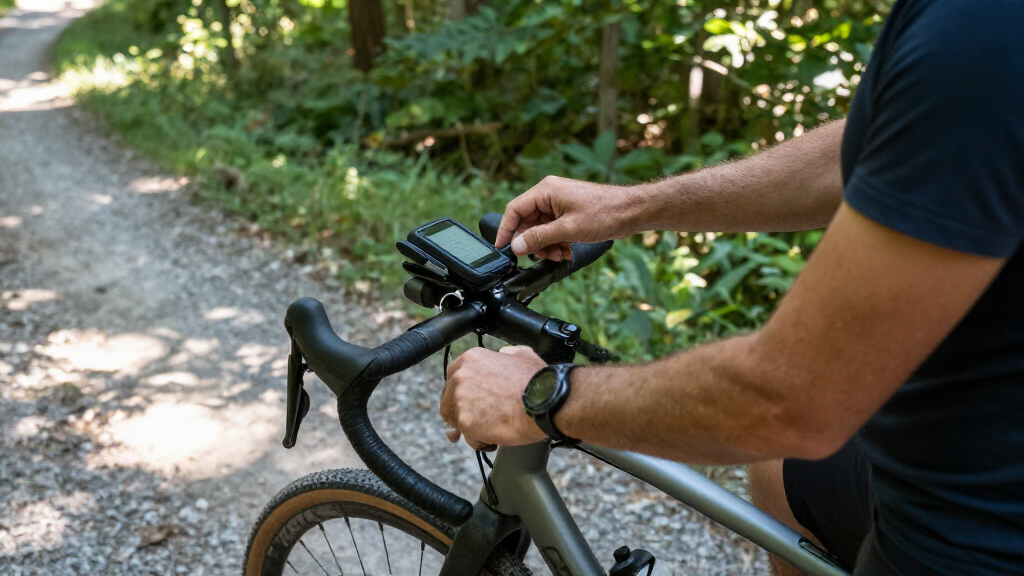
I grouped the nine devices by the alert or riding need they address: vehicle awareness, bike location, and GPS ride computing. I compared each option on the usefulness of its core alert, expected ease of setup and everyday use, mounting or installation demands, weather and battery considerations, and how well its feature set fits its intended rider. This keeps a dedicated radar from being judged as if it were a navigation computer, and a theft tracker from being treated as a live safety system.
The ranking favors devices with a clear cycling use case, practical operation on a ride, and fewer compromises for their intended role. Garmin’s Edge computers rank highly for riders seeking a broad set of ride functions, while the Varia leads for a focused traffic alert. Simpler trackers and computers rank lower for riders who need more than their narrow purpose; the hardwired 4G tracker is a specialist choice because installation and cellular requirements make it less convenient for ordinary bicycle use. Buyers should treat compatibility, network coverage, and included services as details to verify for their setup.
| cyclist alert GPS device | Mounting |
|---|---|
| Bike GPS Tracker with Tail Lig | — |
| Garmin Edge 850 Compact GPS Cy | Handlebar mount |
| CYCPLUS G1 Wireless GPS Bike C | Handlebar mount |
| Garmin Edge 1050 Premium Cycli | Handlebar mount |
| Orbit Velo Bike Tracker with A | — |
| VITALGLOW Hardwired 4G GPS Tra | — |
| Garmin Varia RVR315 Cycling Re | Seatpost mount |
| Garmin Edge 540 Compact GPS Cy | Handlebar mount |
| Garmin Edge 1060 Premium GPS C | — |
Factors to Consider When Choosing Best Cyclist Alert GPS Devices
Before choosing, decide what you want a device to alert you about. A single unit rarely provides every kind of awareness: detecting traffic, recording a ride, guiding a route, and helping recover a stolen bike call for different sensors and connections. These factors can help you avoid paying for features that do not address your main concern.
Choose the Alert You Actually Need
Start by naming the event you want to know about: a vehicle approaching from behind, a route instruction, or a bike that has moved from its parked location. A rear radar is built around traffic awareness, while a GPS computer centers on ride data and navigation; a Find My-style tag is intended for location recovery. Treating these as equivalent can leave a safety gap, especially if you expect a theft tracker to warn you about traffic in real time. If you have several needs, decide which one matters most on every ride and add a second device only if it fills a distinct role. This also helps avoid redundant hardware and notifications.
Check Phone, Platform, and Network Dependencies
Some alert features depend on a compatible phone, an account, nearby devices, or cellular coverage. Apple Find My compatibility is useful within that ecosystem, but buyers should check how location updates work where they park and ride rather than assuming continuous GPS tracking. A 4G tracker may need an active service plan and reliable coverage, while a cycling computer may pair with sensors or a phone for added functions. Confirm supported devices, data requirements, and any recurring service needs before buying. If you want alerts when your phone is away or out of service, verify that the device can provide them independently.
Plan for Battery Life and Charging Habits
Battery claims can describe very different patterns of use, so compare them with how often you ride and how long you leave a bike parked. A bright tail light, screen-heavy computer, radar, and low-power tracker have different energy demands. Frequent charging is manageable for a rider who already charges a computer after long rides, but less appealing for a discreet tracker mounted on a commuter bike. Think about whether you can remove the device for charging and whether doing so affects theft protection or readiness. A device that stays powered and mounted consistently may be more useful than one with more features that you regularly forget to charge.
Match Installation to Your Bike and Routine
Mounting is part of the buying decision, not a minor detail. A removable computer needs a stable, visible position; a radar needs a clear rear-facing placement; and a hardwired tracker may call for electrical access and installation work. Check whether the mount suits your handlebar, seatpost, frame, or light setup before ordering. If you switch bikes, move accessories often, or need to remove gear when parking, a simple removable device may fit better than a permanent installation. Also think about whether the device is easy to inspect and charge without changing your normal routine.
Separate Ride Navigation from Theft Recovery
A GPS cycling computer can record routes and support ride guidance, but that does not automatically make it a dependable anti-theft tracker. A location tag can help find a bike through a supported network, yet it may not offer route planning, live traffic alerts, or the same ride metrics. Buyers often overestimate what one GPS label means, so check which features work while riding and which apply when the bike is parked. For theft concerns, use a tracker as one layer alongside a lock and sensible parking habits. For ride planning, prioritize screen readability, controls, and route functions instead of relying on a tracker’s location feature.
Pay for Useful Capability, Not the Largest Feature List
A larger, higher-end cycling computer can make sense if you regularly use navigation, training data, or a more expansive display. It may be unnecessary for riders who only want basic ride recording or a focused rear-traffic alert. On the other hand, the least complicated device is not always the best value if it lacks the specific alert you need. List the functions you will use every week, then compare the setup, charging, and service demands attached to them. Choosing by purpose usually produces a better fit than choosing by screen size or the number of advertised features.
Frequently Asked Questions
Can one device warn me about traffic and help me recover a stolen bike?
Usually, those are separate functions. Rear radar is designed to identify approaching vehicles, while a location tracker is aimed at helping find a parked or stolen bike through its supported network or cellular connection. A cycling computer may add navigation and ride data, but it should not be assumed to replace either function. If both concerns matter, check whether a paired setup is practical on your bike and whether you are willing to manage multiple batteries and mounts. Treat a tracker as an added recovery aid, not a replacement for a secure lock.
Is Apple Find My compatibility enough for tracking a bike?
It can be useful if you already use Apple devices and the tracker’s location updates suit where your bike is parked. Find My-style location depends on the supported network and should not be confused with a dedicated live cellular GPS service. Check the tracker’s battery, attachment method, and how easily it could be spotted or removed. Also consider whether you need alerts while riding or only a way to locate the bike after it has moved. For continuous tracking expectations, review the exact service and coverage requirements before choosing.
Should I choose a cycling computer or a basic GPS bike computer?
Choose based on how much guidance and ride information you need, not on the word GPS alone. A simpler computer such as the CYCPLUS G1 may suit riders who mainly want basic GPS ride data, while Garmin Edge models target buyers seeking a broader cycling-computer feature set. More features can mean a more involved interface and setup, so they are only useful if you plan to use them. For a new rider, prioritize clear controls and the functions you will use on routine rides. If your main concern is vehicle awareness, compare a radar rather than treating either computer as a traffic-alert device.
Does a hardwired 4G tracker make sense for a bicycle?
It can suit a bike setup where permanent installation is acceptable and cellular tracking is a priority, but it is less straightforward than a removable tag or cycling computer. Buyers should verify that the tracker can be powered and mounted appropriately on their bicycle, that the network works in their area, and whether a service plan is needed. Hardwiring can make charging less frequent, but installation and later removal may be more involved. For riders who move a device between bikes or want a quick setup, a removable option is usually simpler. Compare the practical installation demands with the tracking benefit before committing.
Is a premium Garmin Edge worth choosing over a compact model?
A premium Edge is more persuasive when you will make regular use of its larger display and broader ride features, particularly for route-focused or data-heavy riding. A compact model can be a better fit when handlebar space, a smaller screen, or simpler day-to-day use matters more. Think about visibility in your usual riding conditions and whether you want to read maps or mainly glance at ride data. More capability does not automatically make a safer alert device; a computer and a rear radar have different jobs. Match the computer to your riding habits, then add a dedicated alert device if traffic awareness is the priority.
Conclusion
Best overall for ride computing: I’d start with the Garmin Edge 850 for riders who want a compact, capable computer. Best value: the CYCPLUS G1 makes more sense for straightforward GPS ride data without the broader Edge feature set. Best premium: choose the Garmin Edge 1050 or 1060 if you want a larger, higher-end computer experience; compare their form and feature needs before deciding between them. Best for beginners: the G1 is the more approachable starting point for basic ride recording. For specific needs, the Garmin Varia RVR315 is the focused pick for rear-traffic alerts, the Orbit Velo suits Apple Find My-based bike location, and the tail-light tracker combines visibility with location features. The VITALGLOW hardwired 4G tracker is best reserved for buyers prepared for a more involved installation and cellular requirements. Choose by the alert you need most: traffic awareness, ride guidance, or bike recovery.