We’ve reviewed the top tripods and pier mounts for astrophotography in 2025, focusing on stability, portability, and precise tracking. Our picks include versatile mounts like the Sky-Watcher Star Adventurer GTI, heavy-duty extensions like the iOptron Mini Pier, and portable tripods such as the Vortex Optics Mountain Pass. Whether you’re a beginner or pro, there’s something here to enhance your stargazing setup. Keep exploring to find the perfect gear for your astrophotography adventures.
Key Takeaways
- The list covers a variety of tripods, mounts, and pier extensions suitable for different levels from beginner to professional astrophotographers.
- Features include portability, stability, payload capacity, and advanced tracking or GoTo capabilities for precise imaging.
- Expert reviews highlight top brands such as Sky-Watcher, iOptron, Celestron, and Vortex, emphasizing durability and versatility.
- Recommendations are based on use cases like travel, deep-sky imaging, and heavy-duty professional setups.
- The article provides comparative insights to help users select the best tripod or pier mount tailored to their astrophotography needs in 2025.
Sky-Watcher Star Adventurer GTI Mount Kit with Accessories
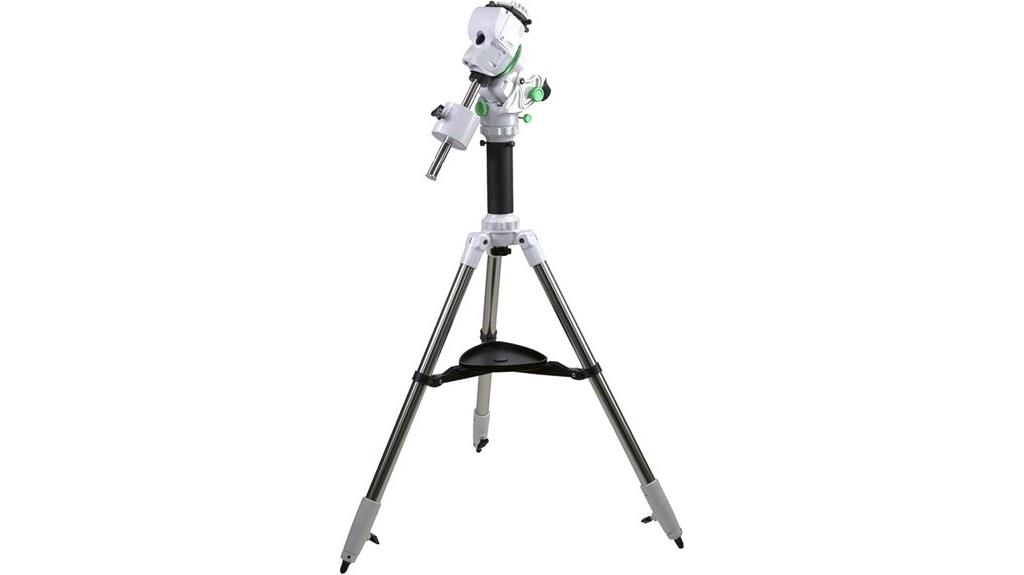
If you’re looking for a portable and user-friendly mount that can handle both beginner and intermediate astrophotography needs, the Sky-Watcher Star Adventurer GTI Mount Kit is an excellent choice. It’s lightweight, easy to set up, and offers full GoTo capability, making target acquisition straightforward. The built-in illuminated polar scope simplifies alignment, while Wi-Fi connectivity lets you control it with your smartphone via the SynScan Pro app. Supporting an 11-pound payload, it’s perfect for DSLR or mirrorless cameras with lenses or small telescopes. The kit includes everything you need, from the mount head to tripod and pier extension, making it versatile for travel and outdoor use.
Best For: amateur and intermediate astrophotographers seeking a portable, easy-to-use mount with full GoTo capabilities for capturing celestial objects with DSLR or small telescopes.
Pros:
- Lightweight and highly portable, ideal for travel and outdoor astrophotography
- Built-in illuminated polar scope and Wi-Fi connectivity simplify alignment and control via smartphone
- Supports multiple tracking modes, including lunar, solar, and sidereal, for versatile astrophotography
Cons:
- Limited counterweight capacity may require additional weights for heavier setups
- Some users experience issues with the polar scope cover falling off and software alignment delays
- Smaller payload capacity and design constraints may limit the use with larger or heavier equipment
iEXOS-100-2 PMC-Eight Astrophotography Tracker System Tripod and Mount
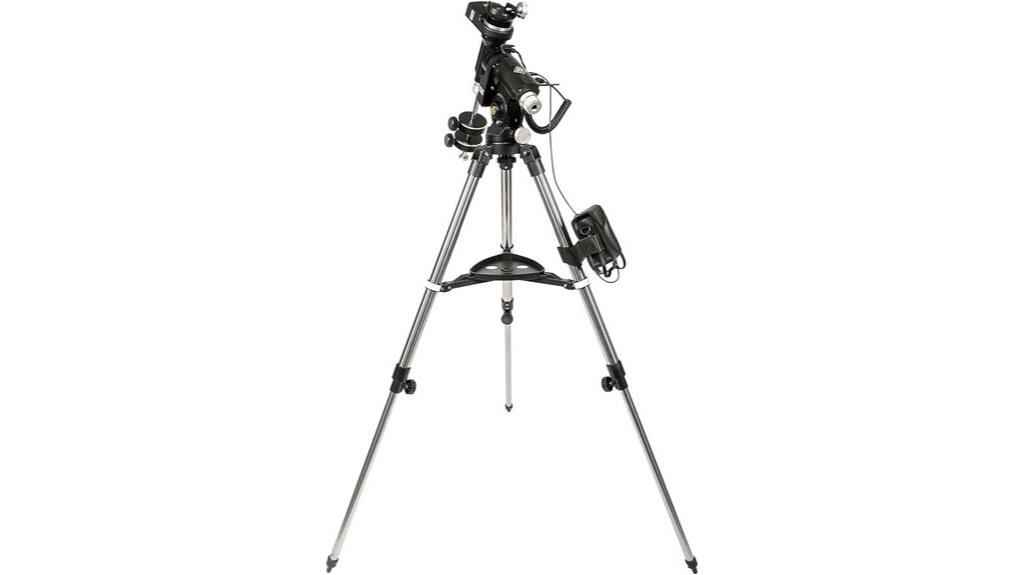
The iEXOS-100-2 PMC-Eight Astrophotography Tracker System Tripod and Mount stands out for its advanced multi-CPU architecture, making it ideal for serious astrophotographers who demand precise and reliable tracking. With eight independent CPUs, it offers exceptional responsiveness, efficiency, and stability, ensuring accurate control during long exposures. The system features clutched dual-axis worm gears and quiet stepper motor belt drives for smooth operation. Its quick polar alignment via a sight hole and altitude control simplifies setup. Controlled through the ExploreStars app with WiFi and Bluetooth, it provides seamless navigation and celestial object identification, making it a top choice for dedicated astrophotographers.
Best For: serious astrophotographers seeking precise, reliable tracking and easy setup for long-exposure imaging.
Pros:
- Advanced multi-CPU architecture ensures high responsiveness and stability
- Smooth operation with clutched dual-axis worm gears and quiet stepper motors
- Quick polar alignment with sight hole and altitude control simplifies setup
Cons:
- May be more complex and expensive than entry-level tracking systems
- Requires compatible devices and app setup for optimal operation
- Larger and heavier, potentially less portable for field use
Sky Watcher Star Adventurer Tripod
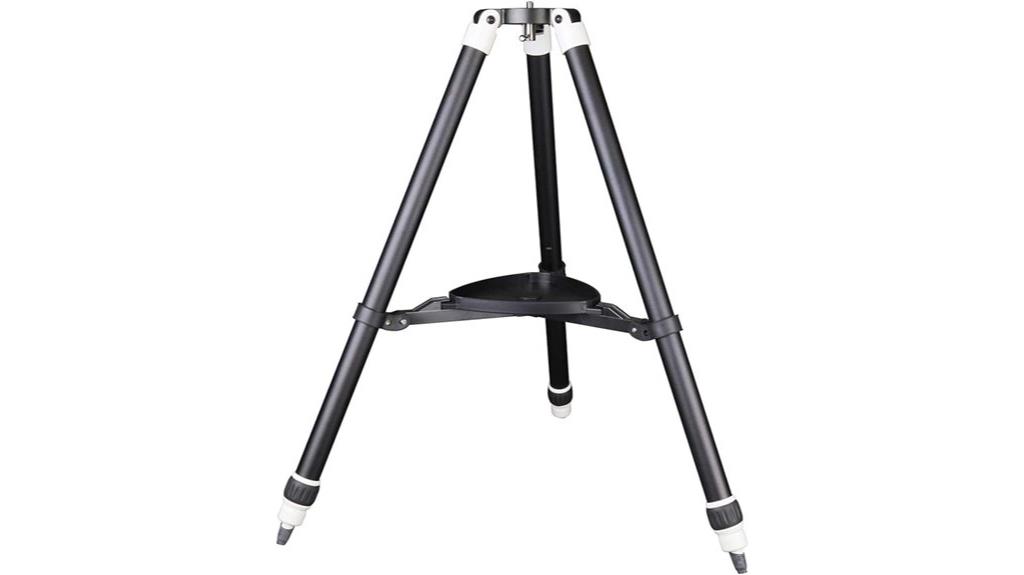
For astrophotographers seeking a lightweight yet durable tripod, the Sky Watcher Star Adventurer Tripod (S20555) stands out as an excellent choice. It measures 36 x 54 x 36 inches, weighs just under 5 pounds, and is compatible with popular mounts like the Star Adventurer Mini and GTi, AZ-GT series, and AZ5. Built from high-quality materials, it offers stability and minimal flexure, even in windy conditions. Its adjustable height and easy setup make it perfect for travel and fieldwork. Customers praise its reliability, support for various telescopes, and value. Slight tray misalignment is a minor issue compared to its overall performance and versatility.
Best For: astrophotographers and amateur astronomers seeking a lightweight, sturdy, and versatile tripod for travel and field use with various telescope setups.
Pros:
- Durable construction with high-quality materials ensuring stability and minimal flexure
- Lightweight design (under 5 pounds) makes it highly portable and easy to transport
- Compatible with multiple mounts and supports a range of telescopes and accessories
Cons:
- Slight tray misalignment, which is an intentional design feature, may affect ease of use for some users
- Limited maximum height adjustment compared to larger tripods
- Some users may find the setup process for leveling and stability requires extra adjustments
iOptron Mini Pier Tripod Extension for CEM60 and MiniTower Mounts

The iOptron Mini Pier Tripod Extension stands out as an essential upgrade for astrophotographers using CEM60 and MiniTower mounts, offering improved stability and seamless compatibility. Designed specifically for iOptron’s MiniTower series and compatible mounts like CEM60, it features a sturdy 5.7-inch pier diameter and 6-inch flange plates, ensuring a secure fit. Elevating your setup by 8 inches, it enhances viewing angles and reduces ground obstructions. Built from durable materials, it minimizes vibrations for sharper images. With precise alignment components, including pegs and an M12 center bolt, it guarantees stable, accurate polar alignment—making it a reliable addition to any astrophotography session.
Best For: amateur and professional astrophotographers seeking enhanced stability and precise alignment for their CEM60, MiniTower, and compatible mounts during astronomical observations and imaging sessions.
Pros:
- Provides increased stability and vibration reduction for clearer images and better observations
- Elevates the mount by 8 inches to improve viewing angles and reduce ground obstructions
- Includes precise alignment components like pegs and an M12 bolt for accurate polar alignment
Cons:
- May be heavier and bulkier to transport compared to standard mounts or tripods
- Compatibility limited to specific mounts; not suitable for all telescope setups
- Installation requires some assembly and alignment, which could be time-consuming for beginners
Sky-Watcher AZ-GTI Portable Computerized Mount

If you’re serious about mobile astrophotography, the Sky-Watcher AZ-GTI Portable Computerized Mount stands out as a top choice due to its lightweight, travel-friendly design. Weighing just 8.6 pounds, it’s easy to carry and set up anywhere. The adjustable aluminum tripod extends from 28 to 53 inches, offering flexible viewing heights. It supports an 11-pound payload, compatible with most telescopes and cameras. WiFi-enabled and app-controlled via Sky-Watcher SynScan Pro, it offers precise tracking with dual-encoder technology. Its rugged all-metal gears ensure smooth operation, and the built-in power options keep you mobile. It’s perfect for both observation and astrophotography on the go.
Best For: mobile amateur astronomers and astrophotographers seeking a lightweight, portable, and feature-rich computerized mount for observing and capturing celestial objects on the go.
Pros:
- Compact, travel-sized design weighing only 8.6 pounds for easy portability
- WiFi-enabled with app control via Sky-Watcher SynScan Pro for convenient operation
- Supports up to 11-pound payload, compatible with most telescopes and cameras
Cons:
- Limited payload capacity may restrict larger or heavier equipment
- Requires a smartphone or tablet for operation, which could be inconvenient in some situations
- External power source needed for extended use outside of battery capacity
iOptron SkyHunter Extension Pier and Tripod

The iOptron SkyHunter Extension Pier and Tripod stands out as an excellent choice for serious astrophotographers seeking stability and versatility. Its sturdy 1.25-inch stainless steel tripod supports a range of mounts, including SkyHunter, SkyGuider Pro, and SkyTracker Pro, plus cameras with 3/8-16 threads. The aluminum extension pier adds 7.5 inches of height, improving positioning and stability. Weighing 24 pounds, it’s built for durability and long-term use. Compatibility and precise dimensions make setup straightforward. With a solid customer rating of 4.7 stars, this gear offers reliable performance, making it a valuable addition to any astrophotography setup.
Best For: Serious astrophotographers seeking a durable, stable tripod extension to enhance their astrophotography setups with versatile mounting options.
Pros:
- Sturdy construction with 1.25-inch stainless steel tripod ensuring stability and longevity
- Compatible with a wide range of mounts including SkyHunter, SkyGuider Pro, and SkyTracker Pro, plus cameras with 3/8-16 threads
- Adds 7.5 inches of height for improved positioning and viewing flexibility
Cons:
- Heavy weight of 24 pounds may require effort to transport and set up
- Aluminum extension pier may be less durable compared to fully stainless steel options
- Higher price point due to premium materials and build quality
iOptron Tri-Pier for GoTo Mounts

Designed for astrophotographers who need reliable support, the iOptron Tri-Pier for GoTo mounts offers exceptional stability and load capacity, supporting up to 220 pounds. Its robust design minimizes vibrations, ensuring clearer images during long exposures. Despite its strength, it’s portable—weighing only 25.8 pounds with folded dimensions of 12.8 x 26 inches—making it easy to transport. The adjustable height from 31.5 to 42.5 inches and uneven ground range of 3.35 inches allow for versatile setups on various terrains. Compatible with 5.7-inch pier diameters and 150 mm top plates, it suits a wide range of GoTo mounts.
Best For: astrophotographers and astronomers seeking a stable, portable support solution for their GoTo mounts capable of handling heavy loads and uneven terrains.
Pros:
- Supports up to 220 lbs, accommodating various telescope setups
- Robust design minimizes vibrations for clearer images during long exposures
- Adjustable height and uneven ground range provide versatile setup options
Cons:
- Weighs 25.8 pounds, which may be cumbersome for some users to carry frequently
- Larger folded dimensions (12.8 x 26 inches) could be less convenient for tight storage spaces
- Compatibility limited to mounts with 5.7-inch pier diameters and 150 mm top plates
Celestron Heavy Duty Alt-Azimuth Tripod

For astrophotographers seeking a rugged, portable tripod that delivers stable support, the Celestron Heavy Duty Alt-Azimuth Tripod stands out. Its sturdy aluminum legs support up to 11 lbs, providing excellent stability with minimal vibrations. Adjustable from 30.9 to 49.2 inches, it easily fits different heights and viewing angles. Weighing only 7.8 lbs and folding to 32.3 inches, it’s lightweight and portable, perfect for outdoor use. The metal alt-azimuth head offers smooth control with friction clutch and azimuth lock, while the center brace enhances stability. It supports small telescopes, cameras, and spotting scopes, making it a versatile choice for casual astronomy.
Best For: casual astronomers, outdoor enthusiasts, and photographers seeking a stable, portable tripod for small telescopes and spotting scopes.
Pros:
- Robust aluminum legs support up to 11 lbs for stable viewing and imaging
- Adjustable height from 30.9 to 49.2 inches to accommodate different users and angles
- Lightweight at 7.8 lbs with a compact folded size of 32.3 inches for easy transportation
Cons:
- Lacks coarse altitude control, which may limit precise adjustments during extended use
- Limited declination movement and small parts like broken covers can affect durability over time
- No bubble level or rubber feet, potentially reducing stability on uneven terrain
Sky-Watcher AZ5 Telescope Mount
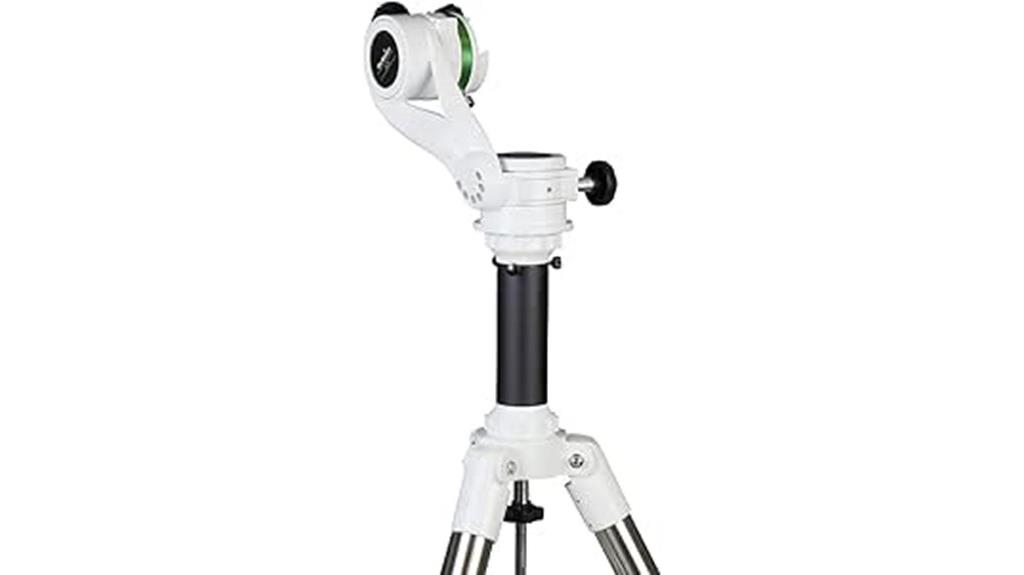
If you’re new to astrophotography or looking for an affordable, reliable mount, the Sky-Watcher AZ5 stands out as an excellent choice. It’s lightweight, with a sturdy cast aluminum build, supporting scopes up to 15 pounds. Its adjustable steel tripod legs provide stability, and the geared slow-motion controls enable precise manual tracking. Perfect for small to medium-sized telescopes, it offers vibration-free operation and smooth movement. Despite some minor manufacturing issues, users praise its durability and ease of use. Weighing around 12 pounds, it’s portable and ideal for beginners wanting reliable performance without breaking the bank.
Best For: beginners and amateur astronomers seeking a lightweight, reliable, and easy-to-use mount for visual astronomy and terrestrial observations.
Pros:
- Sturdy cast aluminum construction provides durability and stability.
- Smooth slow-motion controls allow precise manual tracking of celestial objects.
- Portable design with adjustable steel tripod legs makes it ideal for on-the-go use.
Cons:
- Some users have reported manufacturing issues such as threading problems with the extension shaft.
- Limited weight capacity of 15 pounds may restrict larger or heavier scopes.
- Slightly higher price point compared to basic entry-level mounts.
DaVoice 44mm Tripod Quick Release Plate Camera Mounting Adapter
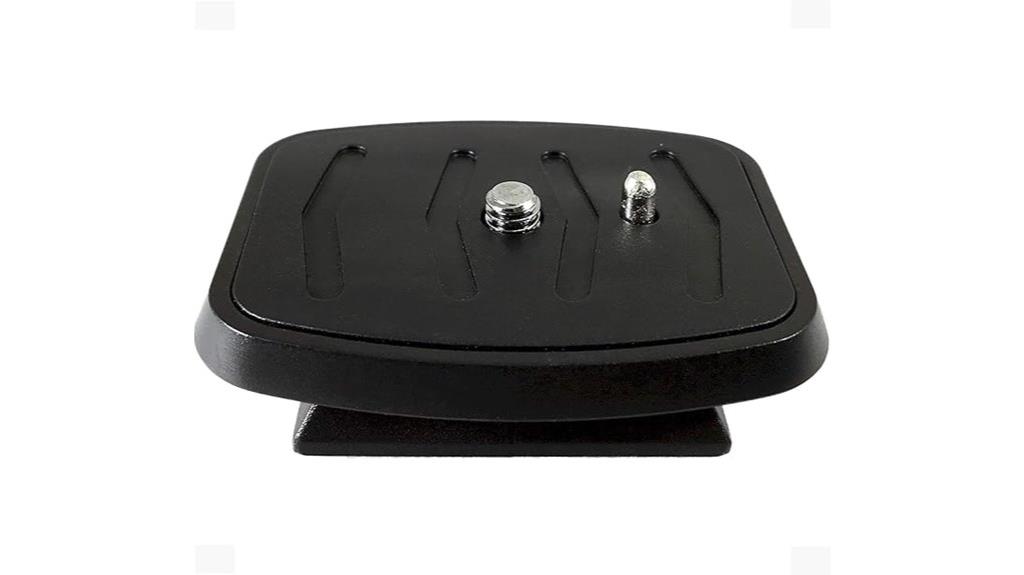
The DaVoice 44mm Tripod Quick Release Plate Adapter stands out as an essential accessory for astrophotographers who need fast, secure camera mounting on compatible tripods. Its 44mm x 44mm square tapered base fits easily into tripod mounts measuring 1 3/4 inches across, making it compatible with Amazon Basics, Velbon, Sunpak, and other brands. Made of durable plastic with a rubber top, it includes a metal pin and thumb screw for a reliable, tool-free attachment. Customers praise its ease of use and solid fit, though some note fragility over time. Overall, it’s a practical, cost-effective upgrade for extending older tripod capabilities.
Best For: DSLR, mirrorless, and smartphone photographers or astrophotographers seeking quick, secure tripod mounting for compatible tripods.
Pros:
- Easy to attach and detach without tools, saving time during shoots
- Compatible with a variety of tripods, including Amazon Basics and Velbon models
- Provides a secure, stable mount with high-quality materials and design
Cons:
- Some users report fragility or breakage of the plate with frequent use
- Proper measurement of tripod mount openings is essential to ensure fit, which can be challenging
- Price may be slightly higher compared to generic or lower-quality quick release plates
NEEWER 72 Inch Camera Tripod Monopod with Center Column and Ball Head

The NEWEER 72-inch Camera Tripod Monopod with Center Column and Ball Head stands out as a versatile choice for astrophotographers who need stability and adjustable height. Made from durable aluminum alloy, it supports gear up to 33 pounds, perfect for DSLR cameras and studio lights. Its adjustable legs extend up to 72 inches and fold down to 26 inches, while the flexible center column can tilt at various angles or be reversed for macro shots. The included panoramic ball head offers smooth movement and quick mounting with an Arca-type plate. Although hefty, it’s highly stable, making it ideal for steady astrophotography and overhead shots in studio or content creation setups.
Best For: photographers and videographers seeking a sturdy, adjustable tripod suitable for astrophotography, overhead shots, and studio setups.
Pros:
- Durable aluminum alloy construction supports up to 33 pounds for versatile gear compatibility
- Flexible center column allows for various angles and macro shooting, enhancing creative options
- Stable design with high-quality build and smooth panning, ideal for content creation and studio work
Cons:
- Hefty weight may reduce portability and make outdoor travel cumbersome
- Some users report knob grip slipping or limited angle adjustments due to knob design
- Large size and weight can be inconvenient for quick setup or outdoor trekking
Sky Watcher Star Adventurer GTI Mount Head Kit
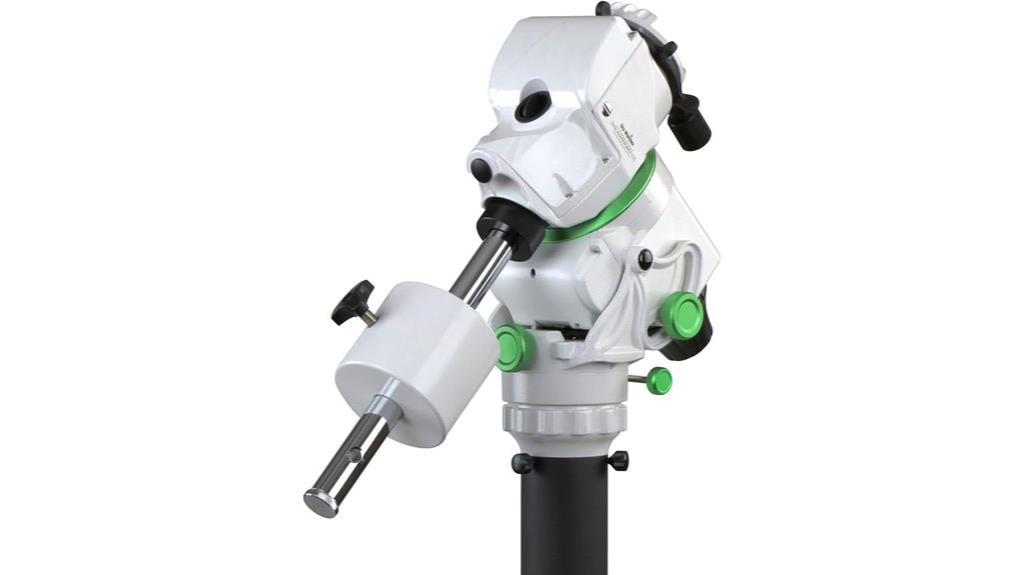
For astrophotographers seeking a lightweight yet reliable mount, the Sky Watcher Star Adventurer GTI Mount Head Kit stands out as an excellent choice. It’s portable, easy to set up, and offers full GoTo capabilities with built-in Wi-Fi, making it perfect for quick astrophotography sessions. The illuminated polar scope ensures precise alignment, while the dual-position counterweight bar adapts to low-latitude use. With an 11-pound payload capacity, it handles DSLR or small telescopes effectively. Tracking is accurate, often below 1 arc second, enabling long exposures with minimal guiding. Despite some quality quirks, its affordability and feature set make it a solid option for amateurs and enthusiasts alike.
Best For: amateur astronomers and astrophotographers seeking a portable, feature-rich mount for quick and precise astrophotography sessions with DSLR cameras or small telescopes.
Pros:
- Lightweight, portable design ideal for travel and quick setups
- Full GoTo capabilities with built-in Wi-Fi and illuminated polar scope for accurate alignment
- High tracking accuracy often below 1 arc second, enabling long exposures without guiding
Cons:
- Occasional quality issues with accessories such as polar scope illuminator and battery compartment
- Initial setup can be challenging for beginners, requiring proper balancing and calibration
- Support and quality control issues reported, including defective units and loose components
EQ6 Tripod to Wave Steel by Sky-Watcher

If you’re looking for a sturdy tripod that offers exceptional stability for astrophotography, the EQ6 Tripod to Wave Steel by Sky-Watcher is an excellent choice. Its robust 2-inch rolled steel legs deliver excellent stability, reducing vibrations and ensuring clear views and smooth tracking. Designed for Sky-Watcher Wave mounts, it also supports NEQ6, EQ6, EQ6-R, and AZ-EQ6 mounts, offering versatile compatibility. A Wave Pier Adapter (S30916) is needed to attach Wave mounts securely. The sleek black trim gives it a professional look, matching well with Wave Mounts and Extensions. Its durable construction guarantees reliable, precise astronomical observations.
Best For: amateur astronomers and astrophotographers seeking a durable, stable tripod compatible with Sky-Watcher Wave mounts for precise observations and long-exposure imaging.
Pros:
- Robust 2-inch rolled steel legs provide excellent stability and vibration reduction
- Compatible with multiple Sky-Watcher mounts including NEQ6, EQ6, EQ6-R, and AZ-EQ6
- Sleek black trim offers a professional appearance and easy integration with other equipment
Cons:
- Requires a Wave Pier Adapter (S30916) for secure attachment, adding an extra component
- Heavier than lightweight tripods, which may affect portability
- Limited to use with Sky-Watcher Wave mounts and compatible systems
Vortex Optics Mountain Pass Tripod Kit
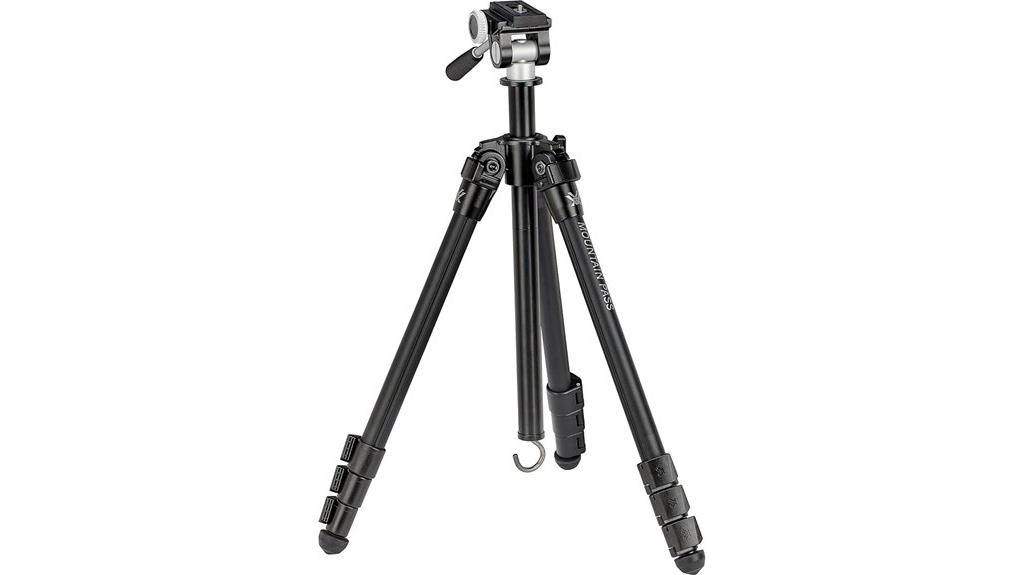
Designed for outdoor enthusiasts who need a reliable, portable tripod, the Vortex Optics Mountain Pass Tripod Kit offers a sturdy aluminum build that supports larger optics and equipment. It supports up to 22 pounds, making it ideal for binoculars and spotting scopes. The telescoping legs adjust independently with quick flip levers for quick, stable setup. Its lightweight, foldable design fits easily into backpacks, perfect for trail use. The kit includes an Arca-Swiss compatible quick-release head for seamless mounting. With a two-way pan and tilt head, adjustable height, and firm joints, it provides stability and smooth movement—making it a versatile, durable choice for outdoor viewing and astrophotography.
Best For: outdoor enthusiasts, birders, hunters, and wildlife observers seeking a durable, portable tripod for supporting larger optics and equipment.
Pros:
- Sturdy aluminum construction supporting up to 22 pounds for versatile equipment use
- Independent telescoping legs with quick flip locks for easy, stable setup in various terrains
- Includes an Arca-Swiss compatible quick-release head for seamless mounting and accessory compatibility
Cons:
- Slightly heavier and more expensive than some lightweight carbon fiber alternatives
- Quick-release system lacks a stop feature, which may require extra caution during mounting
- Bulkier compared to ultra-compact tripods, potentially less ideal for minimal pack space
NEEWER 74 Video Tripod Monopod with Phone Holder
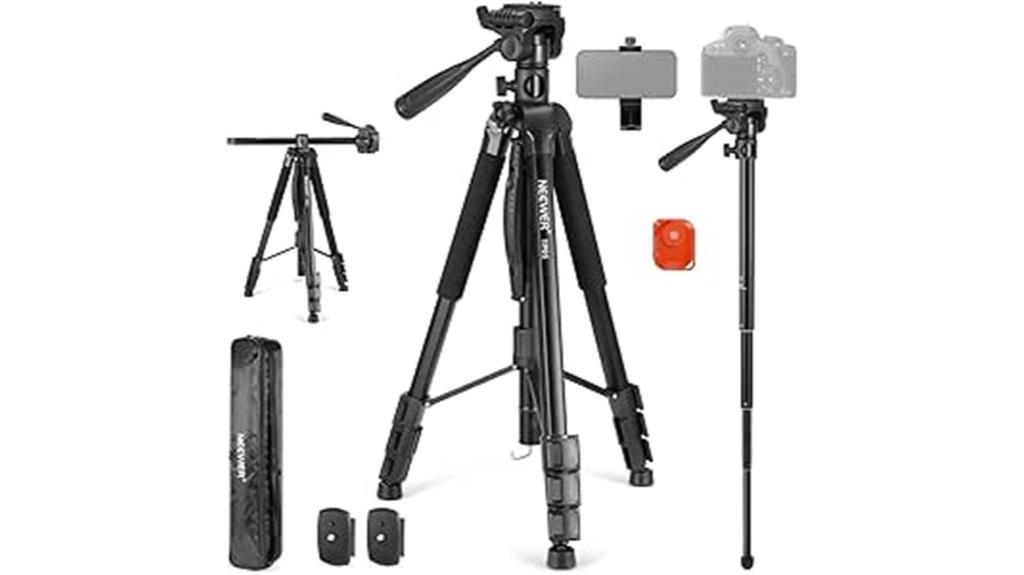
The NEEWER 74 Video Tripod Monopod with Phone Holder stands out as a versatile and budget-friendly option for photographers and videographers who need reliable stability on the go. Made of durable aluminum alloy, it supports DSLR cameras, action cameras, and smartphones up to 17.6 pounds. Its lightweight design (3.9 pounds) and compact foldability (11.4 inches) make it easy to carry. The tripod features a 3-way pan tilt head, bubble level, and rotatable rubber feet for stability on various terrains. Its detachable central axis converts to a monopod, and the included Bluetooth remote shutter enhances remote shooting, making it perfect for vlogging, live streaming, and creative shots.
Best For: budget-conscious photographers and videographers seeking a versatile, portable tripod and monopod for stable shots and creative overhead filming.
Pros:
- Durable aluminum alloy construction supports cameras and smartphones up to 17.6 lbs for reliable stability.
- Versatile features like a 3-way pan tilt head, bubble level, and detachable central axis for overhead shots and monopod use.
- Lightweight and foldable design with carrying bag makes it easy to transport and perfect for on-the-go shooting.
Cons:
- Adapter for action cameras is not included, requiring an additional purchase for that use.
- The phone holder’s maximum width (4.1 inches) may not accommodate larger phones or cases comfortably.
- May lack advanced features found in higher-end tripods, such as quick-release plates or motorized controls.
Factors to Consider When Choosing Tripods and Pier Mounts for Astrophotography

When selecting a tripod or pier mount for astrophotography, we need to consider factors like stability and vibration control to keep images sharp. Load capacity, size, and portability also matter, ensuring the setup can support your gear without being cumbersome. Additionally, compatibility, ease of adjustment, and user-friendliness play key roles in making a practical and reliable choice.
Stability and Vibration Control
Achieving sharp astrophotography images hinges on the stability of your tripod or pier mount, as even minor vibrations can blur long exposures. To guarantee maximum stability, we recommend choosing models made from rigid materials like steel or aluminum, which help reduce flexure and maintain alignment. Vibration damping features, such as rubber feet or decoupling pads, absorb shocks and prevent ground vibrations from reaching your equipment. Proper weight distribution and the use of counterweights further enhance stability, especially in windy conditions or uneven terrain. Additionally, a tripod with adjustable leg locks and a sturdy mounting head secures your gear firmly, resisting shifts during long exposures. Prioritizing these factors assures your setup remains steady, resulting in clearer, more detailed astrophotographs.
Load Capacity and Size
Selecting a tripod or pier mount with the right load capacity is essential to guarantee your astrophotography gear remains steady and safe. You need to support the combined weight of your telescope, camera, and accessories, ideally with at least 25% extra capacity for added stability. Always check the manufacturer’s maximum load rating to ensure it can handle your heaviest equipment setup, including counterweights and accessories. Size and height matter too; choose a mount that matches your observation or imaging position, with adjustable models offering flexibility for different terrains and angles. Smaller, lightweight mounts are portable but may lack stability for long exposures, while larger, sturdier mounts provide better stability at the expense of portability. Proper load capacity and size guarantee reliable performance and best imaging results.
Portability and Weight
Portability and weight are key considerations when choosing tripods and pier mounts for astrophotography, especially if we plan to travel to remote observation sites. Light equipment makes transportation easier, allowing us to reach more secluded locations without hassle. However, lighter tripods may sacrifice stability, which is essential for sharp long-exposure images. Heavier setups tend to offer better stability, minimizing vibrations during long exposures, but they can be cumbersome to carry. The weight capacity also matters, as it determines how much gear we can support safely. Many portable options are designed to be foldable or collapsible, making them easier to transport, often weighing under 20 pounds. Conversely, more stable, fixed installations can weigh 50 pounds or more, limiting mobility but enhancing stability.
Compatibility and Mounting
Ensuring compatibility and secure mounting are essential steps when choosing tripods and pier mounts for astrophotography, as mismatched components can compromise stability and image quality. First, check that the mounting threads or interface standards—such as 1/4-20, 3/8-16, or Vixen-style dovetails—match your telescope or mount. Verify the weight capacity to support your equipment safely without risking instability. Look for mounting options like screw holes, dovetail slots, or quick-release plates that allow secure attachment. It’s also important to confirm that the platform supports precise alignment features, such as polar scope compatibility or polar adjustment options. Additionally, consider whether the mount can seamlessly connect with other supports, like pier extensions or adapters, to achieve ideal setup height and stability.
Adjustment and Ease of Use
Adjustability and ease of use are crucial when choosing tripods and pier mounts for astrophotography, as they directly impact setup speed and stability. A good mount features adjustable height options like telescoping legs or extension columns, allowing us to tailor the setup for different viewing angles and comfort. Intuitive locking mechanisms, such as quick-release clamps and flip levers, make adjustments fast and tool-free, saving valuable observation time. Precise leveling tools, like built-in bubble levels or adjustable feet, help ensure the mount is perfectly horizontal, which is essential for accurate tracking. Smooth pan and tilt controls with fine adjustment knobs enable us to frame celestial objects accurately with minimal effort. Clear, straightforward adjustment procedures and minimal resistance make reconfigurations quick and hassle-free, especially in field conditions.
Frequently Asked Questions
How Do Weather Conditions Affect Tripod Stability During Astrophotography?
Weather conditions considerably impact tripod stability during astrophotography. Wind can cause vibrations, making it hard to get clear shots, while rain or moisture can weaken tripod materials or cause slipping. Cold temperatures can make tripod components brittle, leading to instability. We always recommend using sturdy, weather-resistant tripods, securing them firmly, and protecting your gear from the elements to maintain stability and capture sharp images in any weather.
What Are the Best Materials for Lightweight yet Durable Astrophotography Tripods?
They say, “Good things come in small packages,” and that’s true for lightweight yet durable materials in astrophotography tripods. We recommend carbon fiber for its strength-to-weight ratio, making it sturdy without the bulk. Aluminum is a solid, more affordable choice, offering durability and stability. Both materials balance portability with performance, so you can chase the stars without being weighed down.
How Does Tripod Height Influence Image Quality in Astrophotography?
Tripod height considerably impacts image quality by affecting stability and framing. If it’s too low, you might struggle with awkward angles or vibrations, leading to blurry photos. On the other hand, a properly elevated tripod keeps your camera steady and allows comfortable viewing, especially during long exposures. We recommend adjusting your tripod to a height that minimizes vibrations while providing a comfortable working position, ensuring sharper, clearer astrophotos.
Can Portable Tripods Support Long-Exposure Astrophotography Setups?
Portable tripods can support long-exposure astrophotography setups if they’re sturdy and stable enough. We always check the weight capacity and build quality before taking ours out for night shoots. Lightweight tripods are convenient, but they might wobble in windy conditions or with heavier gear. For best results, we opt for tripods with good locking mechanisms and sturdy materials, ensuring our camera stays steady during those critical long exposures.
What Maintenance Tips Ensure Long-Term Tripod Performance and Stability?
To keep our tripods performing well long-term, we regularly clean the legs and joints to prevent dust buildup. We check for loose screws and tighten them promptly, ensuring stability. Applying a light lubricant to moving parts keeps everything smooth. We also store tripods in a dry, protected place to prevent rust and corrosion, and avoid overextending the legs to maintain structural integrity, ensuring reliable stability for astrophotography.
Conclusion
Choosing the right tripod or pier mount is like finding a steady anchor in a storm—crucial for capturing clear, stunning astrophotography. With so many excellent options out there, we can confidently find gear that keeps our cameras steady and our skies in focus. Remember, the best gear supports our passion and helps us reach new heights in our night sky adventures. Happy shooting, and may your images be as breathtaking as the stars themselves!