
TL;DR

Get bike and ride gear delivered free with Prime
- Fast, free delivery on millions of items
- Prime Video, Amazon Music and more included
- Member-only deals all year
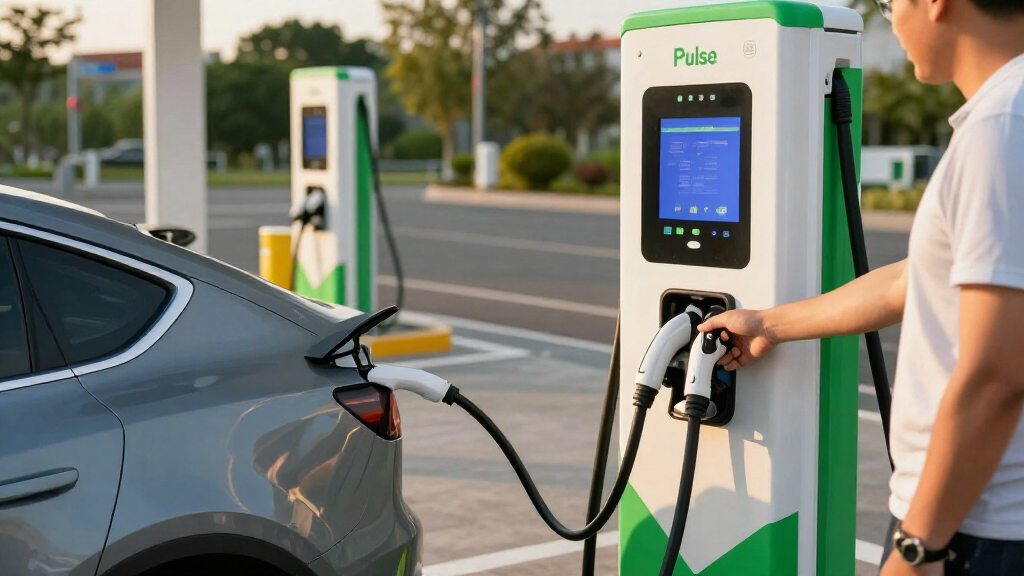
BP Pulse has added its U.S. fast-charging network to ChargeHub’s Passport Hub roaming ecosystem, giving drivers another way to find, access and pay for charging. The network has 874 DC fast-charging ports, with connector types, availability and payment options varying by site.
BP Pulse’s 874 U.S. DC fast-charging ports are now part of ChargeHub’s Passport Hub roaming ecosystem, allowing drivers to locate chargers and manage charging sessions through the ChargeHub app instead of relying on BP Pulse’s own app. The integration gives EV drivers another option for finding chargers across networks, though connector types, pricing and features vary by location.
According to the report by InsideEVs, ChargeHub users can find BP Pulse locations, see real-time port availability and check connector types. The app also supports access and payment for charging sessions. ChargeHub’s Passport Hub includes dozens of charging operators, so drivers can use one service to find more than just BP Pulse stations.
BP Pulse’s U.S. network has 874 fast-charging ports. Roughly a third have the Tesla-style NACS connector; most use CCS1, while some offer CHAdeMO. BP Pulse sites also have on-site credit card readers, meaning drivers can pay without using an app. ChargeHub is an additional access route, not the only way to start or pay for a session.
The network includes chargers with different power levels: Tritium units rated up to 150 kW, ABB dispensers rated at 180 kW and Alpitronic stalls rated at 400 kW. BP Pulse pricing was reported to range from $0.33 to $0.65 per kilowatt-hour. Prices and charger capabilities may differ by site; the report does not provide a station-by-station breakdown.
One App, More Charging Options
For drivers, the integration may reduce the need to switch between operator apps when planning a route or looking for a nearby fast charger. ChargeHub can display availability and connector information alongside locations from other operators, helping drivers check whether a station is likely to suit their vehicle before arriving. Its usefulness depends on the accuracy of live data and whether the listed charger is available when a driver reaches it.
The change also gives BP Pulse another route to reach drivers who already use a roaming app. ChargeHub says its app supports charging at more than 40 operators in the United States and Canada, while more than 70 additional networks can be found on the platform. Those figures describe ChargeHub’s wider network, not the number of operators included in the same payment arrangement. The report does not specify which of those networks support payment through ChargeHub.
Popular right now

Dyson Car+Boat Cordless Handheld Vacuum

Breville BES870BTR Barista Express Espresso Machine, Black Truffle

Ninja Crispi Glass Air Fryer (Stone) – 4‑in‑1
As an affiliate, we earn on qualifying purchases.
BP Pulse’s Network And Access
BP Pulse is the EV-charging subsidiary of BP, the oil and gas company. Its chargers vary in power and connector type, and stations range in size from two stalls to a reported 48-stall location in Inglewood, California. This makes checking a specific station’s details useful: a listing for a nearby site does not by itself establish that it has the connector or charging speed a driver needs.
BP Pulse also supports Plug & Charge, which can let a compatible vehicle handle authorization without a separate app or card. According to the report, however, the feature is limited to Ford and BMW vehicles and is enabled only at the network’s fastest stalls. Drivers can also use the on-site credit card readers, or ChargeHub where supported, so the roaming integration adds to existing access methods rather than replacing them.
““We’re focused on making charging simple, reliable, and easy to access wherever drivers need it.””
— Sujay Sharma, BP Pulse vice president of EV charging
Site-Level Details Still Matter
The report does not say when the integration went live, whether ChargeHub access is available at every BP Pulse location immediately, or whether drivers pay the same rates through ChargeHub as they do through other payment methods. It also does not detail any roaming fees, session fees or differences in billing and support between the ChargeHub app and BP Pulse’s direct channels.
Availability shown in an app can change, and a charger’s connector, power output and Plug & Charge support depend on the specific stall. The report gives network-wide figures but no site-by-site status or performance data. ChargeHub describes Passport Hub as North America’s largest roaming network; that is the company’s claim, rather than an independently established comparison in the information provided.
Check ChargeHub Before You Go
Drivers can search for BP Pulse stations in the ChargeHub app and check the connector and availability information shown for a location before setting off. They can also use a site’s credit card reader or, where their vehicle and charger qualify, Plug & Charge. Because the report does not specify how prices compare across payment methods, drivers should check the price displayed for their intended charging session.
No further rollout date or additional BP Pulse network expansion was announced in the source material. The next practical test is whether the app’s station listings, live availability and payment options work consistently across the network. Until those details are clearer, drivers should verify the individual site listing and have an alternative payment method available.
Key Questions
Can I use ChargeHub to find BP Pulse chargers?
Yes. The reported integration places BP Pulse’s 874 U.S. fast-charging ports in ChargeHub’s Passport Hub ecosystem. The app can show locations, connector types and real-time port availability.
Do I have to use the ChargeHub app to charge?
No. BP Pulse chargers have on-site credit card readers, so an app is not required to pay. The BP Pulse app and eligible Plug & Charge vehicles provide other access options, subject to the station and vehicle’s capabilities.
Which connectors are available at BP Pulse stations?
The network includes NACS, CCS1 and some CHAdeMO connectors. The report says roughly one-third of the ports have NACS, while most have CCS1; drivers should check the details for the specific location.
How much does BP Pulse charging cost?
The reported range is $0.33 to $0.65 per kilowatt-hour. The source does not identify the price at each station or explain whether rates differ by payment method, so drivers should check the rate shown before charging.
Source: insideevs.com