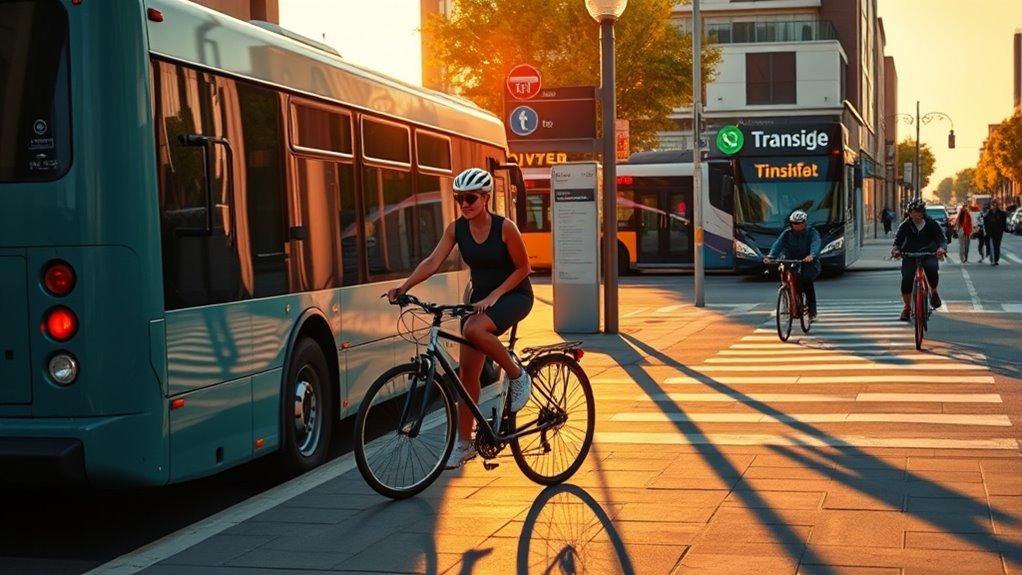

To plan your bike‑bus‑bike commute, check real-time transit data to time your bike rides with bus schedules, especially during peak hours. Choose direct, safe routes to stops so you arrive with enough buffer time for smooth transfers. Look for stops with secure bike facilities and clear access points. Adjust your biking speed based on bus intervals to minimize wait times. Keep these tips in mind, and you’ll discover how to make your commute more efficient and stress-free.
Key Takeaways
- Use real-time transit data to schedule bike rides that align with bus arrival times.
- Choose direct, safe bike routes to bus stops that allow timely arrivals and prevent delays.
- Select bus stops with secure, bike-friendly facilities for quick, hassle-free transfers.
- Plan biking to arrive within the bus transfer window, considering bus frequency and peak hours.
- Conduct trial runs to refine timing, adapting for weather, traffic, and bus schedule variations.

Combining biking and bus travel can make your daily commute more efficient and eco-friendly, but timing and transfers are key to making it seamless. To optimize your bike-bus-bike routine, you’ll want to develop effective scheduling strategies that minimize wait times and keep your transfers smooth. Start by researching bus schedules thoroughly, noting their frequency and peak hours. If your bus service offers real-time updates, use those to plan your departure so you arrive at the stop just as the bus is approaching. This way, you avoid long waits and keep your overall commute efficient.
Research bus schedules and use real-time updates to streamline your bike-bus transfers efficiently.
When planning your bike route to the bus stop, consider the distance and route options. Aim for a direct, safe path that allows you to arrive at the bus stop with enough time to catch your bus comfortably. If you have a flexible schedule, try to align your biking pace with bus arrival times, especially during busy hours when buses tend to run more frequently. This coordination guarantees your transfer is convenient and reduces the risk of missing the bus.
Transfer convenience is also influenced by the location of your bike rack or bike-friendly zones at the bus stop. Choose stops that offer secure bike parking and easy access to the bus boarding area. If possible, select bus stops with covered racks or nearby bike lockers, which protect your bike from weather and make your transition smoother. Knowing the layout of your transfer point helps you move quickly between your bike and the bus, reducing stress and time lost during the switch.
Additionally, consider the transfer window—some transit systems allow a certain amount of time between bus transfers. Knowing this window helps you plan your biking so you arrive at the stop with enough margin to catch the next bus if needed. If your schedule is tight, look for buses with shorter headways or routes that connect conveniently to your biking route. This reduces waiting times and helps keep your overall trip on schedule.
Testing your plan a few times to identify any bottlenecks or delays is also recommended, as it helps you refine your timing and approach. Adjust your timing as needed, considering factors like weather, traffic, or bus delays. Over time, you’ll develop a set of reliable scheduling strategies that make your bike-bus-bike commute smooth and predictable. Being aware of public transit schedules and how they align with your biking routine can significantly enhance your efficiency. By paying close attention to transfer convenience and timing, you’ll enjoy a more efficient, eco-friendly journey that fits seamlessly into your daily routine.
Frequently Asked Questions
How Do I Handle Unexpected Delays During My Bike-Bus-Bike Commute?
If you face unexpected delays during your bike-bus-bike commute, stay calm and use your backup plans. Communicate promptly with your contacts or the transit service to inform them of the delay. Have a flexible mindset and consider alternative routes or transport options, like a nearby bike station or ride-sharing. Staying prepared with communication strategies and backup plans helps you adapt quickly and minimizes inconvenience.
What Are the Best Apps to Plan Combined Bike and Bus Routes?
Imagine having a crystal ball for your commute—apps like Google Maps, Citymapper, and Transit offer just that. They excel in route optimization and real-time tracking, helping you seamlessly plan combined bike and bus routes. With these tools, you can adjust on the fly, avoid delays, and stay ahead of your schedule. Trust these apps to make your journey smoother, more predictable, and less stressful.
How Can I Ensure Safety When Transferring Between Bike and Bus?
To guarantee safety during transfers, always follow bike safety and transfer precautions. Use designated bike racks on buses and double-check that your bike is securely fastened before moving. When transferring, stay alert and communicate with transit staff if needed. Wear a helmet, wear reflective gear, and be visible to others. Planning your route to avoid busy intersections also minimizes risks, making your bike-bus-bike commute safer and smoother.
Are There Any Subsidies or Discounts for Bike-Bus Commuters?
Like Hermes guiding you through busy streets, you can find discounts and subsidies for your bike-bus commute. Many transit agencies offer fare discounts for bike-bus riders, and some provide free or discounted bike parking at stations. Check your local transit authority’s website or contact customer service to discover specific subsidies, bike parking deals, or fare reductions. These perks make your journey smoother, saving you money while supporting eco-friendly travel.
How Do Weather Conditions Affect My Bike-Bus-Bike Schedule?
Weather conditions can considerably impact your bike-bus-bike schedule. If it’s raining, make sure to pack rain gear to stay dry and comfortable. Heavy rain or storms might require route adjustments, like choosing sheltered paths or delaying your departure. Wind and snow can also slow you down or make cycling unsafe. Staying flexible with your timing and being prepared with the right gear helps guarantee a smooth commute regardless of weather changes.
Conclusion
So, next time you think a perfectly timed bike-bus-bike commute is impossible, remember—it’s all about patience and planning. Ironically, the more you focus on precise transfers and timing, the less you might enjoy the ride itself. But hey, if you master the art of juggling schedules, you’ll prove that even the smallest efficiencies can turn a simple trip into a grand achievement—just don’t forget to breathe along the way.