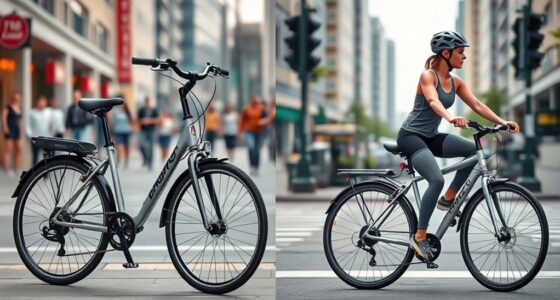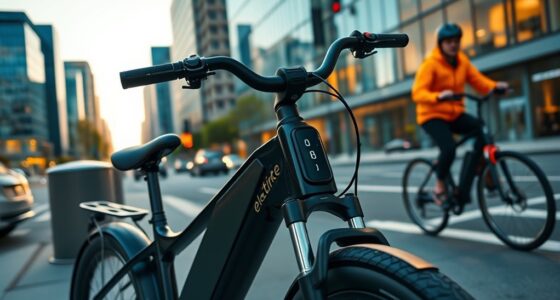
To communicate effectively on your bike, use clear hand signals for turns and stops, maintaining eye contact with pedestrians and other riders to confirm awareness. Incorporate short horn sounds when necessary to alert others quickly, but avoid constant honking. Combining these visual cues and auditory signals creates safer, more predictable rides. By mastering this coordinated approach, you’ll improve safety and understanding on the road—keep exploring for more tips to enhance your communication skills.
Key Takeaways
- Use standardized hand signals for turning and stopping to communicate intentions clearly to others.
- Maintain eye contact with pedestrians and fellow cyclists to confirm awareness and mutual understanding.
- Employ short, deliberate horn sounds to alert others of your presence or approach in busy or dangerous situations.
- Combine hand signals, eye contact, and horns for comprehensive and effective communication while riding.
- Practice and be consistent with signals and cues to enhance safety and prevent misunderstandings on the road.

Riding a bike often requires quick, clear communication to stay safe and connected with others. Whether you’re steering through busy streets or sharing paths with pedestrians and fellow cyclists, using effective signals can prevent accidents and misunderstandings. Hand signals are your primary tools for indicating your intentions to drivers, pedestrians, and other bikers. When you want to turn left, extend your left arm straight out. For a right turn, extend your right arm or raise your left arm with your elbow bent, pointing upward. To stop or slow down, extend your left arm downward with your palm facing behind you. These gestures are universally understood and give those around you a clear idea of your next move. Practice these signals until they become second nature; they’re essential for safe communication on the road or trail. Additionally, consistent use of non-verbal cues like eye contact can significantly enhance mutual understanding and safety among riders and pedestrians alike.
In addition to hand signals, horn usage plays an important role in alerting others to your presence. A quick, audible warning with your bike horn can prevent sudden surprises that might lead to accidents. Use your horn when approaching pedestrians from behind, entering busy intersections, or when other cyclists seem inattentive. Keep your horn sound short and deliberate—avoid constant honking, which can become irritating or confusing. Remember, the horn is a warning device, not a tool for expressing frustration. When used appropriately, it helps maintain a safe environment and keeps everyone aware of your presence.
Eye contact is another powerful form of communication while riding. Making eye contact with pedestrians and fellow cyclists can confirm mutual understanding. For example, catching a pedestrian’s eye before passing ensures they’re aware of your intention to go around. It also helps you gauge their reactions and intentions, so you can adjust your approach if needed. When approaching a cyclist or pedestrian at an intersection, a quick glance can signal your awareness and respect. Eye contact, combined with your signals and horn usage, creates a thorough communication system that promotes safety. Being attentive to others’ responses and body language further enhances this connection, making your ride smoother and more predictable.

XBERSTAR Bike Tail Light Turn Signals 12V Turn Signals Light Electric Bicycle Tail Light Safety Warning Bike Lights for Bicycle E-bike Motorcycle
- Versatile Compatibility: Fits motorcycles, e-bikes, scooters, bicycles
- Enhanced Safety Alerts: Warns others during rides for added security
- Weatherproof Design: IP65 waterproof for rainy or foggy conditions
As an affiliate, we earn on qualifying purchases.
As an affiliate, we earn on qualifying purchases.
Frequently Asked Questions
How Do I Communicate With Drivers at Night Safely?
To communicate with drivers at night safely, make sure you’re highly visible by wearing reflective gear and using bike lights. Use clear hand signals to indicate your intentions, and make eye contact with drivers when possible to guarantee they’ve seen you. Stay alert, avoid blind spots, and ride predictably. Your bright gear and deliberate signals help drivers understand your movements, reducing risks and keeping you safer on the road during low visibility hours.
What Are the Best Hand Signals for Turning?
To signal a turn clearly, extend your arm horizontally with your hand open and palm facing down for a left turn, or upward for a right turn. Use proper hand position techniques to guarantee visibility, keeping your arm steady and visible to drivers. Make sure your signals are distinct and well-timed, allowing drivers to anticipate your movements. Clear hand signal clarity helps you communicate effectively and stay safe on the road.
How Can I Improve Eye Contact With Other Road Users?
To improve eye contact with other road users, focus on your facial expressions and use light reflection to catch their attention. Make brief, consistent eye contact when approaching or passing, signaling awareness and intent. Keep your face visible and approachable, smiling when appropriate. This helps establish trust, shows you’re alert, and encourages mutual understanding. Remember, effective eye contact combined with clear signals can greatly enhance your safety on the road.
What Sound Signals Are Legal and Effective?
You can use your horn as an effective and legal sound signal, but only as an audible alert to warn others of your presence. Make certain you follow horn regulations, which typically restrict loud or unnecessary honking. Use a short, firm blast to communicate your intentions clearly and safely, especially when approaching intersections or overtaking. Avoid excessive noise to stay within legal limits and maintain good relations with other road users.
How Do I Signal When Cycling in a Group?
You must master the art of group communication by using clear hand signals. Exaggerate your gestures to guarantee everyone notices—waving wide for turns, pointing to hazards, or extending an arm to slow down. These hand signals cut through the chaos of group riding, keeping everyone safe and synchronized. Always stay alert, make your signals obvious, and anticipate others’ responses; this keeps your cycling harmonious and accident-free.

DAWAY A14 110dB Electric Bike Horn – 5 Sound Modes, Loud Bicycle Handlebar Alarm Bell with Free Screwdriver, Ideal Gift for Kids & Adults – Safe & Easy Cycling Alert
- Maximum Safety with 110dB Sound: Ultra-loud bike horn for safety
- Five Sound Modes: Versatile alert options for different situations
- Easy Switch Operation: Separate control switch for quick access
As an affiliate, we earn on qualifying purchases.
As an affiliate, we earn on qualifying purchases.
Conclusion
Just like the old sailors relied on signals and eye contact to navigate treacherous waters, you too must master bike communication to stay safe. Clear signals, eye contact, and sound are your guiding stars, helping others understand your intentions. Remember, as in life’s journeys, effective communication keeps everyone on course. So, stay alert, connect confidently, and ride with the same trust that once guided explorers through uncharted seas. Your safe voyage begins with your voice and eyes.
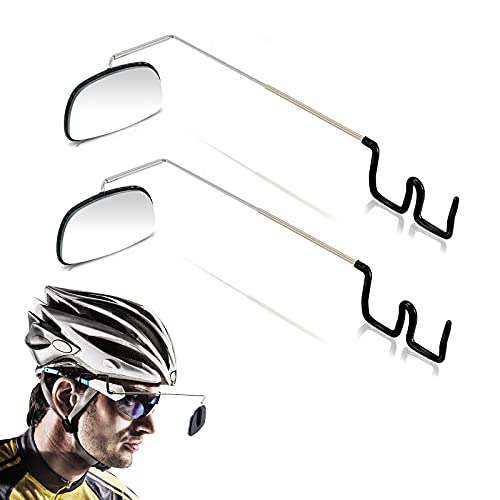
Accmor 2pcs Bike Eyeglass Mirror, 360 Degree Adjustable Bicycle Cycling Rear View Wide Angle Mirror, Riding Accessories
- 360-Degree Adjustable Mirror: Fully rotatable with 3 pivot points
- Wide Field of View: Provides clear, unobstructed rear vision
- Versatile Mounting Options: Fits on glasses and helmet visors
As an affiliate, we earn on qualifying purchases.
As an affiliate, we earn on qualifying purchases.
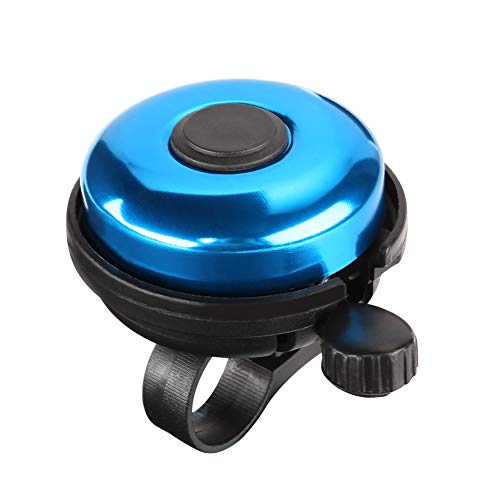
Accmor Classic Bike Bell, Aluminum Bicycle Bell, Loud Crisp Clear Sound Bicycle Bike Bell for Adults Kids
- Clear, Loud Ringtone: Ensures safety with crisp sound
- Universal Fit: Suitable for most mountain and road bikes
- Durable Materials: Made from rust-proof aluminum and plastic
As an affiliate, we earn on qualifying purchases.
As an affiliate, we earn on qualifying purchases.