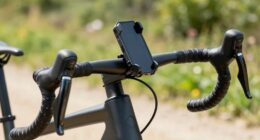
When practicing commuter photography, use lightweight mounts like window clamps or magnetic holders to guarantee safety and stability. Secure your gear firmly to prevent drops, and choose discreet cameras or silent shutters to blend in easily. Keep your equipment close and avoid blocking aisles or pathways. Stay aware of your surroundings and respect privacy laws. If you continue exploring, you’ll discover more tips to capture great shots while staying safe and considerate in busy spaces.
Key Takeaways
- Use lightweight, secure mounts like window clamps or suction mounts to stabilize your camera from moving vehicles.
- Opt for compact, silent-shutter cameras or smartphones to stay discreet and avoid disturbing others.
- Always double-check gear attachments and straps before shooting to prevent accidents or gear drops.
- Mount cameras at safe angles, avoiding obstructing pathways and respecting privacy in public spaces.
- Use monopods or handheld stabilization techniques to maintain safety and image stability during dynamic commuter shots.

Have you ever noticed how a daily commute offers endless photographic opportunities? As you navigate busy trains, bustling bus stops, or crowded sidewalks, you’re surrounded by scenes that tell stories of city life. But capturing these moments requires more than just a good eye; it demands a focus on public safety and the right camera gear. Your priority should always be to keep yourself and others safe while getting the shot. That means being aware of your surroundings, avoiding intrusive or unsafe behavior, and respecting people’s privacy. Using discreet camera gear, like compact cameras or smartphones with silent shutter modes, helps you blend into the environment without drawing unwanted attention. When taking photos in public spaces, avoid blocking pathways or causing disruptions, and always be considerate of people around you. If you’re using larger gear, such as DSLRs or mirrorless cameras, consider mounting them on a sturdy, lightweight tripod or using a monopod. These mounts provide stability and reduce the need to hold heavy equipment for extended periods, which can cause fatigue and increase the risk of accidents in crowded settings. Plus, properly securing your gear minimizes the chance of dropping or damaging your equipment, especially in busy environments. Before you start shooting, check that your camera strap is secure and that your gear is properly mounted. This not only protects your equipment but also helps you stay alert to your surroundings. Safety also involves being mindful of your position—stay clear of doors, tracks, or moving vehicles, and avoid obstructing public pathways. When you’re on a train or bus, keep your camera gear close, and don’t lean into or block aisles. If you’re shooting from a moving vehicle, use mounts or window clamps designed for your camera type; these secure your gear, allow stable shots, and prevent accidents if the vehicle jolts. Always be aware of local regulations and respect privacy. Some areas might have restrictions on photography, especially in sensitive locations. Being cautious about what you photograph helps avoid misunderstandings or legal issues. Remember, your goal is to capture compelling images without compromising safety or infringing on others’ rights. Additionally, understanding the contrast ratio of your equipment can help you better anticipate how your images will turn out in various lighting conditions. By choosing the right camera gear and mounting techniques, you can confidently photograph your commute while prioritizing public safety. The key is to stay alert, use discreet equipment, and always be respectful of your environment and the people in it. This approach ensures you enjoy your passion for commuter photography without risking your safety or that of others, turning ordinary daily rides into extraordinary visual stories.
Frequently Asked Questions
What Are the Best Mounts for Everyday Commuter Photography?
You should opt for versatile mounts like magnetic mounts, adhesive mounts, or clamp mounts for everyday commuter photography. These mount choices offer excellent mounting stability on bikes, helmets, or backpacks, ensuring your camera stays secure during your commute. Prioritize mounts that are easy to attach and remove, so you can switch angles quickly without compromising safety. With the right mount, you capture sharp, dynamic shots without risking your gear or safety.
How Can I Ensure My Camera Stays Secure During Busy Rides?
To keep your camera secure during busy rides, always use a sturdy camera strap safety system that prevents accidental drops. Make certain your lens cap is securely fastened to avoid losing it amidst the chaos. Keep a firm grip on your camera, and consider using anti-slip straps or wristbands for extra security. Regularly check all attachments and straps to ensure everything stays tight and reliable throughout your commute.
Which Techniques Help Prevent Camera Shake on Moving Vehicles?
To prevent camera shake on moving vehicles, focus on tripod stability by securing your camera firmly with mounts designed for stability. Enable your camera’s image stabilization feature to reduce blur caused by motion. Additionally, use a fast shutter speed to freeze motion and keep your hands steady or lean against a stable surface. These techniques help guarantee sharp, clear images even during bumpy rides.
Are There Specific Accessories for Hands-Free Commuter Photography?
Did you know that over 60% of photographers prefer hands-free accessories? For commuter photography, you should consider a sturdy camera strap and wrist support. A camera strap keeps your camera secure and easily accessible, while wrist support helps stabilize your shot and reduce fatigue. These accessories let you shoot safely on the go without fussing over your gear, ensuring you capture great moments confidently and comfortably.
How Do I Protect My Gear From Weather While Commuting?
You can protect your gear from weather by using weatherproof cases, which shield your camera from rain and dust. Additionally, attach protective lens filters to safeguard your lens from scratches and moisture. Always keep a microfiber cloth handy to wipe off any water or dirt. When not in use, store your equipment in a well-padded bag, and consider using rain covers for extra protection during heavy downpours.
Conclusion
Remember, just like the steady hand of a conductor guiding an orchestra, your focus and safety are key. Embrace your commute as a daily adventure, capturing moments with confidence and care. Keep your gear secure, stay alert, and let your passion for photography flow naturally. With each shot, you’re weaving your own story—one that echoes the timeless rhythm of travel and discovery, turning everyday journeys into mesmerizing visual tales.