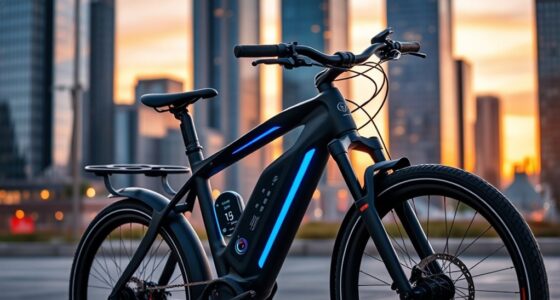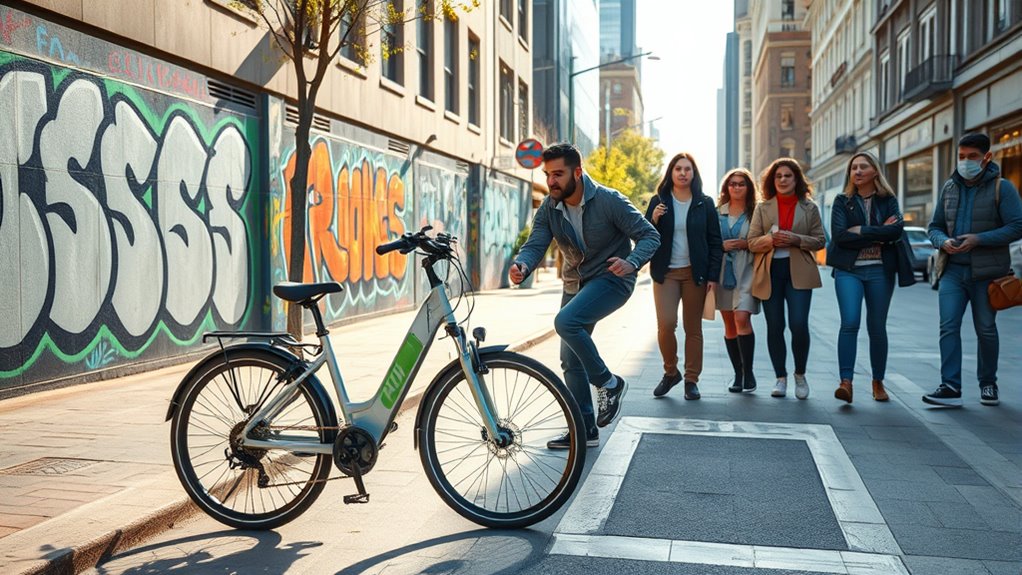

Many myths about e-bikes, like needing no pedaling or being purely motorized, are false. E-bikes rely on active pedal assistance and aren’t just motorized buzzers. They are affordable with options for long-distance travel and can provide great exercise when used properly. Safety concerns are often exaggerated, but with proper controls and awareness, e-bikes are safer than many think. Keep exploring to uncover the truths behind these common misconceptions.
Key Takeaways
- E-bikes require active pedaling; motor assistance supplements, not replaces, human effort.
- They are classified as bicycles because they involve pedaling and do not operate solely on motor power.
- E-bike safety features and rider training reduce accident risks, countering myths of higher danger.
- E-bikes promote physical activity through adjustable effort levels, not eliminate exercise benefits.
- Long-distance riding is feasible with proper planning, batteries, and charging infrastructure, debunking limitations myth.
E-Bikes Are Just Motorized Buzzles That Require No Pedaling

Many people assume that e-bikes are simply motorized bicycles that require no pedaling, but this isn’t accurate. E-bikes still involve pedaling effort, meaning you actively contribute to your ride. The motor assistance kicks in to help when you need it, making pedaling easier rather than replacing it altogether. You control how much help you get, whether it’s just a boost on hills or extended assistance during long rides. This setup allows you to stay engaged physically while reducing fatigue, especially on challenging terrain. Far from being a motorized scooter with no pedaling, an e-bike relies on your input combined with motor assistance to create a smooth, efficient ride. It’s a blend of human effort and technology, not a replacement for pedaling. Understanding e-bike mechanics helps riders make informed choices about their equipment and riding style.
They Are Too Expensive for the Average Rider
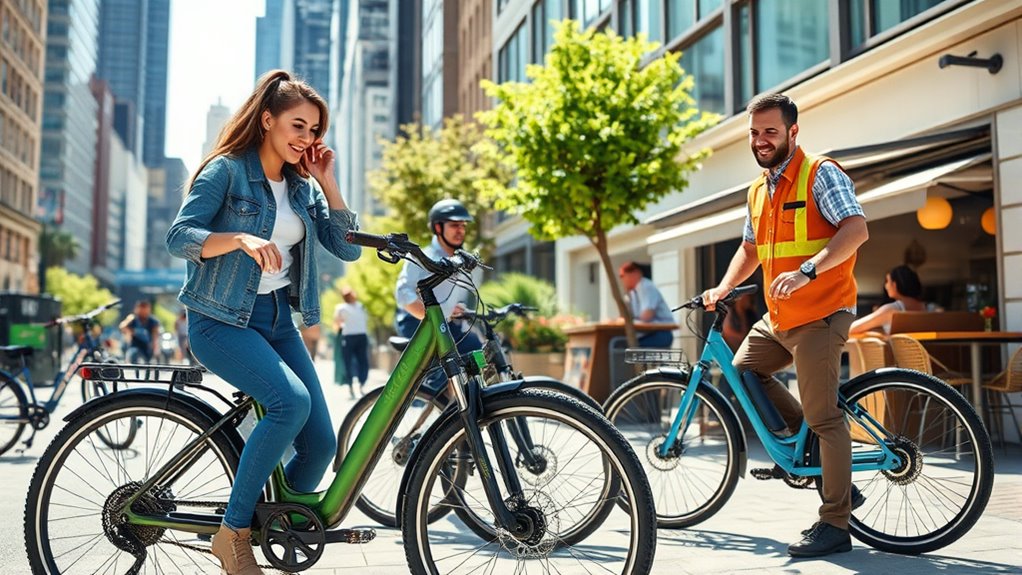
While e-bikes offer an efficient way to enhance your riding experience, their upfront cost can seem high compared to traditional bikes. A quick cost comparison shows that initial prices range from affordable models to premium options, making it possible to find something within your budget. Many brands now offer affordability options like financing plans, discounts, and used e-bikes, which help lower the entry barrier. Over time, the savings on fuel, maintenance, and transit costs can offset the initial investment. Plus, considering the health benefits and increased commuting efficiency, e-bikes can be a cost-effective choice in the long run. With a bit of research and smart purchasing, you don’t have to break the bank to enjoy the benefits of an e-bike. Additionally, understanding the cost implications of different e-bike assets can help you make a more informed investment decision.
E-Bikes Are Not Suitable for Long-Distance Travel
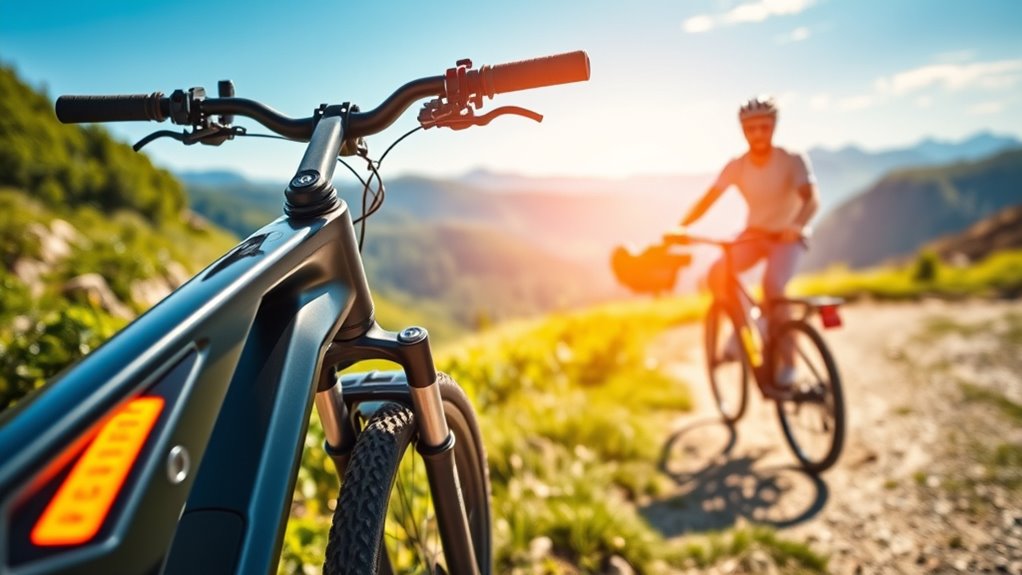
Many assume e-bikes can’t handle long-distance travel, but their battery ranges are improving. You need to plan routes around charging stations, especially on extended trips. With the right preparation, e-bikes can be a reliable option for longer journeys. Proper storage conditions can also help maintain battery life and performance over time.
Battery Range Capabilities
Some assume e-bikes can’t handle long-distance travel, but modern battery technology has considerably extended their range. Advances in battery life mean you can now ride further on a single charge, making long trips more feasible. Most e-bikes today offer a range of 20 to 50 miles, depending on factors like terrain and rider weight. Additionally, the increasing number of charging stations along popular routes makes it easier to top up your battery if needed. While older models had limited range, newer e-bikes are designed for extended journeys, reducing range anxiety. With proper planning, you can confidently take longer rides without worrying about running out of power. Battery range is no longer a major barrier to enjoying extensive rides on your e-bike.
Charging Infrastructure Availability
Although charging infrastructure has improved considerably, many still believe that e-bikes aren’t suitable for long-distance travel because charging stations are scarce in remote areas. However, this isn’t entirely true. More charging stations are being installed along popular routes and in key locations, making long trips increasingly feasible. Plus, your e-bike’s connection to the power grid isn’t a limiting factor; many models support fast charging, reducing downtime. You can plan your trip around existing charging stations or carry portable chargers for added convenience. Advances in battery technology also mean longer ranges, decreasing reliance on frequent charging. Additionally, charging infrastructure is expanding rapidly, further easing the logistics of long-distance travel. With proper planning and awareness of available infrastructure, you can confidently travel long distances without worrying about access to charging stations.
Pedal-Assist E-Bikes Are Not Real Bicycles

Pedal-assist e-bikes often face criticism for not being considered “real” bicycles, but this perception overlooks how they function. These bikes still rely on your pedal power, requiring you to actively engage in manual cycling. The motor provides assistance only when you pedal, blending human effort with technology seamlessly. Many argue that because you don’t rely solely on muscle, they aren’t true bicycles. However, pedal-assist bikes are designed to enhance your natural riding experience. They qualify as bicycles because they use pedals and require manual effort, just like traditional bikes. Here’s a quick comparison:
| Feature | Pedal-Assist E-Bike | Traditional Bicycle |
|---|---|---|
| Power source | Motor + Pedal power | Human effort |
| Requires manual cycling | Yes | Yes |
| Speed control | Motor assistance | No motor assistance |
Furthermore, understanding power sources in e-bikes helps clarify why they are considered bicycles under various regulations.
E-Bikes Are Unsafe and More Prone to Accidents
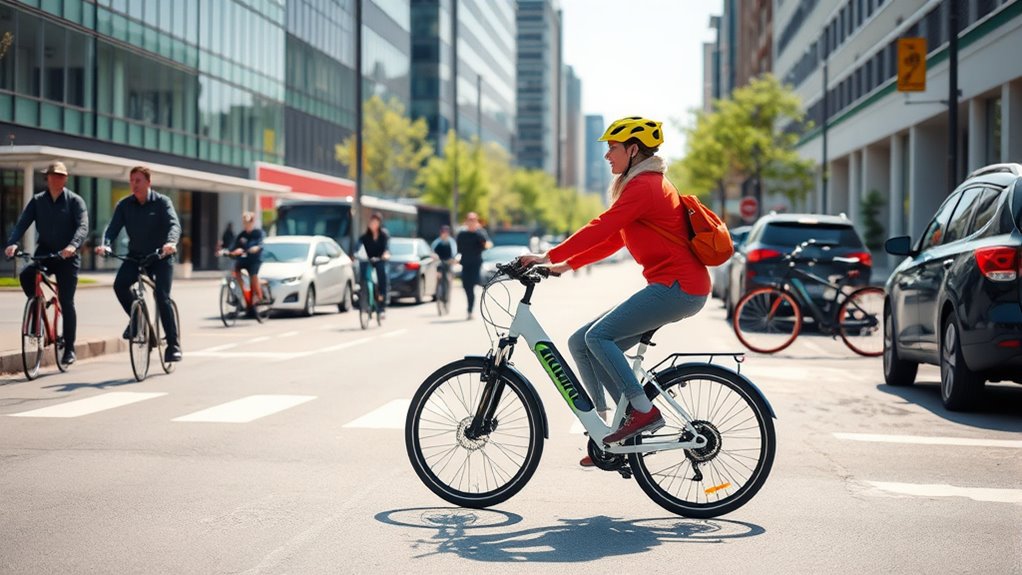
Many believe e-bikes are more dangerous, but safety statistics show they actually have a lower risk of accidents. With better visibility and control, you can ride more confidently, especially when properly trained. When you learn how to ride safely, the chances of accidents decrease even further. Additionally, airless paint sprayers offer a safer and more efficient alternative to traditional painting methods, reducing the likelihood of messes and accidents during projects.
Safety Statistics Show Lower Risk
While some believe e-bikes are more dangerous, recent safety statistics reveal the opposite. Studies show that e-bike riders are less likely to be involved in serious accidents than traditional cyclists or motorists. This lower risk can be attributed to improved helmet safety awareness and rider education programs that emphasize protective gear and safe riding habits. Many riders now receive training on handling e-bikes properly, reducing errors and accidents. Additionally, e-bikes often come with built-in safety features like better braking systems. As a result, the data suggests that, when proper precautions are taken, riding an e-bike is safer than many assume. Imagination also plays a role in enhancing rider safety, as it encourages proactive problem-solving and awareness. You can enjoy the benefits of e-biking while minimizing risks by prioritizing helmet safety and staying informed through rider education.
Enhanced Visibility and Control
Is it true that e-bikes are more dangerous because of their enhanced visibility and control issues? Not necessarily. E-bikes often feature improved rider visibility thanks to their design, making you more aware of your surroundings. While some worry about control, modern e-bikes are equipped with advanced braking efficiency systems that help you stop quickly and safely. These enhancements actually reduce the risk of accidents by giving you better command over your bike, especially in tricky situations. Additionally, features like braking systems and responsive controls contribute to safer riding experiences. The idea that increased visibility and control lead to more accidents is a misconception. In fact, these features help you respond faster to hazards, making riding safer rather than more dangerous. Properly understanding and utilizing these systems is key to enjoying the safety benefits e-bikes offer.
Proper Training Reduces Accidents
Although enhanced visibility and control improve safety, they don’t guarantee accident-free riding. Proper rider training is essential for accident prevention. When you learn how to operate your e-bike correctly, you gain better control in various situations, reducing the risk of falls or collisions. Training helps you understand braking techniques, handling sharp turns, and *maneuvering* tricky terrain. Many accidents happen because riders are unfamiliar with their bike’s capabilities or overlook safety protocols. Investing in rider training equips you with the skills needed to respond quickly to unexpected hazards. This education not only boosts your confidence but also *considerably* lowers your chances of accidents. Remember, even with the most advanced features, safe riding starts with proper training and awareness. Being familiar with safety protocols and recognizing warning signs can further enhance your riding safety.
Using E-Bikes Will Not Help You Get Any Exercise

Many assume that riding an e-bike doesn’t provide any real exercise, but that isn’t entirely true. E-bikes offer notable exercise benefits because you control how much effort you put in. If you pedal actively, you engage your leg muscles and increase your heart rate, making it a valuable form of physical activity. Even when the motor assists, you still get movement and some physical exertion. You can choose to ride more vigorously or use the assistance to cover longer distances without overexerting yourself. This flexibility encourages more consistent activity, especially for those who might avoid traditional exercise. Additionally, incorporating proper training techniques can further optimize your workout while riding an e-bike. So, rather than ignoring exercise benefits, you can tailor your e-bike rides to match your fitness level and goals, making it a practical tool for staying active.
Frequently Asked Questions
Can E-Bikes Replace Traditional Bicycles for Commuting?
You might wonder if e-bikes can replace traditional bicycles for commuting. With a solid battery range, e-bikes can cover longer distances comfortably, making them a practical option. Your riding experience will often be smoother and less tiring, especially on hilly terrain. While they offer convenience and efficiency, consider your commute length and terrain to decide if an e-bike suits your needs better than a traditional bike.
Do E-Bikes Have Maintenance Costs Similar to Regular Bikes?
E-bikes do have maintenance costs similar to regular bikes, but there are some differences. You’ll need to take into account battery lifespan, which affects how often you might need to replace or service the battery. Repair frequency can be slightly higher due to electronic components, but routine maintenance like tire checks and brake adjustments remain similar. Overall, staying on top of these factors helps keep your e-bike in good shape without unexpected costs.
Are E-Bikes Suitable for All Age Groups?
E-bikes are suitable for many age groups, as they accommodate various physical abilities. If you’re younger or older, you can enjoy riding without overexertion, thanks to pedal assist and easy controls. They’re perfect for commuters, seniors, or anyone looking for accessible transportation. Still, it’s best to take into account individual health and comfort levels to ensure riding remains safe and enjoyable for your specific age group.
How Do E-Bikes Impact the Environment Compared to Cars?
Imagine shrinking your carbon footprint so much it’s almost invisible—that’s what e-bikes do compared to cars! By choosing an e-bike, you help cut emissions profoundly, thanks to emission reduction. Plus, with proper battery recycling, you lessen environmental harm even more. Unlike cars, e-bikes produce zero tailpipe emissions, making them a cleaner, greener way to get around, saving the planet one ride at a time.
Are There Legal Restrictions on E-Bike Usage in Different Regions?
You should know that legal regulations and regional restrictions on e-bike usage vary widely. In some areas, you might need a license or registration, while others allow free use on bike paths and roads. Always check local laws before riding, as restrictions can differ by city or country. Staying informed helps you avoid fines or penalties and guarantees you’re riding within the legal limits of your region.
Conclusion
Don’t let these myths deter you from embracing e-bikes. They’re not just motorized buzzles or gadgets for the lazy; they offer a practical, eco-friendly way to stay active and explore like a Victorian adventurer. With advancements in technology, e-bikes are safer, more affordable, and perfect for long rides. So, hop on and enjoy the ride—your modern chariot awaits, proving that progress and pedaling can indeed coexist harmoniously.