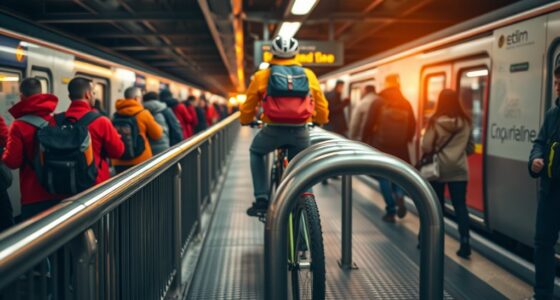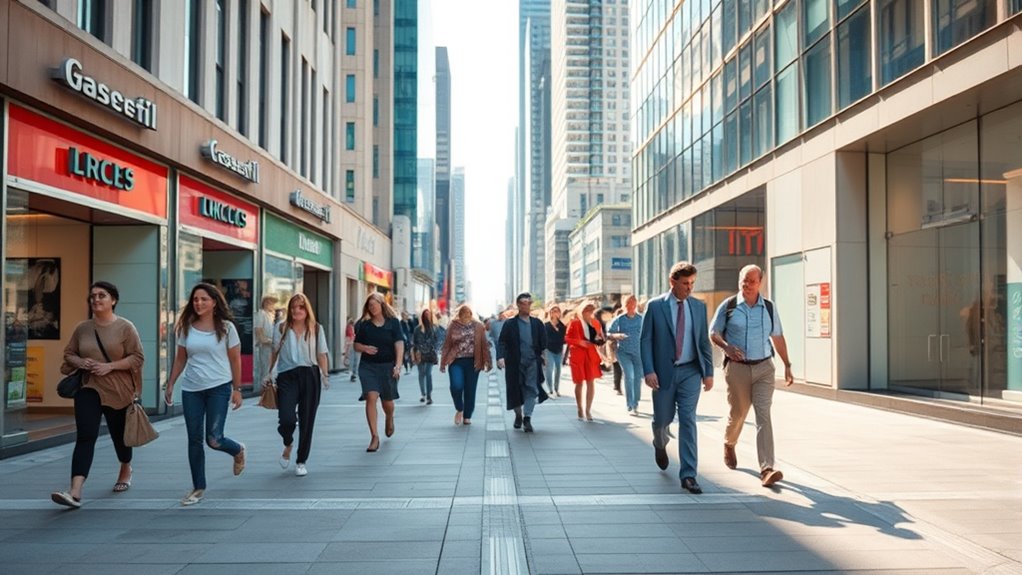

On busy urban paths, you should stay to the right (or left, depending on the country) to allow faster users to pass smoothly. Always check behind you before overtaking and signal your intentions clearly with hand signals or verbal cues like “On your left.” Be patient and give others plenty of space when being overtaken, and try to maintain a steady, predictable flow. Keep these etiquette tips in mind to stay safe and respectful—there’s more to learn for smoother journeys ahead.
Key Takeaways
- Stay to the left or right depending on traffic flow, and avoid straddling lane lines.
- Signal clearly and early before overtaking or changing lanes to alert other users.
- Check behind and ahead before passing, ensuring sufficient space and smooth movement.
- Maintain consistent speed and avoid sudden stops to prevent congestion.
- Be courteous and allow others to pass safely, showing patience during busy periods.
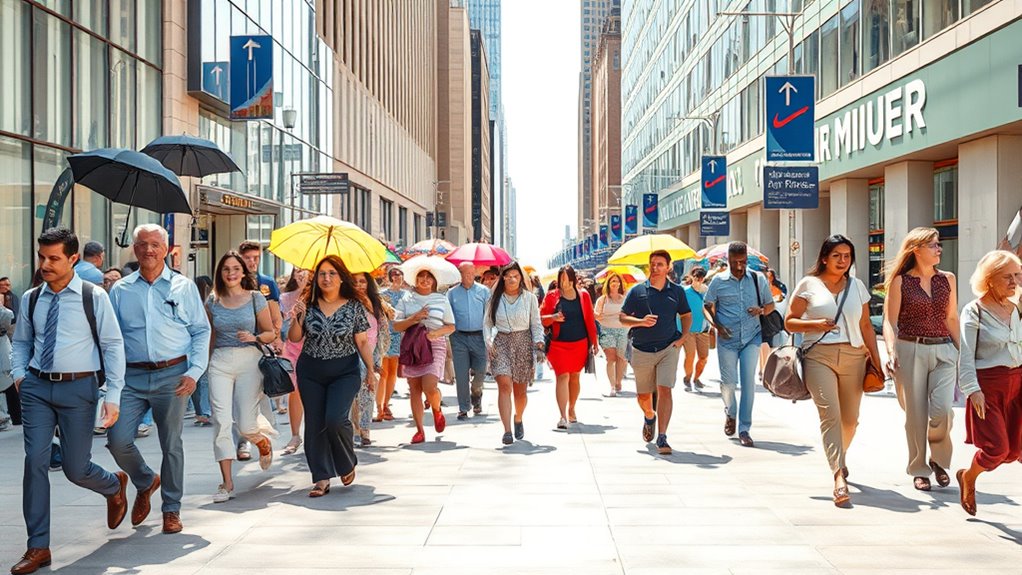
Navigating busy urban paths can be challenging, especially when everyone is trying to move efficiently and safely. With pedestrians, cyclists, and sometimes even skaters sharing the same space, understanding and following proper lane etiquette becomes essential. One of the most important aspects of this etiquette is knowing the passing rules. You need to be aware of when and how to pass others without causing confusion or accidents. Typically, if you’re moving faster than someone ahead, you should stay to the left in countries where traffic flows on the right, or to the right if you’re on the left side of the path. Always check behind you before attempting to pass, and make sure there’s enough space to do so safely. Passing should be done smoothly, avoiding sudden movements that might startle others. When passing, it’s crucial to signal your intentions clearly, even if there are no formal signals required. Using hand signals or verbal cues, like saying “On your left,” helps communicate your intentions and reduces the risk of collisions. Signal techniques are vital in crowded environments, where quick, clear communication can prevent misunderstandings. For example, extending your arm and pointing in the direction you plan to pass can serve as a visual cue, alerting others to your movements. If you’re on a bike, giving a quick hand signal before overtaking someone is a good habit. It’s also respectful to make eye contact if possible, ensuring the other person or cyclist is aware of your intent. When you’re being overtaken, stay aware of your surroundings and avoid sudden stops or swerves. Move aside gradually, allowing the faster user to pass comfortably without forcing them to brake or swerve unexpectedly. Remember, consistent signaling techniques and adherence to passing rules foster a harmonious environment on busy paths. This not only keeps everyone safe but also helps maintain a steady flow of movement, preventing bottlenecks and frustration. Keep in mind that patience and clear communication are key, especially during peak hours when congestion is high. If you notice someone struggling to pass, slow down slightly or give extra space, showing courtesy and understanding. By mastering passing rules and signaling techniques, you contribute to a safer, more organized environment for all users. Whether you’re cycling, walking, or skating, respecting lane etiquette ensures that everyone can steer through busy urban paths with confidence and ease. Focusing on these details might seem small, but they have a big impact on overall safety and efficiency, making your daily commute smoother and more pleasant for everyone involved.
Frequently Asked Questions
How Should I Signal When Overtaking Someone?
When overtaking someone, you should use clear hand signals, like extending your arm outward or upward to indicate your intention. Pair this with verbal communication if possible, saying “On your left” or “Passing on your right” to make your move clear. Always guarantee your signals are visible and timely, giving the person ahead enough warning to stay safe. Your proactive communication helps prevent misunderstandings and keeps everyone safe.
Are There Specific Rules for Children or Elderly Pedestrians?
You should always prioritize child safety and elderly consideration on busy urban paths. Slow down when approaching children or elderly pedestrians, giving them extra space. Make eye contact if possible, and use gentle signals to communicate your intentions. Be patient and wait for a clear, safe moment to pass. Respect their pace and needs, ensuring everyone feels secure and comfortable while sharing the path.
What Should I Do if I Encounter a Stopped Cyclist?
Did you know that cycling accidents involving stopped cyclists happen in about 15% of urban incidents? When you encounter a stopped cyclist, stay alert and slow down to guarantee cycling safety. Pedestrian courtesy means giving them space and avoiding abrupt moves. Make eye contact if possible, and wait patiently until they move or pass. Your calm, respectful actions help keep everyone safe on busy urban paths.
How Do I Handle Disputes Over Lane Positioning?
When disputes over lane positioning arise, prioritize passing courteousness and lane courtesy. You should calmly communicate your intentions, such as signaling or making eye contact, to clarify your movements. If tensions escalate, it’s best to slow down or yield to avoid conflict. Remember, maintaining a respectful attitude and practicing patience helps keep the path safe and enjoyable for everyone, even during busy moments.
Are There Different Etiquette Rules for Different Times of Day?
They say “timing is everything,” and that’s true for lane etiquette too. During peak hour, you should follow time-specific rules like staying in designated lanes and yielding more patiently. Off-peak, you might have more flexibility to switch lanes or pass. Always adapt your behavior to the flow and congestion levels, showing courtesy regardless of the time, so everyone stays safe and moving smoothly on busy urban paths.
Conclusion
By following these lane etiquette tips, you’ll navigate busy urban paths smoothly and safely. Imagine you’re cycling through downtown during rush hour when everyone sticks to their lanes—suddenly, your ride becomes less stressful and more enjoyable. Taking a moment to signal turns and stay on your side can prevent accidents and keep traffic flowing. So next time you’re on a crowded path, remember: your courteous actions make a difference for everyone sharing the road.