
To dress effectively during shoulder seasons, focus on layering with versatile fabrics like lightweight wool, chambray, and breathable cotton blends that adapt easily to changing temps. Use accessories such as scarves, hats, and lightweight gloves for quick adjustments, adding comfort and style. Combine pieces like sleeveless tops with transitional cardigans for flexibility. Mastering these strategies guarantees you stay cozy and fashionable, no matter how unpredictable the weather gets—explore further for expert tips that keep you prepared.
Key Takeaways
- Master versatile layering using transitional fabrics like lightweight wool, chambray, and breathable cotton blends for adaptable comfort.
- Incorporate accessories such as scarves, hats, and gloves for quick weather adjustments and added style.
- Combine sleeveless tops with cardigans or jackets to balance warmth and breathability in fluctuating temperatures.
- Focus on mix-and-match pieces that are easy to layer, remove, or add as weather conditions change throughout the day.
- Prioritize practical, stylish outfits that support comfort and confidence during unpredictable shoulder season weather.
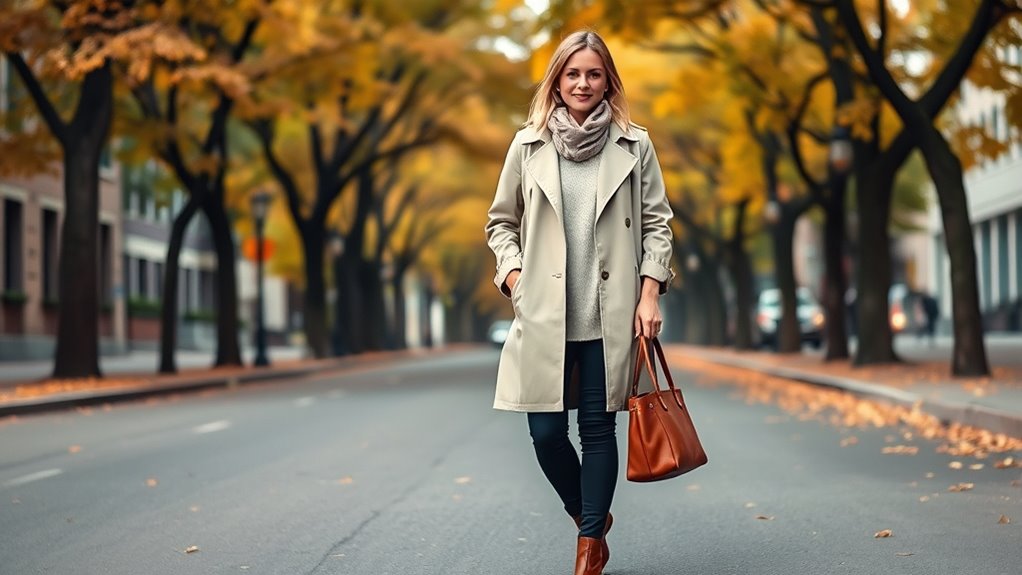
As the weather shifts between warm and chilly during shoulder seasons, mastering layering becomes essential for staying comfortable. You want to stay cozy without overheating or feeling cold, and that’s where understanding transitional fabrics and versatile accessories comes into play. Transitional fabrics are specially designed to adapt to fluctuating temperatures. Think lightweight wool, chambray, or breathable cotton blends—these materials provide just enough warmth without trapping too much heat. When you choose clothing made from these fabrics, you can easily add or remove layers as the day progresses. For example, a cotton or chambray shirt offers a breathable base layer, while a thin wool sweater adds warmth without bulk. If the day warms up, you can peel off the sweater and still stay comfortable in the breathable shirt underneath.
Layer with transitional fabrics like light wool or chambray for adaptable comfort during changing weather.
Versatile accessories also make a big difference in your layering strategy. Items like scarves, hats, and lightweight gloves allow you to adjust your outfit quickly to changing conditions. A scarf isn’t just for style; it provides extra warmth around your neck when it’s chilly and can be loosened or removed if the sun warms things up. A stylish hat offers sun protection during the day and can also help retain heat when it’s cooler. Lightweight gloves can keep your hands warm during chilly mornings or breezy evenings, but can be stashed away easily when not needed. These accessories are easy to pack or carry, giving you the flexibility to adapt without overloading your wardrobe. Incorporating knowledge about clothing versatility helps you select pieces that serve multiple functions, further enhancing your layering options.
Layering with transitional fabrics and versatile accessories also helps you create a balanced look that’s both functional and fashionable. For instance, a sleeveless top layered under a cardigan made from a transitional fabric gives you options—you can take off the cardigan if it gets hot or put it back on if the temperature drops. Pairing this with a scarf or a hat adds style points while serving practical purposes. When you choose clothing that’s lightweight yet insulating, you avoid the bulk of heavy winter gear, making your outfit easier to manage throughout the day.
Finally, keep in mind that your wardrobe should revolve around pieces that mix and match effortlessly. With transitional fabrics and versatile accessories, you’ll be prepared for whatever the weather throws at you during shoulder seasons. This approach not only keeps you comfortable but also lets you express your style without sacrificing practicality. By mastering these layering strategies, you’ll navigate unpredictable weather with confidence and ease.
Frequently Asked Questions
How Do I Choose the Best Fabrics for Layering?
You should choose fabrics that offer a balance of fabric breathability and layering durability. Opt for breathable materials like cotton or merino wool for your base layers, which wick moisture and keep you comfortable. For outer layers, select durable fabrics like nylon or polyester that withstand the elements. Combining these guarantees your layers stay functional and comfortable, adapting to changing temperatures without sacrificing performance or comfort.
What Accessories Can Enhance Layered Outfits in Shoulder Seasons?
You can enhance layered outfits in shoulder seasons with statement jewelry and stylish scarves. Statement jewelry adds a pop of personality and elevates simple layers, making your look more polished. Stylish scarves not only provide extra warmth but also add texture and color, creating visual interest. Mix and match different scarves to suit your mood and outfit, and choose bold jewelry to make your layered look stand out effortlessly.
How Can I Adjust My Layers for Unpredictable Weather?
Ever experienced that surprise rain or sudden chilly breeze? To stay prepared, check weather forecasting before dressing, and choose versatile footwear like waterproof boots or slip-ons. Layer with a lightweight, packable jacket or a cozy cardigan that you can easily add or remove. Keep a compact umbrella handy, and opt for breathable fabrics. With these adjustments, you’ll stay comfortable no matter how unpredictable the weather turns.
Are There Specific Color Schemes for Shoulder Season Dressing?
You should choose color palettes featuring versatile, seasonal tones like soft neutrals, earthy hues, and muted shades. These colors easily mix and match, making it simple to layer for unpredictable shoulder season weather. Opt for adaptable options that blend well with your existing wardrobe. Incorporating seasonal tones helps you stay stylish and comfortable, regardless of sudden temperature changes, ensuring your outfit remains cohesive and practical throughout the shift period.
What Are Quick Tips for Transitioning Outfits Between Seasons?
Did you know that 65% of people find seasonal wardrobe swaps challenging? To make shifts easier, keep versatile pieces like lightweight sweaters and scarves ready for quick outfit updates. Use transitional footwear options such as ankle boots or loafers to adapt to changing weather. Layer smartly, adding or removing items as needed, and stick to neutral colors to seamlessly blend your outfits across seasons.
Conclusion
As you master layering for shoulder seasons, remember that 80% of people find they can adapt their wardrobe easily with the right pieces. By mixing lightweight layers with versatile outerwear, you stay comfortable no matter the weather. Keep experimenting with different textures and lengths to stay stylish and prepared. With these strategies, you’ll confidently navigate those tricky transitional days, making every outing both practical and fashionable. Embrace layering and enjoy the versatility it offers!