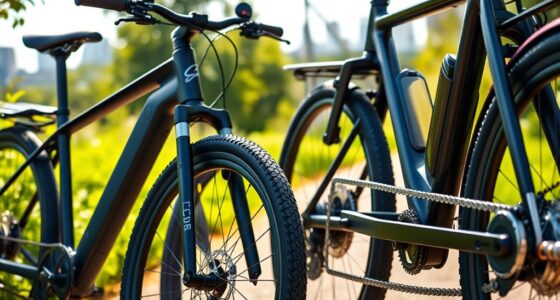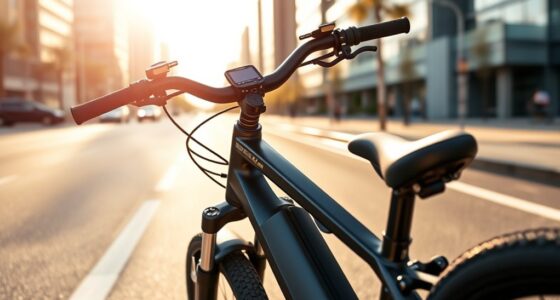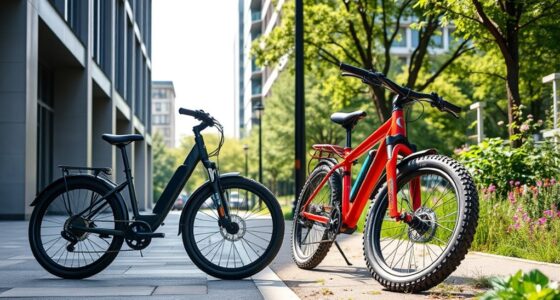

Pedal-assist e-bikes provide a natural riding feel by engaging your effort, offering better control and smoother assistance on various terrains. They’re energy-efficient, helping extend battery life and reduce long-term costs, while being easier to operate and accessible for riders of all levels. Plus, you can customize assistance levels for different situations, making them ideal for urban use and off-road adventures. Want to discover how these benefits can enhance your rides? Keep exploring to learn more.
Key Takeaways
- Pedal-assist bikes offer a natural riding experience with smoother, more responsive motor support that adjusts to pedaling effort.
- They are more energy-efficient and have longer battery life due to optimized power use based on rider input.
- Pedal-assist bikes enhance safety and control, especially on hills and rugged terrains, by providing steady, manageable assistance.
- They are generally more eco-friendly, supporting sustainability with lower energy consumption and easier recycling options.
- Pedal-assist models are often more accessible for beginners and those with mobility issues, promoting active engagement and confidence.
Natural Riding Feel and Physical Engagement
Pedal-assist e-bikes offer a riding experience that closely resembles traditional cycling, providing a natural feel that many riders prefer. To achieve this, proper sensor calibration is essential. When the sensors are accurately calibrated, they detect your pedaling effort precisely, ensuring the motor responds instantly and smoothly. This motor responsiveness creates a seamless progression between pedaling and assistance, making your ride feel more organic and engaging. If the sensors are off, the motor may lag or activate unexpectedly, disrupting the natural flow. Regularly checking and calibrating sensors helps maintain optimal responsiveness, so you feel connected to your ride. Additionally, **sensor calibration** is crucial for consistent performance and safety. This natural sensation encourages more active pedaling, giving you a workout while enjoying the benefits of electric assistance.
Energy Efficiency and Battery Life

Maintaining proper sensor calibration not only enhances the natural riding feel but also improves energy efficiency. When your sensors are accurately calibrated, your e-bike uses power more effectively, extending battery longevity. Pedal-assist systems tend to optimize energy consumption because they rely on your pedaling effort, reducing unnecessary battery drain. Throttle bikes, on the other hand, often consume more energy as they operate independently of your input. To maximize battery life, consider these tips: 1. Regularly calibrate your sensors to ensure precise assistance. 2. Use pedal-assist mode instead of throttle for better energy efficiency. 3. Maintain steady pedaling to reduce sudden power surges and conserve battery. Additionally, ensuring that your motor system is well-maintained can further improve overall energy efficiency and prolong battery life.
Ease of Use and Accessibility
For many riders, ease of use and accessibility are key factors in choosing an e-bike. Pedal-assist bikes often feel more natural because they respond smoothly to your pedaling effort, thanks to responsive motors. This motor responsiveness makes controlling speed simple and intuitive, especially for beginners. Battery management is also easier with pedal-assist, since the system adjusts power based on your input, conserving energy and extending ride time. Throttle e-bikes, on the other hand, require less physical effort to operate but can be less accessible for those with mobility issues or preference for a more seamless riding experience. Overall, pedal-assist bikes tend to offer a more user-friendly experience, combining motor responsiveness and intelligent battery management for a ride that’s easy to start and control. Additionally, remote hackathons and virtual events can provide riders and enthusiasts with opportunities to learn about new technologies and innovations in e-bike design and functionality.
Control Over Power Assistance
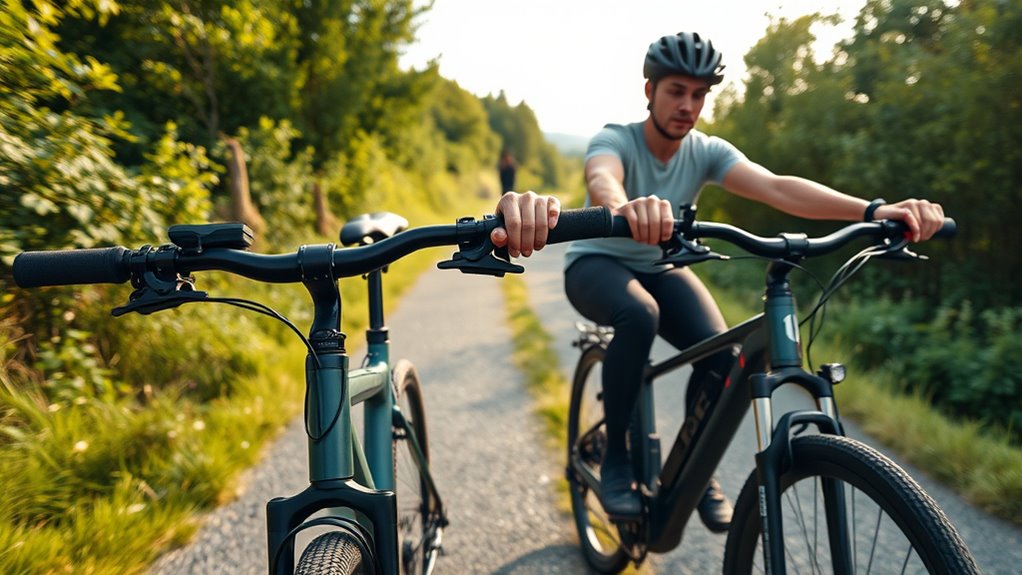
With pedal-assist bikes, you have better control over how much power you use, allowing you to adjust your ride’s intensity. You can manually regulate assistance levels to match your effort or terrain, giving you more control. This adaptive system helps you ride more comfortably and efficiently, whether you want a gentle boost or a stronger push. Additionally, understanding the different cookie categories can help you manage your privacy preferences while enjoying a tailored riding experience.
Manual Power Regulation
Manual power regulation gives you direct control over how much assistance your e-bike provides, allowing you to tailor the ride to your preferences and terrain. This feature lets you adjust motor power levels in real-time, giving you better motor customization options. It also guarantees compliance with local regulations, helping you stay within legal limits for motor output. With manual regulation, you can:
- Fine-tune assistance for uphill climbs or flat terrain.
- Conserve battery life by reducing power when unnecessary.
- Adapt quickly to changing riding conditions without relying solely on preset modes.
This control appeals to riders who want a more personalized experience and prefer managing their e-bike’s power output actively. It’s especially useful if you’re concerned about regulatory compliance and want to avoid exceeding legal power limits. Understanding store hours can help you plan your rides better and ensure you’re riding within permitted times.
Ride Intensity Control
Ride intensity control allows you to easily adjust the level of motor assistance during your ride, giving you the flexibility to match your effort and riding conditions. With precise control over assistance levels, you can optimize your cycling experience, whether climbing hills or cruising flat roads. This helps improve battery longevity by preventing unnecessary power usage, ensuring your bike’s battery lasts longer between charges. Additionally, managing assistance levels enhances motor efficiency because the motor works only as hard as needed, reducing wear and tear. You can fine-tune assistance to conserve energy on long rides or increase support when facing tough terrain. Overall, ride intensity control empowers you to balance effort and battery health, making your e-bike more efficient and reliable over time.
Adaptive Assistance Levels
Adaptive assistance levels automatically adjust the motor support based on your riding conditions and input, providing a seamless experience without constant manual changes. This feature enhances control over power assistance, allowing you to focus on your ride. With motor customization options, you can fine-tune how much support you receive, making your e-bike uniquely suited to your preferences. Plus, adaptive assistance helps conserve battery life by reducing power when unnecessary, which is helpful during long rides or battery swapping sessions. Implementation challenges in integrating these systems can be minimized with proper setup and maintenance.
Suitability for Different Terrain Types

When riding on hills and inclines, pedal-assist e-bikes give you better control and power, making climbs easier. Off-road terrain demands durable wheels and responsive handling, which some bikes handle better than others. In urban settings, ease of navigation and quick acceleration can markedly influence your riding experience on different terrains. Additionally, understanding Halloween safety tips can enhance your overall riding experience during festive events.
Hills and Inclines Handling
Pedal-assist e-bikes excel on hills and inclines because their motors provide consistent power as you pedal, making steep terrains more manageable. This steady assistance helps conserve battery longevity and enhances motor efficiency, so you can ride longer without worrying about battery drain. With pedal assist, you control the level of support, ensuring the motor works efficiently during climbs.
Consider these advantages:
- The motor maintains steady power output, reducing strain and improving efficiency.
- You can manage battery life better by adjusting pedal assist levels based on terrain.
- Consistent motor support makes tackling steep inclines smoother and less exhausting.
Off-Road Terrain Performance
Pedal-assist e-bikes are well-suited for off-road adventures because they provide controlled power that enhances stability and control across various terrain types. This feature allows you to navigate rocky trails, uneven surfaces, and steep inclines more safely. With motorcycle integration options, you can customize your e-bike for rugged terrains, boosting performance and confidence. It’s essential to contemplate road safety regulations, which often specify pedal-assist bikes’ limits for off-road use, ensuring legal compliance. Unlike throttle-only models, pedal-assist bikes help maintain balance and rider engagement, reducing the risk of accidents on unpredictable terrain. Overall, pedal-assist systems give you the reliable support needed to tackle challenging outdoor environments while adhering to safety standards.
Urban Navigation Ease
Traversing urban environments becomes easier with pedal-assist e-bikes because they offer smooth, controlled power that adapts to different terrains and traffic conditions. This makes maneuvering busy streets, bike lanes, and slight inclines hassle-free. Pedal-assist systems help maximize battery longevity by efficiently using power, ensuring you can travel longer distances without worry. Additionally, these bikes often feature theft prevention measures like integrated locks or alarm systems, giving you peace of mind. Incorporating good lighting can further enhance safety during nighttime rides.
Consider these advantages:
- Better control across varied urban terrains, reducing fatigue.
- Extended battery life through optimized pedal assistance.
- Enhanced theft prevention features, increasing security.
Cost Considerations and Maintenance

While both pedal-assist and throttle e-bikes typically require a higher upfront investment than traditional bicycles, their ongoing maintenance costs can differ markedly. Your battery longevity plays a vital role in long-term expenses, as replacing batteries can be costly but isn’t needed often if cared for properly. Pedal-assist bikes generally put less strain on their batteries, potentially extending their lifespan and reducing replacement costs. Conversely, throttle e-bikes may use batteries more intensively, leading to more frequent replacements. The initial investment covers the bike itself and the battery, so understanding how each type impacts battery longevity helps you plan future expenses. Additionally, Kia Tuning options like ECU remapping or suspension upgrades highlight how performance modifications can influence the overall cost and maintenance of vehicles. Overall, while the initial purchase might be higher, maintenance costs tend to be manageable if you prioritize battery care.
Safety and Rider Confidence
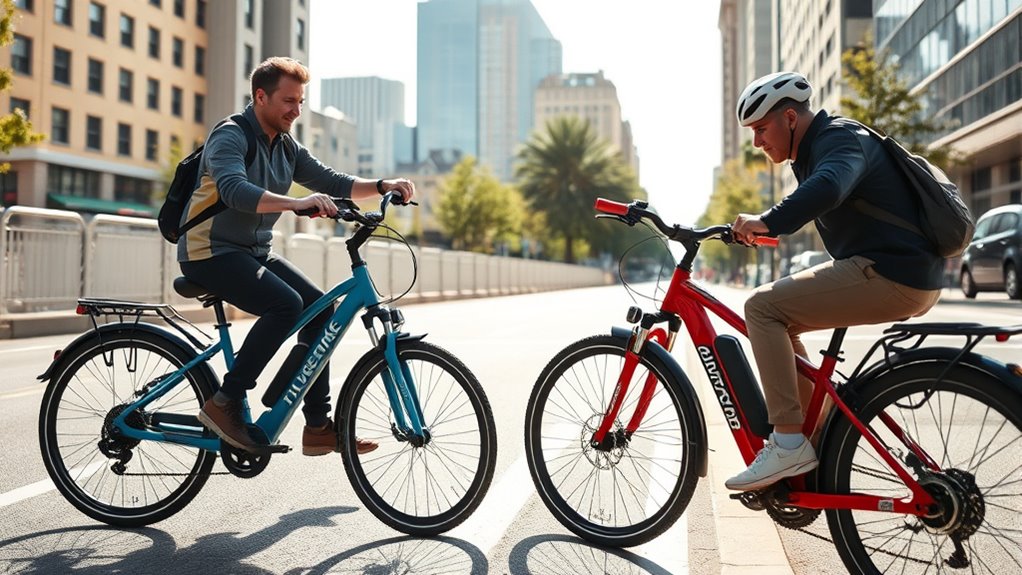
Safety and rider confidence are important factors to contemplate when choosing between pedal-assist and throttle e-bikes. With pedal-assist bikes, you often feel more in control, boosting your confidence through active engagement. Throttle bikes can be intimidating if you’re unfamiliar, but they simplify riding, especially in traffic. Consider these points:
- Battery management: Pedal-assist bikes encourage efficient battery use, reducing the risk of sudden power loss, which boosts your safety.
- Theft deterrence: Throttle e-bikes are easier to identify and harder to steal due to built-in locks, increasing security.
- Rider confidence: Pedal-assist models help build skills and control, making you feel more secure, especially on challenging terrains or crowded streets.
- Tuning options: Customizing e-bikes through performance upgrades such as better motors or controllers can further enhance safety and riding experience.
Both types impact safety, but understanding these features helps you choose confidently.
Environmental Impact and Sustainability
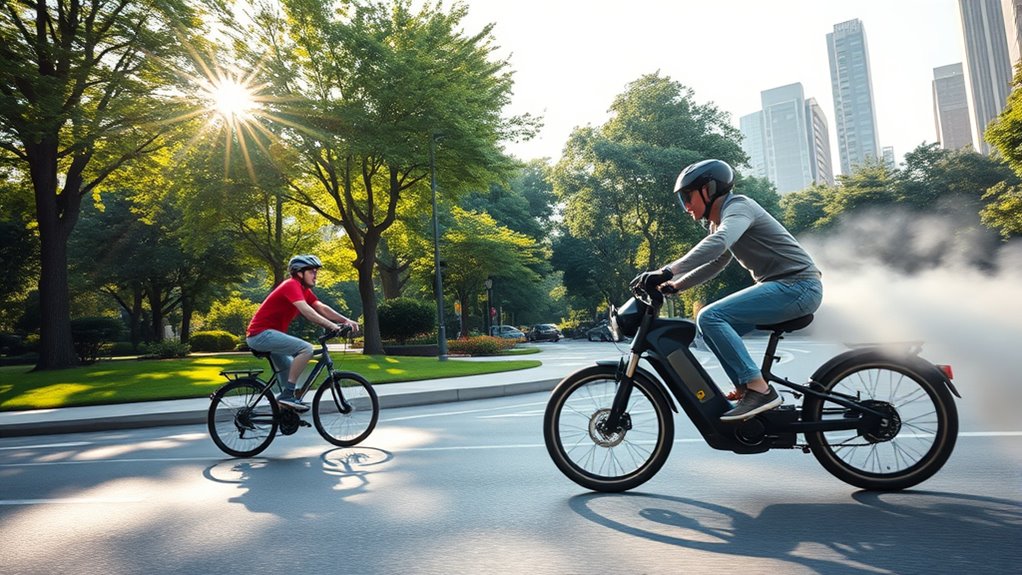
Choosing between pedal-assist and throttle e-bikes can considerably influence your environmental footprint. Pedal-assist bikes often require less energy during manufacturing, resulting in lower manufacturing emissions. They’re designed to promote longer lifespan and easier recycling through well-established recycling programs. Throttle e-bikes may have larger batteries and more complex components, which can increase waste and complicate recycling efforts. Additionally, their higher energy consumption during use can lead to increased carbon emissions if the electricity isn’t renewable. By opting for pedal-assist models, you support sustainability efforts and reduce your overall impact on the environment. You’ll also contribute to reducing landfill waste by choosing bikes built with recyclable materials and supported by recycling programs. Proper installation and maintenance of e-bikes further extend their lifespan and reduce environmental impact. Ultimately, pedal-assist bikes offer a greener, more sustainable transportation choice.
Frequently Asked Questions
How Do Pedal‑Assist and Throttle Bikes Impact Long-Term Health Benefits?
You’ll find that pedal‑assist bikes encourage more consistent effort, boosting your cardiovascular health and muscle engagement over time. Unlike throttle bikes, which can reduce physical activity, pedal‑assist bikes require you to pedal actively, helping you build strength and endurance. This sustained movement promotes better long-term health, making your rides more effective for fitness while still being enjoyable. So, choosing pedal‑assist bikes supports a healthier, more active lifestyle.
Can Pedal‑Assist Bikes Be Customized for Different Riding Preferences?
You can definitely customize pedal-assist bikes to match your riding preferences. Many models let you adjust the level of pedal assistance, from minimal help to full support, so you control how much effort you put in. You might also find options for different riding modes or settings that suit your style. This bike customization allows you to tailor your ride, making it more comfortable and enjoyable based on your specific needs.
How Do Maintenance Needs Compare Between Pedal‑Assist and Throttle E‑Bikes?
Think of maintaining your e-bike like tending a garden—you’ll need to care for different parts. Pedal‑assist bikes often have slightly lower battery wear because you control power, but both require regular brake system checks for safety. I once met a rider whose throttle e-bike’s battery needed replacement sooner due to constant use, highlighting how different riding styles influence maintenance needs. Regular inspections extend your bike’s lifespan and keep you riding smoothly.
Are There Legal Restrictions on Using Throttle E‑Bikes in Certain Areas?
You should check local laws before riding a throttle e-bike, as legal restrictions vary by area. Many regions have specific area regulations that limit or prohibit throttle bikes on certain paths or roads. Some places treat throttle e-bikes the same as mopeds, requiring registration or licenses. Always research your local rules to avoid fines or confiscation, ensuring you ride legally and safely.
Which Type Offers Better Performance in Adverse Weather Conditions?
Imagine your ride as a steady ship steering stormy seas—you’ll want reliable weather resilience. Pedal-assist bikes, with their natural engagement, often offer better traction control and stability in adverse weather, helping you stay balanced on slippery surfaces. Throttle e-bikes can be more unpredictable, risking slips and skids. So, for challenging conditions, pedal-assist bikes give you more control, keeping you safer when the weather turns rough.
Conclusion
Choosing between pedal-assist and throttle e-bikes depends on your riding style and priorities. Do you want a natural, engaging experience or maximum convenience? Consider how each option aligns with your terrain, fitness goals, and budget. Ultimately, the right e-bike can transform your rides and reduce your carbon footprint. Are you ready to embrace the future of cycling and make a conscious choice that benefits both you and the planet?