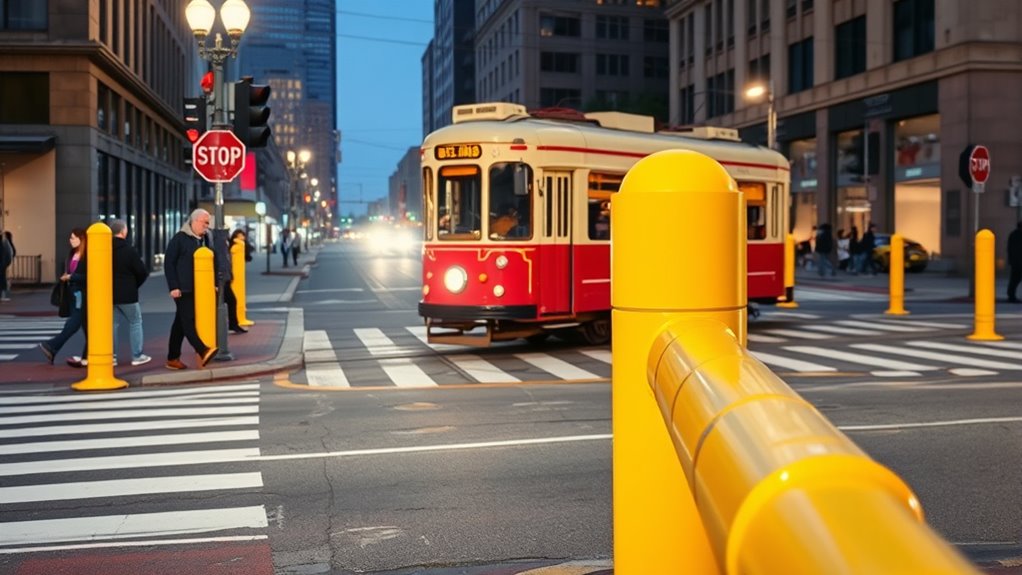

When approaching streetcar and rail crossings, always obey signals, gates, and alarms. Stop behind lowered gates, look both ways, and wait for clear signals before crossing. Never try to beat the train or go around barriers. Stay alert, keep distractions away, and use designated crosswalks or safe crossing points. By following these safe techniques, you help prevent accidents—continue exploring to learn even more ways to stay safe at crossings.
Key Takeaways
- Always obey flashing lights, gates, and alarms; do not attempt to cross until signals indicate it is safe.
- Stop well behind lowered gates and wait until they are fully raised before crossing.
- Look both ways and listen for train horns before proceeding, even if signals are not active.
- Use designated crosswalks and avoid distractions like phones or headphones while crossing.
- Educate children on crossing safety and stay alert to prevent accidents at streetcar and rail crossings.

Streetcar and rail crossings are critical points where vehicle and pedestrian traffic intersect with train routes, requiring careful safety measures to prevent accidents. As someone managing these crossings, understanding how signal timing works and prioritizing pedestrian safety can considerably reduce risks. Signal timing is essential because it coordinates train movements with road traffic, ensuring that vehicles and pedestrians are given clear, predictable signals to either proceed or wait. When signals are well-timed, you can anticipate when a train is approaching and act accordingly, reducing the chances of crossing into an active track. It’s important to always obey signals, whether they’re flashing lights, gates, or audible alarms, as these are designed to protect everyone involved.
Effective signal timing and obeying signals are key to safe streetcar and rail crossings.
Pedestrian safety is especially paramount at these crossings. If you’re walking, always use designated crosswalks and wait for the signals indicating it’s safe to cross. Never attempt to beat a train by rushing across the tracks; trains are often closer and moving faster than they appear. Keep a safe distance from the tracks until the signals clearly indicate that it’s safe to proceed. When crossing, stay alert and avoid distractions like looking at your phone or listening to music through headphones. Train horns and signals are your primary alerts, and you should be prepared to respond immediately.
For drivers, adhering to signal timing is equally important. When signals indicate a train is approaching, don’t try to beat the crossing. Stop well behind the gates if they’re down, and wait until the signals and gates are fully lifted before proceeding. Remember, even if you don’t see a train immediately, it could be approaching quickly. Being patient and cautious helps prevent accidents. Also, never attempt to go around lowered gates; this is illegal and dangerous, as trains can be closer than they appear.
In addition to following signals, maintain awareness of your surroundings. Look both ways before crossing, even if the lights are flashing or gates are down, as mechanical failures can occur. Educate others around you—especially children—about the importance of crossing safety and obeying signals. Regularly inspecting your surroundings and respecting the safety measures in place makes a substantial difference. By understanding signal timing and prioritizing pedestrian safety, you contribute to a safer environment for everyone sharing the crossing. Ultimately, your vigilance and adherence to safety protocols help prevent accidents and save lives at these busy intersections. Incorporating advanced safety features such as auto functions and smart signals can further enhance crossing safety and efficiency.
rail crossing safety lights and alarms
As an affiliate, we earn on qualifying purchases.
As an affiliate, we earn on qualifying purchases.
Frequently Asked Questions
How Are Crossing Signals Maintained for Safety?
You guarantee crossing signals stay safe by regularly inspecting and maintaining warning devices, such as flashing lights, bells, and gates. Maintenance protocols include checking for proper operation, cleaning components, and testing the signaling system frequently. If any malfunction occurs, you promptly repair or replace faulty parts to prevent accidents. Consistent upkeep guarantees signals reliably warn drivers and pedestrians, keeping everyone safe at streetcar and rail crossings.
What Are the Penalties for Illegal Crossing?
Imagine you ignore crossing signals and get caught; you face serious crossing penalties, including hefty fines and possible jail time. Illegal crossings disrupt safety and can cause accidents. Authorities impose strict penalties to deter such behavior. For example, in some areas, illegal crossing can lead to a $500 fine or more, and repeated offenses may result in license suspension or criminal charges. Always follow safety rules to avoid these penalties.
How Do Weather Conditions Affect Crossing Safety?
Weather conditions greatly impact crossing safety by creating weather hazards and visibility challenges. Rain, snow, fog, and ice can make surfaces slippery, increasing your risk of slipping or losing control. Reduced visibility from fog or heavy rain can hide approaching trains or streetcars, making it harder to judge distances and timing. Always exercise extra caution in bad weather, slow down, and make sure your vehicle is well-maintained to stay safe at crossings.
Are There New Technologies Improving Crossing Safety?
Yes, new technologies are improving crossing safety. You’ll find automated barrier systems that activate when a train approaches, preventing vehicles and pedestrians from crossing at unsafe times. Pedestrian detection technology also plays a key role by monitoring foot traffic and alerting drivers or activating safety measures if pedestrians are present. These innovations work together to reduce accidents, making crossings safer for everyone and helping you avoid potential hazards more effectively.
Who Is Responsible for Crossing Safety Inspections?
Think of crossing safety inspections as your guardian at the gate. You’re responsible for ensuring that crossing signage is clear and visible, and pedestrian barriers are in place and functioning properly. Usually, transportation authorities or local agencies handle these inspections, but you should report any issues you notice. Staying vigilant helps keep everyone safe, just like a vigilant guardian guarding the entrance to a safe crossing.
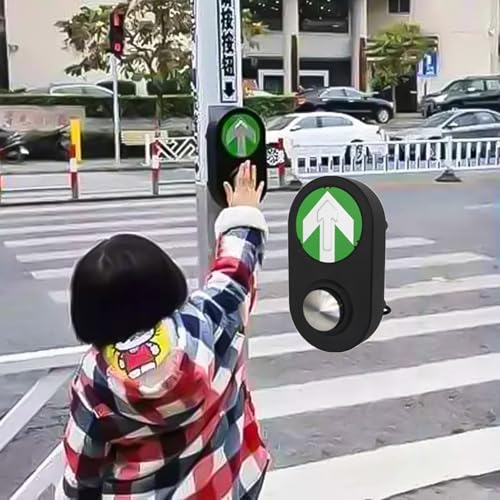
Lmekoe Crosswalk Pedestrian Push Button Traffic Signal Push Button Contactor for Safety Crossing Traffic Light
- Crossing Application Button: Triggers pedestrian crossing signals
- Easy to Use: Connects to traffic lights for control
- Convex Tip Design: Assists visually impaired users
As an affiliate, we earn on qualifying purchases.
As an affiliate, we earn on qualifying purchases.
Conclusion
Remember, crossing streetcars and trains is like walking a tightrope — it requires focus and caution. Always obey signals, look both ways, and stay alert. If you stay vigilant, you’ll navigate crossings safely, avoiding accidents like a skilled tightrope walker. Your safety depends on your awareness and actions. Stay cautious, stay safe, and make every crossing a secure moment in your day.

System Sensor MHW SpectrAlert Mini Horn, Wall Mount, 12/24V, White
- Voltage Range: 12-24V
- Product Type: Mini Horn
- Function: Buzzer, Horn, Alarm
As an affiliate, we earn on qualifying purchases.
As an affiliate, we earn on qualifying purchases.

120" Vermont DOT Railroad Crossing Kit – 1/16" (.063") Light-Duty LDPE
- Length of the Kit: 120 inches long
- Material: Light-duty 1/16" LDPE
- Durability: Designed for long-lasting markings
As an affiliate, we earn on qualifying purchases.
As an affiliate, we earn on qualifying purchases.