Urban hazards like door zones, driveways, and delivery trucks pose unseen dangers for pedestrians and drivers alike. When vehicles double park or stop abruptly in these areas, it increases the risk of accidents and blind spots, especially near busy sidewalks. Being alert near driveways or during delivery truck operations can help you avoid unexpected collisions. Understanding these hazards more deeply will help you stay safer in urban environments, so keep exploring to learn how to navigate these risks effectively.
Key Takeaways
- Door zones and driveways are common urban hazards due to limited visibility and sudden vehicle movements.
- Delivery trucks often double park or stop abruptly, increasing pedestrian risk in these areas.
- Restricted sightlines near door zones and driveways make pedestrian-vehicle interactions more dangerous.
- Proper urban planning and enforcement can reduce hazards from delivery vehicles and parking in risky zones.
- Enhancing signage and pedestrian crossings in these areas improves safety awareness and accident prevention.

Urban hazards pose significant risks to city residents, often arising from the dense infrastructure and human activity that define urban environments. As you navigate busy streets, you’re constantly exposed to dangers like pedestrian safety issues and traffic congestion, both of which are amplified by the crowded nature of city life. Pedestrian safety is a critical concern because, in urban areas, pedestrians share space with vehicles, bikes, and delivery trucks, often leading to accidents if precautions aren’t taken. With traffic congestion slowing down vehicles, drivers may become impatient, increasing the likelihood of reckless maneuvers that put pedestrians at risk. You need to stay alert, especially when crossing streets or walking along busy sidewalks, because vehicles might not always see you or give enough space.
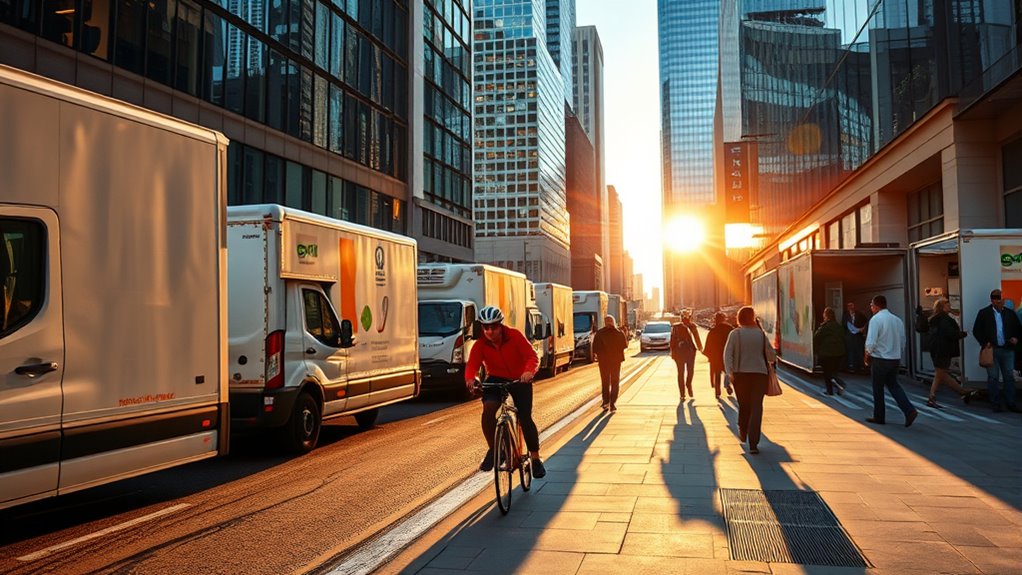
Traffic congestion doesn’t just make commutes frustrating; it creates a cascade of hazards, including increased chances of accidents and delays in emergency responses. When streets are clogged, drivers tend to become more aggressive, sometimes ignoring traffic signals or rushing to beat the congestion—behaviors that threaten pedestrian safety. Pedestrians may find themselves caught in the chaos, especially at intersections where vehicles often run red lights or make unpredictable turns to avoid traffic jams. Additionally, congestion forces delivery trucks and service vehicles to stop frequently, often in inconvenient spots like door zones or driveways, creating further hazards for pedestrians. You might notice delivery trucks parking too close to crosswalks or blocking sidewalks, which forces pedestrians to step into traffic or walk around obstacles, increasing the risk of accidents.
Door zones and driveways are particular trouble spots because they are often overlooked in urban planning. When delivery trucks or service vehicles park in these areas, pedestrians are vulnerable to being hit by passing cars or getting caught in blind spots. Delivery trucks frequently double park or stop abruptly, making it harder for pedestrians to navigate safely and increasing the chance of accidents. In congested areas, drivers may also struggle with limited visibility, especially near driveways where vehicles are backing out or turning, and pedestrians might be hidden from view. These hazards are compounded during peak hours when traffic volume is high and streets are crowded, making vigilance essential for pedestrian safety. Recognizing these risks, city planners and residents alike must work together to improve traffic flow, enforce parking regulations, and create safer sidewalks to reduce urban hazards and protect everyone moving through the city. Additionally, implementing high-quality projectors in urban signage and public information displays can help improve communication and safety awareness.
Frequently Asked Questions
How Can City Planners Improve Safety Around Door Zones?
To improve safety around door zones, you should advocate for city planners to add sidewalk buffers and enhance street lighting. Sidewalk buffers create a physical separation between pedestrians and parked cars, reducing the risk of dooring accidents. Better street lighting guarantees visibility during night hours, helping both pedestrians and drivers see potential hazards. These measures make door zones safer, encouraging walking and protecting everyone from injury.
What Are the Most Common Injuries From Delivery Trucks?
You’re most likely to get injured from delivery trucks due to their blind spots, which hide pedestrians from drivers’ view. These blind spots make it easy for trucks to accidentally hit someone, especially when they’re backing up or turning. Poor pedestrian visibility around delivery trucks increases the risk of being struck, so always stay alert near these vehicles, especially in busy urban areas.
How Do Driveway Designs Impact Pedestrian Safety?
Driveway designs considerably impact your safety by affecting sidewalk obstructions and driveway visibility. When driveways are well-designed, they keep sidewalks clear, reducing the risk of pedestrians stepping into traffic. Good visibility allows you to see oncoming vehicles, giving you time to react. Conversely, poorly designed driveways with obstructed views or narrow entrances can hide cars, increasing your chances of accidents. Always stay alert around driveways and choose walkways that prioritize visibility.
Are There Legal Restrictions on Parking in Door Zones?
Imagine a world where parking in door zones causes chaos—well, there are strict parking regulations and door zone restrictions that prevent this. Legally, you can’t park in door zones, as it’s often prohibited by local ordinances to protect pedestrians. These restrictions aim to keep door zones clear, ensuring safe passage. Ignoring them risks fines or towing, so always check local signs and regulations before parking.
What Technology Can Help Detect Hazards in Urban Areas?
You can use sensor systems for hazard detection in urban areas, which help identify potential dangers like door zones or delivery trucks. These technologies use cameras, radar, or lidar to monitor surroundings in real-time, alerting you to hazards before they become accidents. Implementing sensor systems enhances safety by providing early warnings, allowing you to react quickly and avoid dangerous situations in busy city environments.
Conclusion
Maneuvering urban hazards is like walking a tightrope—you need awareness and quick reflexes to stay balanced. Door zones, driveways, and delivery trucks are the unseen obstacles waiting to trip you up. By staying alert and cautious, you become the skilled acrobat, avoiding danger amidst the chaos. Remember, every step you take is part of your own performance—stay focused, stay safe, and keep your balance on this busy city stage.