To choose the right assist level for traffic, assess whether you’re in light or heavy traffic. In light traffic, lower assist conserves your battery and gives you more control, while in dense traffic, higher assist helps maintain a steady speed and reduces fatigue. Adjust based on traffic flow to balance efficiency and safety. By tailoring your assist, you’ll extend battery life and guarantee a smoother ride—if you keep exploring, you’ll find even more tips to perfect your setup.

Get bike and ride gear delivered free with Prime
- Fast, free delivery on millions of items
- Prime Video, Amazon Music and more included
- Member-only deals all year
Key Takeaways
- Reduce assist in light traffic to conserve battery and maintain control, increasing assist in dense traffic for safety.
- Adjust assist higher during stop-and-go conditions to reduce rider fatigue and improve safety.
- Use lower assist on open roads to extend ride duration and optimize battery life.
- Increase assist in congested areas to help navigate traffic smoothly and reduce strain.
- Continuously monitor traffic flow and adapt assist levels to balance efficiency and rider comfort.
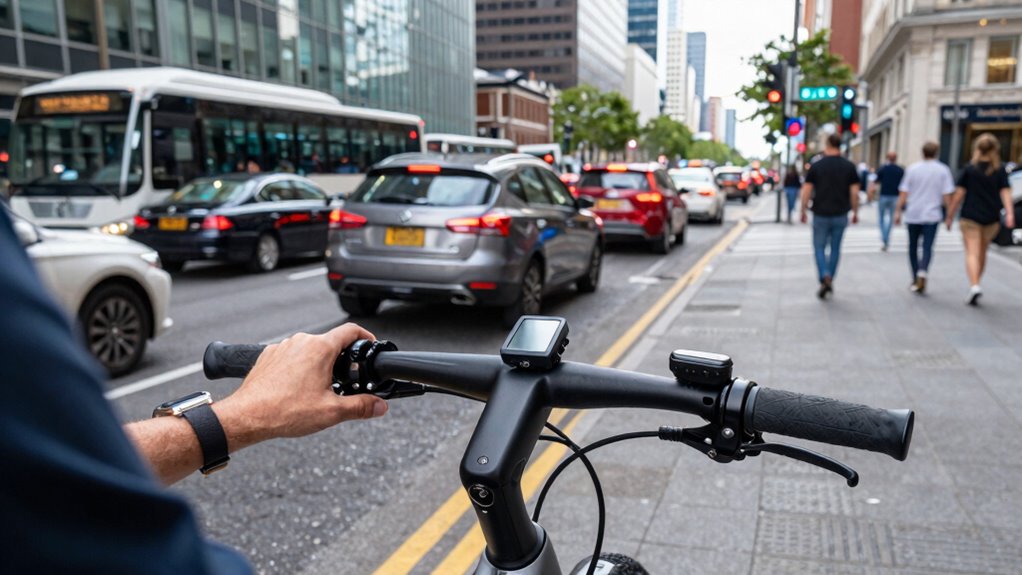
Have you ever struggled to find the perfect assist level on your equipment? It’s a common challenge, especially when you’re navigating different traffic conditions. The right assist level can make your ride smoother, safer, and more enjoyable. To achieve this, you need to understand how adjusting your assist impacts battery optimization and user comfort. Lower assist levels conserve battery life, allowing you to go farther without recharging, which is especially useful during longer commutes or rides through less busy areas. Higher assist settings provide more power, helping you tackle steep inclines or heavy traffic with less effort. But keep in mind, increased power consumes more battery, so it’s a balancing act.
When traffic is light and roads are clear, dialing down your assist level can give you more control and extend your ride time. You’ll notice that with less assistance, your muscles do more of the work, which can improve your overall exercise benefits and help conserve your battery. Conversely, when traffic thickens or you’re faced with challenging terrain, boosting your assist can keep your speed steady and reduce fatigue. This way, you stay comfortable and alert, rather than tiring out too quickly. Adjusting the assist level based on traffic flow doesn’t just benefit your stamina; it also enhances user comfort by preventing you from feeling overwhelmed or underpowered. Additionally, understanding how smart home technology integrates with your riding habits can help you optimize your experience further. Being familiar with battery management strategies can also prolong your device’s lifespan and ensure consistent performance. Recognizing terrain considerations can further refine your assist adjustments for different environments. In more complex urban settings, being aware of traffic patterns can help you select the most appropriate assist level for safety and efficiency.
Another factor to consider is the terrain itself. On flat roads or gentle slopes, a moderate assist level usually strikes the best balance between performance and battery life. When you hit steeper hills or uneven surfaces, increasing the assist can make a significant difference in maintaining a comfortable cadence and preventing strain. This tailored approach means you’re not overusing your battery on easy stretches nor underpowering yourself during tougher segments. Paying attention to riding environment can also help you adapt your assist level more effectively to changing conditions.
Ultimately, choosing the right assist level is about being mindful of traffic conditions and how they influence your ride. It’s a dynamic decision — you should adjust as needed, rather than sticking to one setting throughout your journey. This flexibility not only optimizes your battery’s lifespan but also ensures you’re riding in the most comfortable way possible. By fine-tuning your assist level according to traffic and terrain, you make every ride more efficient, enjoyable, and safe. It’s all about finding that sweet spot that balances power, battery use, and your personal comfort.
Popular right now

Ninja DualZone Smart Air Fryer, 10 Qt, 6-in-1, DZ950

LG 85-inch QNED75B Mini LED Smart TV Bundle with HDMI and CPS Protection Plan

Hisense 85 U6 Pro Series Mini-LED ULED 4K UHD HDR Gaming AI Smart Fire TV (85U6SF Pro)
As an affiliate, we earn on qualifying purchases.
Frequently Asked Questions
Can Assist Levels Be Changed While Riding?
Yes, you can change the motorcycle assist level while riding. Most bikes with assist features allow for assist level adjustment on the fly, giving you flexibility to adapt to traffic conditions. You simply use the designated controls or buttons to increase or decrease the assist level, ensuring ideal support and control during your ride. Always check your motorcycle’s manual to understand how to properly adjust the assist level safely in real-time.
Do Different Assist Levels Impact Battery Life?
Different assist levels definitely impact your e-bike’s battery life. For example, using the highest assist setting can reduce battery efficiency by up to 50%, increasing power consumption considerably. When you crank up the assist, your battery drains faster, so you’ll need to recharge sooner. Lower assist levels help conserve energy, extending your ride time. So, choosing the right assist level balances your riding needs with ideal power consumption and battery longevity.
Is There a Recommended Assist Level for Highway Driving?
For highway driving, you should set your assist level to a moderate setting. This helps maintain smooth traffic flow and guarantees you respond effectively to road signage and changing conditions. Higher assist levels can offer more support but may drain your battery faster. Adjust to a level that keeps you comfortable, attentive, and in sync with traffic flow, while also respecting road signage to ensure safe, efficient travel.
How Do Assist Levels Affect Overall Safety?
Assist levels directly impact safety by influencing rider fatigue and pedal efficiency. Higher assist levels reduce your effort, preventing fatigue on long rides, but may make you less attentive. Lower levels demand more pedaling, increasing fatigue but boosting your focus. Choosing the right assist helps maintain control and awareness, ensuring safer riding. Adjust according to traffic conditions so you stay alert, efficient, and in control at all times.
Are Assist Levels Customizable for Individual Preferences?
Ever wonder if assist levels are customizable for your personal preferences? Yes, many bikes and e-scooters offer personalization options, allowing you to tailor the assist level to your comfort and riding style. You can adjust settings to match your experience or the terrain you’re tackling. So, whether you prefer a more relaxed ride or more support, you can easily set the assist level that fits your needs best.
Conclusion
Remember, choosing the right assist level is like tuning a guitar—you want just enough tension to hit the perfect note. When I first started, I set my assist too high and felt disconnected from the ride. But once I dialed it down, every turn became more responsive and enjoyable. According to recent surveys, riders who adjust their assist levels adapt faster to changing traffic, making every journey safer and more comfortable. Trust your instincts and fine-tune as you go—your ride will thank you.