
To choose safer streets instead of just faster ones, look for features like strategic street lighting that improves visibility and well-placed crosswalks that alert drivers. Support calming measures such as speed bumps and curb extensions that naturally slow traffic and protect pedestrians. Observe if the street design includes narrow lanes, traffic islands, or median refuges that make driving more predictable. Signage and strict speed limits further enhance safety, creating a shared space for all. Keep exploring to discover more ways to make streets safer for everyone.

Get bike and ride gear delivered free with Prime
- Fast, free delivery on millions of items
- Prime Video, Amazon Music and more included
- Member-only deals all year
Key Takeaways
- Prioritize street designs that enhance pedestrian visibility with proper lighting, markings, and removal of obstructions.
- Implement traffic calming measures like speed bumps, curb extensions, and lane narrowing to reduce vehicle speeds.
- Incorporate street features such as median refuges and traffic islands to facilitate safe crossing points.
- Enforce and promote visible signage and policies that support lower speed limits and pedestrian awareness.
- Design streets that encourage human activity, social interaction, and environmental benefits to foster safer, vibrant communities.
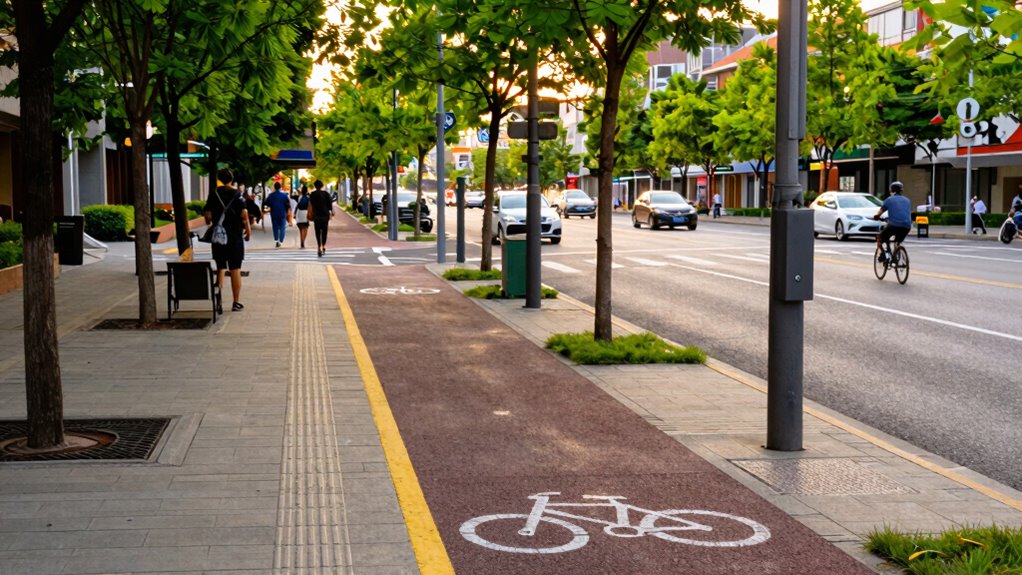
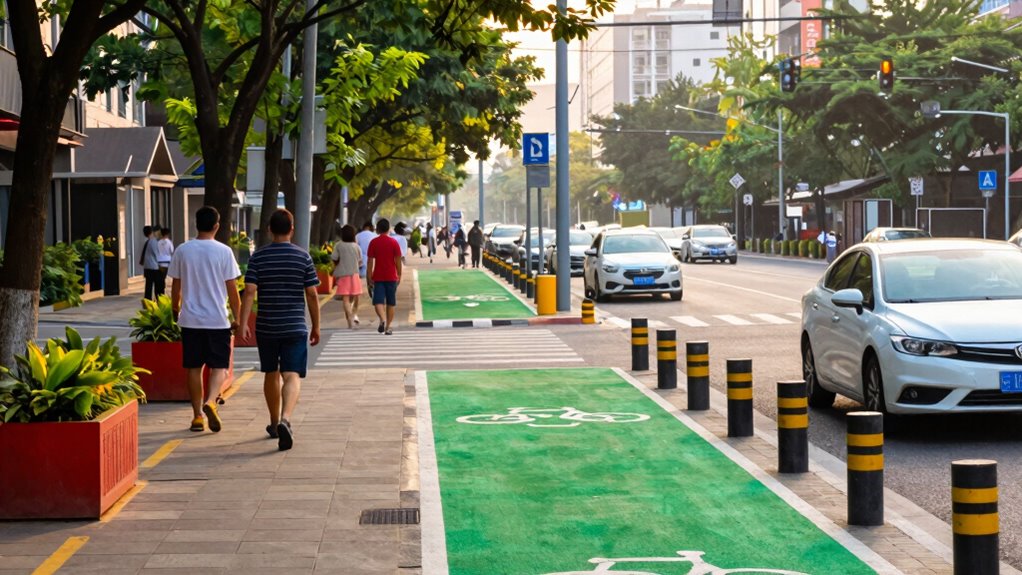
Creating safer streets is essential for building vibrant, walkable communities where everyone feels secure. When you prioritize safety over speed, you help foster an environment where pedestrians, cyclists,, and drivers coexist harmoniously. One of the most effective ways to achieve this is by enhancing pedestrian visibility. Ensuring that pedestrians are clearly seen by drivers reduces the risk of accidents considerably. This can be done through strategic street lighting, well-placed crosswalks, and the removal of visual obstructions like parked cars or overgrown vegetation. Bright, high-contrast markings on crosswalks and signage also alert drivers to slow down and pay attention, especially in areas with high foot traffic.
Enhancing pedestrian visibility through lighting, crosswalks, and signage promotes safer, more walkable communities.
Traffic calming measures are crucial in creating streets that prioritize safety rather than just faster travel times. These techniques include installing speed bumps, curb extensions, chicanes, and narrowing lanes to naturally slow vehicles down. When you incorporate traffic calming, you discourage reckless speeding and encourage drivers to stay alert and attentive. These measures create a more predictable environment for pedestrians, making it safer to cross streets and walk along sidewalks. Not only do they reduce vehicle speeds, but they also lessen the severity of collisions should they occur, saving lives and reducing injuries.
Choosing safer streets also involves rethinking street design to prioritize human activity. Instead of wide lanes that invite speeding, consider narrower roads that encourage slower driving. Add curb extensions at crosswalks to shorten crossing distances and increase pedestrian visibility, making it easier for drivers to see and yield to pedestrians. Incorporating traffic islands and median refuges enhances safety for those crossing busy streets, providing a safe space in the middle of the road. These design choices not only slow traffic but also make streets more inviting for walking, biking,, and social interaction. Promoting biodiversity in street design can also contribute to creating more pleasant and environmentally friendly urban spaces. Additionally, integrating traffic calming elements consistently across neighborhoods can foster a culture of safety and shared responsibility among residents.
Furthermore, you should support policies that enforce stricter speed limits and improve signage. Clear, consistent, and visible signage reminds drivers to stay within safe speed limits, especially in residential or high-foot-traffic areas. Educating the community about the importance of traffic calming and pedestrian-friendly design helps foster a shared responsibility for safety. When streets are designed with these principles in mind, you’re not just making travel safer—you’re creating spaces where people feel comfortable and connected. Prioritizing pedestrian visibility and traffic calming transforms streets from hurried thoroughfares into lively, secure corridors that serve everyone, not just the fast-moving vehicles.
As an affiliate, we earn on qualifying purchases.
Frequently Asked Questions
How Do Traffic Calming Measures Improve Safety?
Traffic calming measures improve safety by reducing vehicle speeds and encouraging safer driving behaviors. They help manage traffic flow, preventing aggressive driving and sudden stops, which lowers accident risks. In areas with high urban congestion, these measures create a more predictable environment for pedestrians, cyclists, and drivers alike. By calming traffic, you make streets safer and more accessible for everyone, reducing the likelihood of collisions and injuries.
What Role Does Lighting Play in Street Safety?
Imagine a street cloaked in darkness, then lit by vibrant, well-placed lighting. You see how lighting enhances urban aesthetics and guides your movement. Good lighting technology reduces accidents by illuminating hazards and making pedestrians and cyclists visible. It creates a safer environment at night, discouraging crime and boosting confidence. Proper lighting transforms streets into inviting, secure spaces, ensuring you feel safer and more comfortable steering through your community.
How Can Community Input Influence Street Design?
Your community input shapes street design through active engagement and design collaboration. When you participate in local meetings or share feedback, you help identify safety concerns and priorities. This collaboration guarantees planners consider your needs, like better lighting or crosswalks, making streets safer for everyone. Your voice influences decisions, fostering safer, more accessible streets that reflect your community’s unique needs and promote a sense of ownership and safety.
Are There Specific Features That Make Streets Safer for Pedestrians?
Imagine streets so safe, pedestrians feel like they’re walking on air. You can make that happen by adding well-marked pedestrian crossings that stand out like neon signs, guiding everyone safely across busy roads. Sidewalk buffers act like invisible shields, keeping pedestrians away from speeding cars. These features create a protective barrier, ensuring walkers feel secure and encouraging more foot traffic, transforming streets into inviting, safe spaces for everyone.
How Does Street Maintenance Impact Overall Safety?
Good street maintenance directly impacts safety by ensuring clear, smooth surfaces that reduce accidents and fall risks. Well-maintained streets also improve urban aesthetics, making areas more inviting and easier to navigate. Additionally, proper upkeep guarantees emergency access, allowing first responders to reach incidents quickly. When streets are kept in good condition, you create a safer environment where pedestrians, drivers, and emergency services can operate efficiently and confidently.
pedestrian crosswalk warning signs
As an affiliate, we earn on qualifying purchases.
As an affiliate, we earn on qualifying purchases.
Conclusion
Remember, choosing safer streets is like planting seeds for a better tomorrow. As you walk or drive through your neighborhood, envision a future where every corner is a haven, not a hazard. Prioritize safety over speed, and you’ll help cultivate a community where everyone can flourish. The path to safer streets isn’t just about reaching your destination faster—it’s about creating a landscape where safety blossoms with every step and turn you take.
As an affiliate, we earn on qualifying purchases.
As an affiliate, we earn on qualifying purchases.
Halloween Picks
halloween
As an affiliate, we earn on qualifying purchases.