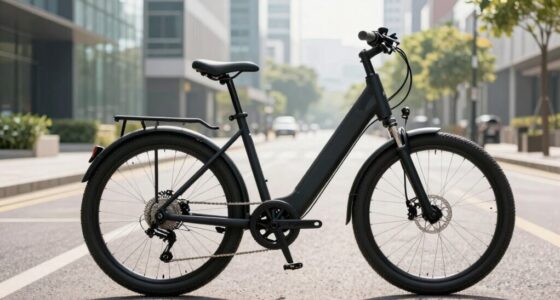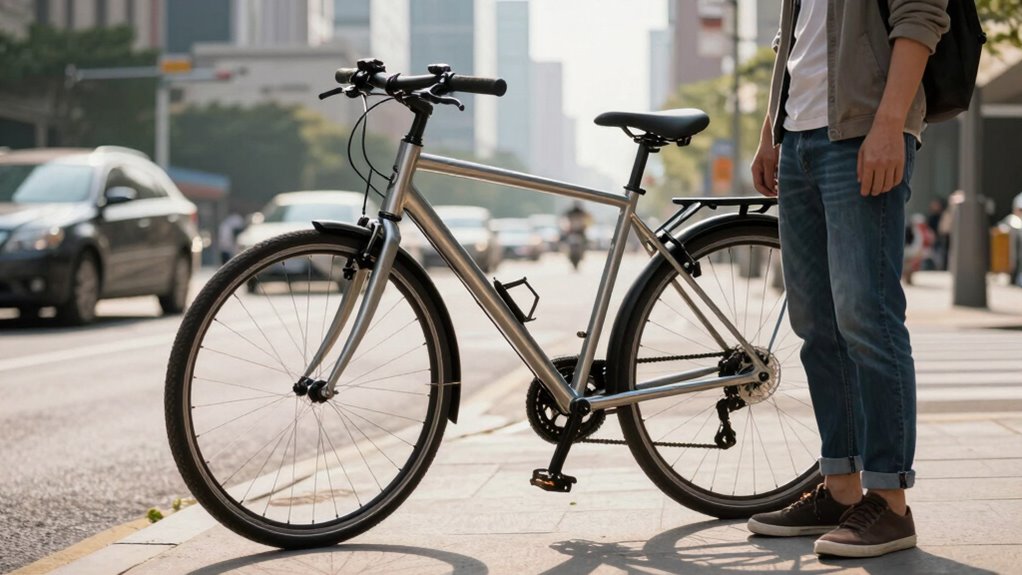

To choose between comfort and speed, consider your daily riding goals. If you prioritize relaxed, longer rides, focus on ergonomic grips, wider tires, and suspension features for comfort. If arriving quickly matters more, go for lightweight frames, aerodynamic positions, and performance upgrades like sleek wheels and drop handlebars. You can blend both by adding comfort accessories to speed-focused builds or vice versa. Continuing your exploration will help you craft a bike tailored perfectly to your routine.
Key Takeaways
- Identify your primary riding goals: relaxed commuting or quick travel.
- Prioritize comfort features like ergonomic grips and wider tires for longer, relaxed rides.
- Opt for lightweight frames, aerodynamic positioning, and sleek tires for faster, performance-oriented rides.
- Consider a hybrid setup that combines comfort accessories with select speed upgrades.
- Regular maintenance and proper bike fit optimize performance for either comfort or speed.
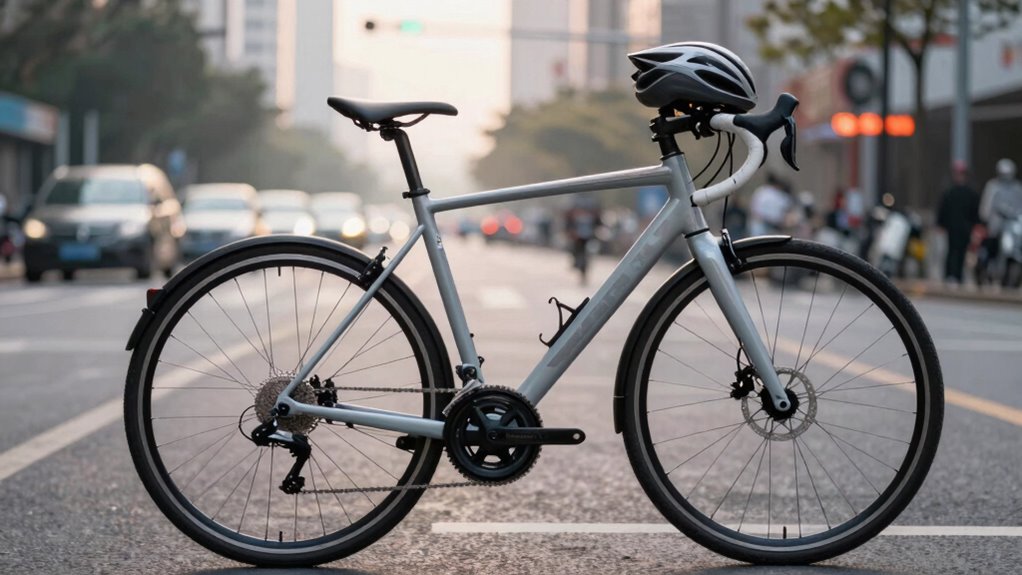
When building a commuter bike, you often face the choice between prioritizing comfort or speed. Your decision depends on what matters most for your daily rides. If you’re someone who values arriving at work relaxed and ready, comfort takes precedence. But if cutting through traffic quickly and arriving sooner is your goal, speed becomes your focus. Both approaches influence your choice of bike accessories, frame geometry, and component upgrades. Balancing these factors can help you create a bike tailored to your needs.
To emphasize comfort, you might opt for a wider saddle, ergonomic grips, and a relaxed frame geometry that puts you in a more upright position. These bike accessories go a long way in reducing fatigue on longer commutes. Consider adding features like suspension seats or front suspension forks, which absorb shocks from rough roads, making rides smoother. You’ll also want to pay attention to tires—lower pressure and wider tires provide better cushioning and grip, enhancing comfort. Regular maintenance tips like checking tire pressure frequently and lubricating the chain ensure your bike remains smooth and dependable, preventing discomfort caused by mechanical issues.
Opt for wider saddles, ergonomic grips, and suspension features to enhance comfort and reduce fatigue on longer rides.
On the other hand, if speed is your priority, you’ll want a more aerodynamic riding position. This means selecting a bike with a lightweight frame, narrow tires, and drop handlebars that let you lean forward into a more streamlined posture. Bike accessories such as clipless pedals and aerodynamic wheels can boost your efficiency, helping you conserve energy on longer or faster rides. Upgrading components like a high-quality drivetrain or lightweight rims makes a significant difference in acceleration and top speed. Maintenance tips for speed-focused builds include keeping your chain clean and well-lubricated to minimize resistance, regularly checking brake performance for quick stops, and ensuring that your tires are inflated to the perfect pressure for less rolling resistance. Additionally, understanding bike component compatibility can help ensure your upgrades integrate seamlessly and perform optimally. Incorporating a proper bike fit can also enhance both comfort and efficiency, regardless of your build focus.
Ultimately, your choice hinges on how much comfort you need versus how much speed you want. You might find a hybrid approach works best—adding comfort-enhancing accessories for daily rides while keeping a few speed-oriented upgrades handy for faster commutes or weekend rides. Remember, balancing these priorities also involves ongoing maintenance. Regularly inspecting your bike, keeping it clean, and replacing worn-out parts will help you enjoy a smooth, efficient ride regardless of your build’s focus. Whether you lean towards comfort, speed, or a mix of both, understanding these fundamental differences allows you to craft a commuter bike that truly matches your riding style and daily routine.
ergonomic bike grips
As an affiliate, we earn on qualifying purchases.
As an affiliate, we earn on qualifying purchases.
Frequently Asked Questions
How Does Terrain Influence Comfort Versus Speed Choices?
Terrain considerably influences your comfort versus speed choices. For rough or uneven terrain, prioritize terrain adaptability with wider tires and suspension to absorb surface impact, boosting comfort. Smooth surfaces allow you to focus on speed, using narrower tires and lightweight components. Understanding surface impact helps you select gear and bike features that match your route, ensuring a smoother ride whether you’re seeking efficiency or comfort.
Can You Upgrade Parts Later to Balance Comfort and Speed?
Yes, you can upgrade parts later to balance comfort and speed. For example, adding ergonomic grips improves comfort, while switching to a lightweight frame boosts speed. You might start with a focus on one and then gradually upgrade to the other as your needs evolve. This flexibility allows you to customize your ride, making it more comfortable or faster over time without needing a complete overhaul.
What Budget Considerations Affect Comfort and Speed Options?
Think of your budget as a map guiding your journey. With limited funds, you might choose a steel or aluminum bike frame for affordability, sacrificing some speed or comfort. Prioritizing comfort? Opt for a relaxed riding posture with cushier tires, but this may increase costs. For speed, lightweight carbon frames and aerodynamic features come at a premium. Balancing these factors helps you find the best fit within your budget constraints.
Are There Specific Accessories That Improve Comfort Without Sacrificing Speed?
Yes, you can boost comfort without losing speed by adding ergonomic grips and a padded saddle. Ergonomic grips reduce hand fatigue during long rides, helping you stay relaxed and focused. A padded saddle offers extra cushioning without adding much weight, making your commute smoother. These accessories improve your riding experience, ensuring you stay comfortable and efficient, whether you’re commuting daily or tackling longer distances.
How Do Weather Conditions Impact Comfort and Speed Priorities?
Weather conditions are like a fickle friend, changing your ride’s comfort and speed. Wind resistance can turn a swift ride into a struggle, so you’ll want to layer your clothing to block gusts and stay warm or cool as needed. Rain or snow demands waterproof gear, sacrificing some speed for comfort and safety. You’ll find balancing these factors depends on the forecast, making each ride a unique adventure.
wide commuter bike tires
As an affiliate, we earn on qualifying purchases.
As an affiliate, we earn on qualifying purchases.
Conclusion
Ultimately, choosing between comfort and speed in your commuter build is like balancing a tightrope—you’ll need to find that sweet spot where your ride feels just right. Think of your bike as a trusted steed, capable of swift gallops or gentle trots, depending on your mood. Embrace the dance between the two, knowing that your perfect ride is a personalized symphony, where comfort and speed harmonize like a well-tuned orchestra guiding you smoothly through every journey.
aerodynamic road bike wheels
As an affiliate, we earn on qualifying purchases.
As an affiliate, we earn on qualifying purchases.
suspension seat post for comfort
As an affiliate, we earn on qualifying purchases.
As an affiliate, we earn on qualifying purchases.