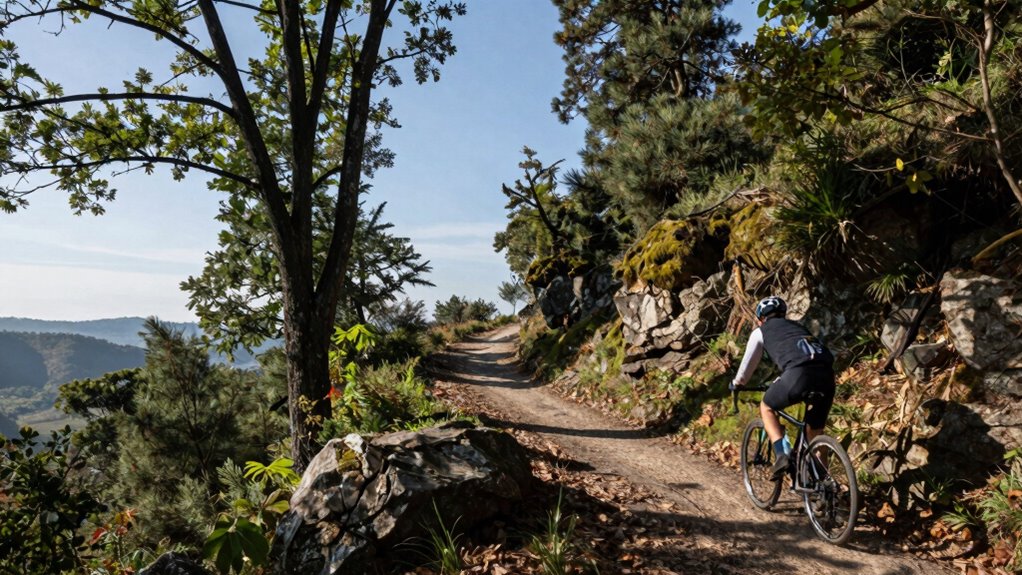

When your commute includes steep hills, make sure your bike is well-maintained—check brakes, inflate tires, and verify gear functions beforehand. Shift to a lower gear to ease pedaling, keep a steady cadence, and stay seated when climbing. Use smooth, progressive braking and keep your body slightly back when descending for control. Wear protective gear and wear reflective clothing for safety. To master these techniques and turn hills into manageable segments, continue exploring how to ride confidently through challenging terrain.

Get bike and ride gear delivered free with Prime
- Fast, free delivery on millions of items
- Prime Video, Amazon Music and more included
- Member-only deals all year
Key Takeaways
- Shift to lower gears early to make pedaling easier on steep inclines.
- Maintain a steady cadence and stay seated to conserve energy.
- Use proper braking techniques when descending to control speed safely.
- Stay alert for obstacles and terrain changes during climbs and descents.
- Wear protective gear and signal intentions for safety on challenging hills.
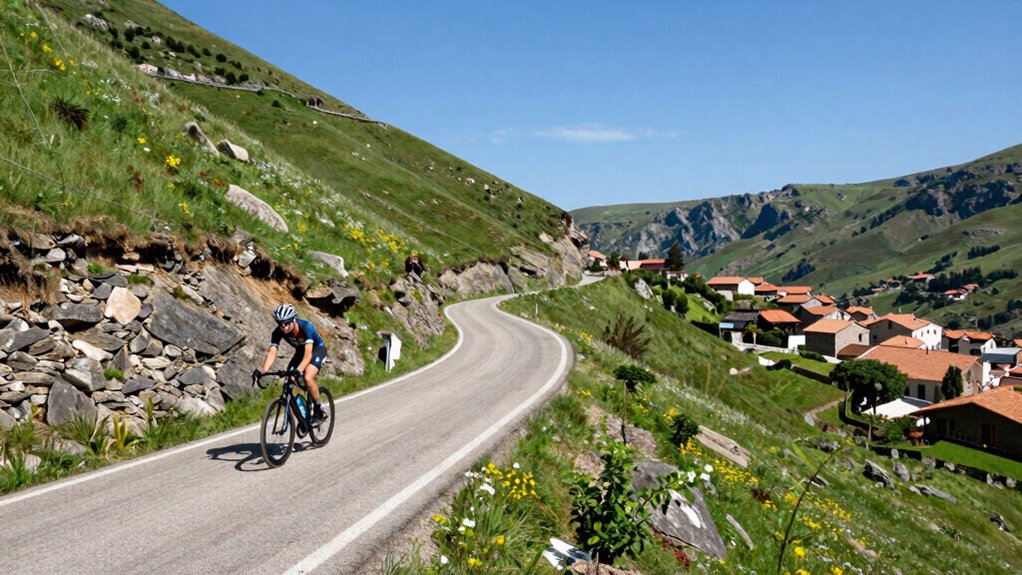
If your daily commute involves traversing steep hills, it can be both physically demanding and time-consuming. Tackling these inclines requires more than just effort; it demands a focus on hill safety and the right bike gear. Before you set out, check your bike to ensure it’s in top shape—brakes should be responsive, tires properly inflated, and gears functioning smoothly. Having the correct bike gear is essential for maintaining control and conserving energy when climbing or descending steep slopes.
Proper bike maintenance and gear are key to safe, efficient hill riding during your daily commute.
When approaching a hill, start by shifting to a lower gear. This makes pedaling easier and helps you maintain a steady rhythm without overexerting yourself. Keep your cadence consistent—aim for a smooth, steady pedal stroke rather than sprinting up the hill. As you climb, stay seated if possible, as this improves traction and keeps your weight balanced over the bike. If you start to feel fatigue, don’t push too hard; instead, take a brief moment to recover before continuing. Your focus should be on hill safety: keep your eyes on the road, watch for obstacles, and be prepared for sudden changes in terrain or traffic. Proper bike maintenance can also help ensure your ride remains smooth and safe over challenging terrain.
Descending steep hills requires just as much attention. Use your brakes judiciously—avoid grabbing them suddenly or riding the rear brake alone, which can cause a skid. Instead, apply both brakes smoothly and progressively to control your speed. Keep your body centered and slightly back to maintain stability, especially on uneven or loose surfaces. Wearing appropriate bike gear, like a helmet, gloves, and reflective clothing, enhances your safety by protecting you and increasing visibility. Good bike gear also includes comfortable, well-fitting shoes that grip the pedals securely, giving you better control during the climb and descent. Regular bike gear checks ensure everything functions correctly, helping to prevent mechanical failures during critical moments on steep hills.
Always be mindful of your surroundings. Slow down when approaching intersections, sharp turns, or busy areas. Use hand signals to communicate your intentions to drivers and other cyclists. Additionally, being aware of road conditions allows you to anticipate hazards like debris or wet patches that can affect your riding safety. Familiarizing yourself with U.S. e-bike laws can also help you understand where and how you can ride safely on different terrains and roadways. Regularly check your bike gear to ensure everything functions correctly—this can prevent mechanical failures that might occur during critical moments on steep hills. Incorporating proper training techniques can further boost your confidence and efficiency when tackling challenging inclines. Remember, hill safety isn’t just about how you ride but also about being prepared and aware of potential hazards. With the proper bike gear, steady technique, and cautious approach, you can navigate steep hills safely and efficiently, turning what seems daunting into a manageable part of your daily commute.
Popular right now

Shark Navigator Robot Vacuum with Self-Empty Base, Dark Grey (RV2120AE)

Ninja Foodi DZ201 8-Quart DualZone 6-in-1 Air Fryer

Dyson Cyclone V10 Origin Cordless Vacuum
As an affiliate, we earn on qualifying purchases.
Frequently Asked Questions
How Can I Prevent My Bike From Overheating on Steep Climbs?
To prevent your bike from overheating on steep climbs, focus on bike cooling and overheating prevention techniques. You should reduce your effort by shifting to a lower gear to decrease strain and avoid excessive heat build-up. Keep your cadence steady and avoid sudden bursts of power. Regularly check your bike’s components for proper lubrication and airflow, and consider installing fans or cooling pads if you often face long, steep climbs.
What Are the Best Footwear Options for Hilly Commutes?
You’ll want footwear that balances comfort and grip enhancement for hilly commutes. Opt for cycling shoes with stiff soles to maximize power transfer and support, ensuring your feet stay comfortable during long climbs. Alternatively, choose athletic shoes with good tread for better grip on varied surfaces. Prioritize a snug fit to prevent slipping and blisters, and consider clipless options if you’re comfortable—these help you stay connected to your bike, making steep hills more manageable.
How Do I Maintain My Bike’s Gears for Steep Hills?
To maintain your bike’s gears for steep hills, regularly check and clean your bike chain to prevent slipping and guarantee smooth shifting. Keep your gears properly adjusted and lubricated. Additionally, optimize your tire pressure—slightly lower pressure can improve traction and ease pedaling uphill. Consistently performing bike chain maintenance and tire pressure optimization helps your gears function efficiently, making those steep climbs less strenuous and more manageable.
Are There Specific Safety Tips for Descending Steep Hills?
Ever wondered how to stay safe when descending steep hills? You should use proper braking techniques—feather your brakes, avoid sudden stops, and keep control. Gear selection is vital; shift to a lower gear beforehand to reduce speed naturally. Always keep your weight centered and look ahead to anticipate obstacles. Do you want to enjoy the thrill rather than fear it? Follow these tips to descend safely and confidently.
How Can I Improve My Stamina for Frequent Hill Climbs?
To improve your stamina for frequent hill climbs, focus on consistent endurance training and refining your climbing techniques. Incorporate interval training, alternating between high-intensity efforts and recovery, to boost your stamina. Practice proper climbing techniques like maintaining a steady cadence and staying seated when possible. Over time, these strategies will build your strength and endurance, making steep hills feel more manageable and boosting your confidence on challenging commutes.
Conclusion
Embracing your hilly commute might feel like traversing a mountain range, but with a little patience and preparation, you’ll find your stride. Think of each uphill as a gentle challenge that builds strength and resilience. As you discover your rhythm, those steep inclines become less intimidating, transforming into opportunities for growth. So, keep your spirits high and your gear ready—before you know it, you’ll be conquering those slopes with a confident smile.