
Before every ride, you should double-check that your child’s car seat is properly installed, secure, and suitable for their age and size. Make sure all seat belts fit correctly, and inspect safety features like airbags and locks to verify they’re working properly. Confirm the vehicle’s condition, like tire pressure and fluid levels, and have an emergency kit ready. Keep your phone charged, and inform someone of your route—continuing your prep helps keep your kids safe every time.
Key Takeaways
- Ensure all children are properly buckled in age-appropriate car seats and harnesses are snug.
- Verify vehicle safety features like seat belts, airbags, and child locks are functioning correctly.
- Conduct a quick pre-trip safety check: seat belt fit, secure car seats, and vehicle readiness.
- Pack an emergency kit with first aid supplies, water, snacks, and a flashlight for safety.
- Keep communication devices charged, inform someone of your route, and monitor weather conditions.
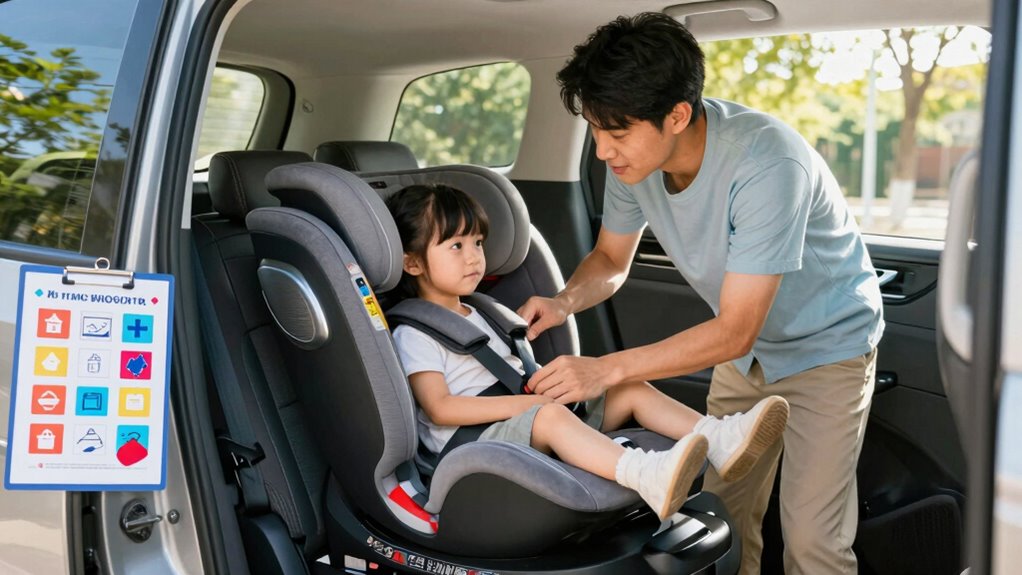
Commuting with kids can be a challenging part of daily life, especially when balancing their needs with your schedule. To make every trip safer and smoother, you need a thorough safety checklist before you hit the road. One of the most critical aspects is car seat safety. Before starting your journey, ensure that your child’s car seat is properly installed and appropriate for their age, weight, and height. Check that the seat is tightly secured, with no excessive movement, and that the harness straps fit snugly against your child’s body. Regularly inspecting the car seat for any signs of wear or damage is essential, as is replacing it after any accidents or when it reaches the manufacturer’s expiration date. Proper car seat safety isn’t just a recommendation—it’s a legal requirement in many places and a crucial step in protecting your little ones.
Ensure your child’s car seat is properly installed, secure, and appropriate for their age and size for safe travels.
Road trip planning plays a significant role in maintaining safety and reducing stress. When preparing for long drives, map out rest stops and consider the best routes to avoid heavy traffic or construction zones. Having a clear plan helps you avoid sudden stops or detours that could compromise safety. Pack an emergency kit that includes essentials like first aid supplies, water, snacks, and a flashlight. Make sure your vehicle is in good working order, with tire pressure checked and fluid levels topped off. Additionally, if you’re traveling with young children, bring extra blankets, toys, and comfort items to keep them calm and entertained during the trip.
As part of your safety checklist, verify that all safety features of your vehicle are functioning properly—seat belts, airbags, and child locks. It’s also wise to familiarize yourself with your car’s safety features and ensure everyone in the vehicle knows how to use them correctly. For road trip planning, consider the weather forecast and pack accordingly, as driving in rain or snow can increase risks. Keep your phone charged and accessible for navigation or emergencies, and always inform a trusted person about your route and expected arrival time.
Before every trip, do a quick review: Are all kids securely buckled in their car seats? Are the seat belts fitting correctly? Is your vehicle ready for the journey ahead? Taking these simple steps ensures that your road trip is not only enjoyable but also safe. Proper planning, combined with diligent checks on car seat safety, creates peace of mind and protects your children throughout every commute.
Frequently Asked Questions
What Is the Safest Car Seat for Toddlers?
The safest car seat for toddlers is a convertible safety seat that offers extended rear-facing benefits. You should choose one that easily shifts from rear-facing to forward-facing as your child grows. Rear-facing seats provide better support for your toddler’s head, neck, and spine, reducing injury risk in an accident. Make sure the seat fits your vehicle properly and meets all safety standards for ideal protection during every ride.
How Often Should I Check My Child’s Seat Installation?
You should check your child’s seat installation before every ride to verify safety. Remember, seat belt importance can’t be overstated, as it keeps your kid secure. Always follow rear-facing rules, especially for infants and toddlers, and make sure the seat is tightly installed and reclined at the correct angle. Regular checks prevent accidents caused by loose seats and guarantee your child’s safety during every trip.
Are Booster Seats Necessary for Older Children?
Yes, booster seats are necessary for older children, even if they’ve outgrown car seats. While booster seat laws and age guidelines vary, most recommend children remain in boosters until they’re 4’9” tall or around 8-12 years old. Think of it like a seatbelt’s best friend—properly positioning the lap and shoulder belt for safety. Skipping a booster can leave your child vulnerable in a crash, so follow the laws and guidelines.
What Should I Do if My Child Feels Car Sick?
If your child feels car sick, you should act quickly to ease their discomfort. Encourage them to look at the horizon or focus on a fixed point outside, which can help reduce motion sickness. Keep the car well-ventilated and offer small sips of water or ginger snacks as remedy options. You might also consider over-the-counter remedies, but consult your pediatrician first. Comfort and reassurance are key.
How Can I Keep Kids Entertained During Long Commutes?
The early bird catches the worm, so start with car entertainment to keep kids engaged from the get-go. Bring along travel games like I Spy, magnetic puzzles, or storycards to pass the time. Switch activities frequently to prevent boredom and keep their minds active. Having a variety of options guarantees they stay entertained, making long commutes more enjoyable for everyone. Remember, a little planning goes a long way!
Conclusion
Before you hit the road, remember, you’re the captain steering your family’s safety ship through unpredictable waters. Each checklist item is a lighthouse guiding you away from hidden dangers. With every buckle secured and mirror checked, you’re weaving a safety net that catches your little ones before they fall. Trust your instincts and stay vigilant—because a safe journey isn’t just about reaching your destination, but about creating memories wrapped in trust and protection.