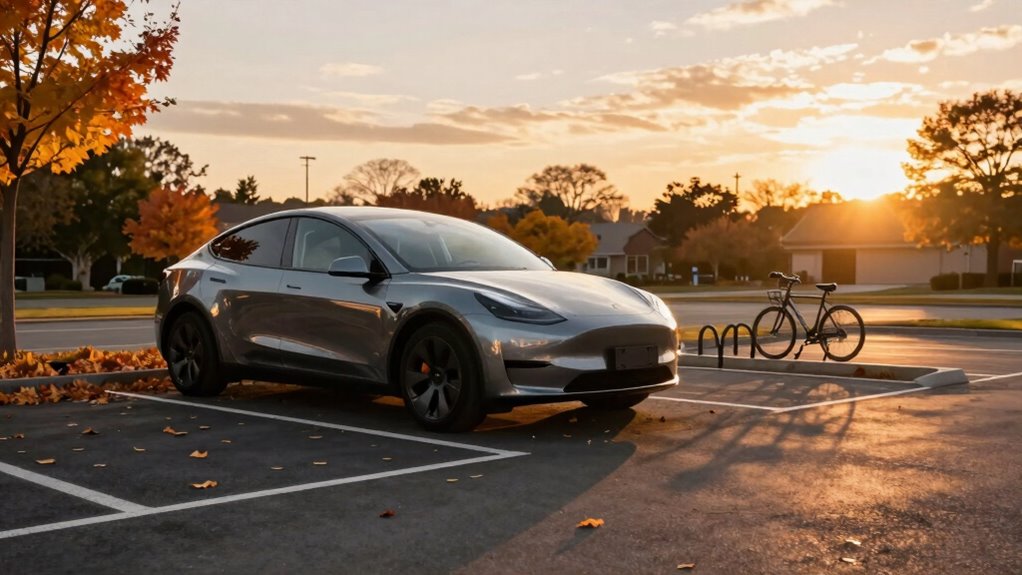

At the end of your day, park in a well-lit spot near entrances or security cameras, ensuring good visibility of your vehicle. Lock all doors and windows, activate your alarm or anti-theft system, and hide valuables out of sight. Walk with awareness, stick to lit paths, and trust your instincts if something feels off. By following these simple steps, you enhance your safety and vehicle security—keep going to discover more effective tips.

Get bike and ride gear delivered free with Prime
- Fast, free delivery on millions of items
- Prime Video, Amazon Music and more included
- Member-only deals all year
Key Takeaways
- Choose a well-lit, visible parking spot near entrances or security cameras.
- Lock all doors, close windows, and activate the vehicle’s anti-theft system before leaving.
- Remove or hide valuables from sight and store them securely in the trunk.
- Walk through well-lit, populated areas and stay alert for suspicious activity.
- Confirm all vehicle doors are locked and keys are with you before departing.

As your workday wraps up, establishing a consistent end-of-day parking routine can save you time and stress tomorrow. When you arrive at your parking lot, take a moment to choose a well-lit spot close to the entrance or exit. Good parking lot safety begins with visibility; well-lit areas discourage theft and vandalism, so aim for spots that are illuminated and within sight of security cameras if possible. This small step can make a significant difference in ensuring your vehicle’s security and your peace of mind.
Choose well-lit parking spots near entrances to enhance safety and prevent theft.
Once you’ve parked, always remember to lock your doors and double-check your windows. It’s a simple habit that greatly enhances vehicle security. If your car has an alarm or anti-theft system, activate it before heading inside. Many people forget to turn on their alarms, but it’s a quick step that can deter potential thieves, especially in quieter or less busy lots. If you carry valuables, avoid leaving them visible through the windows, as this can tempt theft. Instead, store them in the trunk or conceal them out of sight before you arrive at the parking lot.
As you leave your vehicle, take a moment to assess your surroundings. Are there any suspicious individuals nearby? Do you notice anything unusual? Trust your instincts—if something feels off, consider walking to a more populated or secure area before heading inside. When you’re ready to go, lock your car doors securely and take your keys with you. Never leave the keys inside the vehicle, even if you plan to return shortly. This simple step prevents accidental lockouts and theft.
When walking away from your vehicle, stay aware of your environment. Use well-lit paths and avoid shortcuts through isolated or poorly lit areas. If your parking lot has designated security patrols, take note of their presence — it’s an added layer of safety for you and your vehicle. If possible, park in a spot that offers clear lines of sight to your vehicle from the building or security station. This not only discourages potential trouble but makes it easier for security personnel to notice anything out of the ordinary. Additionally, parking lot safety tips can help you stay vigilant and prepared. Being aware of the surroundings and potential risks can help you react quickly if needed. Incorporating biodiversity-friendly practices, such as choosing well-maintained and environmentally conscious parking areas, can also contribute to a safer overall environment. Remember, a well-maintained parking lot not only enhances safety but also creates a more pleasant environment for everyone. A good end-of-day parking routine isn’t just about parking; it’s about creating a habit that prioritizes safety and vehicle security. By choosing the right parking spot, locking your vehicle, and remaining alert, you reduce your risk of theft or damage. When you finish your day with these simple steps, you’ll head home confident that you’ve done everything possible to protect your car and yourself, making your return the next day easier and more secure.
As an affiliate, we earn on qualifying purchases.
Frequently Asked Questions
How Long Should a Typical End-Of-Day Parking Routine Take?
A typical end-of-day parking routine should take about 5 to 10 minutes. You check for clear parking space markings to park correctly, turn on your vehicle’s lights, and guarantee parking lot lighting is adequate for safety. Then, you secure your vehicle, lock doors, and double-check that no valuables are visible. This quick routine helps you park safely and efficiently while maintaining awareness of your surroundings.
What Tools or Accessories Can Simplify Parking at Day’s End?
Parking at day’s end is like guiding a ship into harbor, smooth and precise. You can simplify this with parking sensors, which beep to warn you of obstacles, and parking mats that mark exactly where your car should go. These tools help prevent dents and scratches, making your routine faster and less stressful. Using parking sensors and mats guarantees you park efficiently and safely every time, saving you time and frustration.
Is It Necessary to Clean Your Car During the Routine?
No, it’s not necessary to clean your car during your routine, but it’s a good idea to do some exterior cleaning to remove dirt and debris that can damage your paint. You might also want to tidy up the car interior, like removing trash or organizing belongings. This keeps your car looking good and helps maintain its value. A quick exterior wipe and interior check can make a big difference.
How Do Weather Conditions Affect End-Of-Day Parking?
Weather turns your parking routine into a dance with nature, where rain, snow, or sun can cloud your judgment. You need to watch out for slick spots or flooding, especially in poorly lit parking lots. Use bright parking lot lighting and weather-resistant accessories to keep your car safe and visible. Adjust your routine by parking under cover when possible, ensuring your vehicle stays protected from the elements until morning.
Should You Check Your Car for Damage Before Leaving?
Yes, you should check your car for damage before leaving the parking lot. It’s part of good parking lot etiquette and helps you spot issues early. While doing so, make certain you follow security precautions by locking your doors and keeping valuables out of sight. Taking a quick look can prevent future disputes and guarantees you leave the lot confident that your vehicle is safe and secure.
As an affiliate, we earn on qualifying purchases.
Conclusion
By establishing a consistent end-of-day parking routine, you not only safeguard your vehicle but also streamline your mornings. Remember, nearly 80% of car owners report that organized parking habits reduce stress and save time. So, take a few moments to park neatly, double-check for valuables, and note your parking spot. These small steps make a big difference in maintaining your vehicle’s condition and starting your next day smoothly.
As an affiliate, we earn on qualifying purchases.
As an affiliate, we earn on qualifying purchases.
Halloween Picks
halloween
As an affiliate, we earn on qualifying purchases.