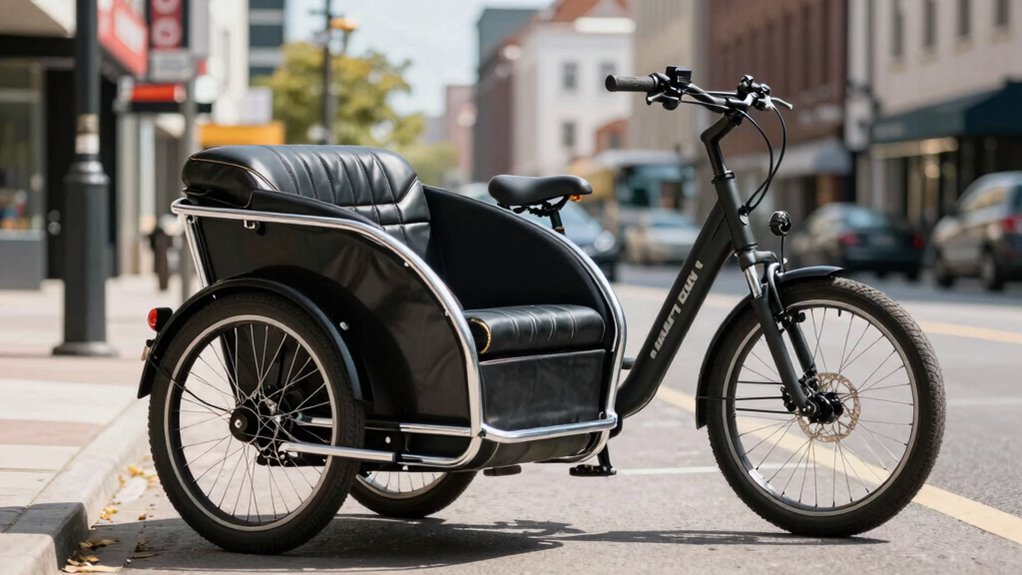

When you add a passenger to a cargo e-bike, the weight shifts and the center of gravity moves, affecting its handling and stability. The extra load changes how the bike accelerates, brakes, and turns, making it feel less responsive, especially during sharp maneuvers. Adjusting tire pressure and considering battery placement can help manage these changes. Keep exploring to discover more ways to optimize your e-bike’s safety and performance with added passengers.

Get bike and ride gear delivered free with Prime
- Fast, free delivery on millions of items
- Prime Video, Amazon Music and more included
- Member-only deals all year
Key Takeaways
- Passenger seating shifts weight distribution, affecting bike stability and handling during acceleration, braking, and turns.
- Additional passenger weight raises the center of gravity, influencing responsiveness and balance, especially on uneven terrain.
- Proper battery placement (front or rear) helps counterbalance added weight, maintaining control and safety.
- Increased load impacts suspension performance and tire pressure needs to ensure optimal grip and ride comfort.
- Understanding load effects enables better handling adjustments for safer, more controlled riding experiences.

Have you ever wondered how passenger seating and cargo handling influence the performance of an e-bike? When you add a passenger or extra cargo, the bike’s handling changes considerably, and understanding why can help you ride more safely and comfortably. One of the key factors affected by passenger seating is the bike’s balance. With a passenger on board, the weight distribution shifts, often toward the rear or side, depending on where the seat is placed. This shift impacts how the bike accelerates, brakes, and turns. To compensate, you might need to adjust tire pressure—generally slightly increasing it—to maintain maximum traction and reduce roll. Proper tire pressure becomes even more crucial because under-inflated tires can make handling sluggish and increase the risk of flats, especially when the bike is heavily loaded or carrying a passenger. Additionally, weight distribution plays a significant role in overall handling, affecting stability and control during rides. It’s also important to consider how center of gravity changes with added weight, which can influence the bike’s responsiveness and balance. Adjusting bike geometry can help optimize handling when carrying passengers or cargo, ensuring a safer riding experience.
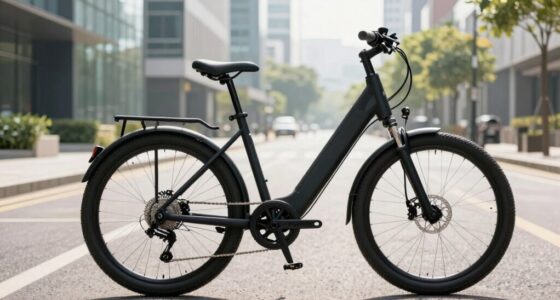
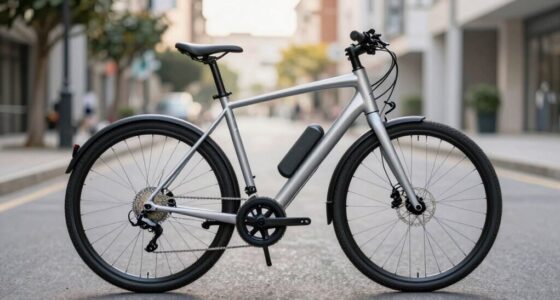
Another essential aspect that influences handling is battery placement. If your cargo or passenger seat is positioned near the rear, it can affect the bike’s center of gravity, making it feel less stable during sharp turns or quick stops. When the battery is mounted in the rear rack or integrated into the frame close to the rear wheel, it can help counterbalance the added weight, improving overall stability. Conversely, if the battery is located toward the front, it can help offset rearward weight shifts, but you must ensure it’s securely mounted to prevent shifting that could throw off your control. The placement of the battery can also influence the bike’s responsiveness, especially when handling uneven terrain or sudden maneuvers. Battery placement is a crucial design consideration that directly impacts handling and safety.
Additionally, the weight added by passenger seating or cargo handling affects the bike’s suspension and overall ride quality. As weight increases, you might need to tweak tire pressure—raising it slightly to handle the extra load and prevent tire deformation. Proper maintenance of tire pressure ensures that the contact patch remains ideal, giving you better grip and steering precision. It also reduces wear on the tires, so you get longer-lasting performance even under increased loads. The combined effects of battery placement, tire pressure, and weight distribution become evident in how your e-bike responds to your commands. When you understand these influences, you can make informed adjustments, resulting in a smoother, safer ride whether you’re carrying a passenger or a heavy load.
Popular right now

Bose QuietComfort Ultra Headphones (2nd Gen), Wireless Noise Cancelling Over-Ear Headphones, Driftwood Sand

Shark Pet Cordless Stick Vacuum, Up to 40-Minute Runtime, Lightweight, IX141

LG 55-Inch QNED73B Mini LED 4K Smart TV (2026)
As an affiliate, we earn on qualifying purchases.
Frequently Asked Questions
How Does Passenger Weight Distribution Affect Bike Stability?
Passenger weight distribution directly impacts your bike’s stability by shifting the center of gravity. When a passenger sits closer to the center, it keeps the weight balanced, making your bike easier to control. If they sit too far back or forward, it can cause uneven weight distribution, making handling more challenging. Properly managing passenger placement helps maintain a low, centered center of gravity, ensuring a safer, more stable ride.
Are There Safety Features for Passenger Seating on Cargo E-Bikes?
You’ll be glad to know that cargo e-bikes often feature safety measures like sturdy seat belts and padded, ergonomic seats to enhance passenger comfort. With improved seating ergonomics, riders experience better balance and control. Some models include reinforced frames and low center of gravity designs, reducing the risk of accidents. These safety features help make certain that passenger seating doesn’t compromise stability, making your ride safer and more comfortable for everyone onboard.
Can Passenger Seating Be Added or Removed Easily?
Yes, you can add or remove passenger seating on your cargo e-bike easily. Many models feature removable seats, allowing quick conversion between cargo and passenger modes. Seat adjustment options make it simple to customize the seating position for comfort or safety. This flexibility means you can adapt your bike to different needs without much effort, making it a practical choice for versatile transportation.
How Does Passenger Seating Influence Battery Life?
Passenger seating substantially impacts your bike’s battery life by increasing power consumption and reducing battery capacity. When you add passengers, the bike’s motor works harder to handle the extra weight, draining the battery faster. More weight demands more energy, making your ride less efficient and shortening your range. To maximize battery life, keep passenger seating minimal or lightweight, helping your cargo e-bike operate most effectively and extend its energy endurance.
What Legal Regulations Exist for Passenger Seating on Cargo E-Bikes?
You need to know that legal regulations for passenger seating on cargo e-bikes vary by region. Market regulations often restrict the number of passengers and specify safety standards, influencing design customization. Some areas require seat belts, weight limits, and specific frame modifications for passenger seats. Always check local laws to confirm your cargo e-bike complies, as regulations aim to promote safety while accommodating different market needs.
Conclusion
So, next time you add a passenger or extra cargo to your e-bike, don’t be surprised if your ride feels a bit more rebellious. Ironically, what’s supposed to make your journey easier can turn it into a balancing act. You might think you’re just carrying a friend or groceries, but in reality, you’re also juggling stability and control—talk about a wild ride in disguise! Who knew that passenger seating could turn your smooth glide into a hilarious adventure?