
To plan your commute around charging access, start by checking your vehicle’s range and mapping out charging stations along your route using apps or online maps. Prioritize stations with fast chargers and guarantee they’re compatible with your vehicle. Segment longer trips with planned stops at reliable charging spots, and always keep your battery at least 80% before departure to reduce range anxiety. Staying informed and flexible makes your journey smoother—continue on to discover more pro tips for stress-free EV commuting.
Key Takeaways
- Identify and map out nearby charging stations along your route using apps or online tools.
- Plan your trip with sufficient battery charge, including designated charging stops if needed.
- Prioritize fast-charging stations and ensure station compatibility with your vehicle.
- Segment long trips with strategically placed charging stops to prevent battery stress.
- Keep charging station information updated and have backup options in case of unavailability.
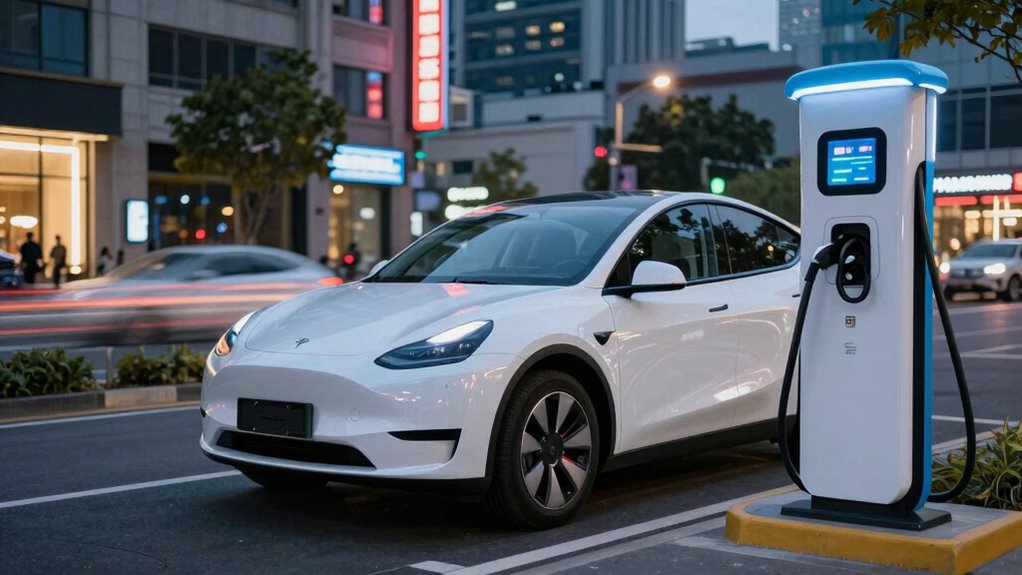
Planning your commute around charging access is vital to guarantee your electric vehicle (EV) stays powered without stress. You need to think ahead about how you’ll manage your battery and where you’ll find reliable charging station networks along your route. Effective battery management involves understanding your vehicle’s range and keeping an eye on your battery levels before starting each trip. If your EV has a limited range, you might want to plan shorter routes or identify key charging spots beforehand, so you don’t run out of juice unexpectedly. It’s a good idea to keep your battery charged to at least 80% before heading out, especially if you know your destination or route has limited charging options. This buffer helps prevent range anxiety and gives you peace of mind during your commute. Regularly updating your knowledge of charging station networks can help you stay informed about new or expanded charging options along your route.
Familiarizing yourself with charging station networks is vital. Not all charging stations are created equal, and their distribution can vary widely depending on your location. Use apps or online maps that display real-time availability of charging stations, so you can identify the most convenient options along your route. Some networks are extensive and well-established, offering fast chargers that can fill your battery in 20-30 minutes. Others might be more limited, requiring you to plan your stops carefully. It’s a smart move to identify multiple stations beforehand, in case your preferred charging point is busy or out of service. Also, check if the network requires a membership or app registration, so you can streamline the charging process and avoid delays.
As you plan your route, consider the proximity of charging stations to your usual stops or destinations. If you have a longer trip, break it into segments with designated charging points. This way, you avoid the stress of running low on battery and ensure your EV remains ready for the next leg. Keep in mind that some charging stations are compatible with multiple vehicle types and connectors, so verify that your vehicle is supported. Regularly updating your knowledge of charging station networks and maintaining good battery management habits will help you stay flexible and confident during your commute. By doing so, you turn what could be a stressful process into a seamless experience, letting you focus on your journey rather than worrying about running out of power.
EV fast charging station portable charger
As an affiliate, we earn on qualifying purchases.
As an affiliate, we earn on qualifying purchases.
Frequently Asked Questions
How Do Charging Station Locations Vary by Region?
Charging station locations vary by region due to regional charging disparities and infrastructure investments. In urban areas, you’ll find dense networks, while rural regions often have fewer options. To navigate this, use location mapping strategies that highlight regional disparities, helping you plan your route effectively. Stay updated on local charging maps and apps, ensuring you can locate stations easily and avoid running out of charge during your commute.
What Are the Costs Associated With Different Charging Options?
You’ll find that charging infrastructure costs vary, affecting your expenses. Level 1 chargers are usually free or inexpensive, while Level 2 chargers might charge a fee per hour or kilowatt-hour. Fast chargers, like DC fast chargers, tend to be more costly per session due to their rapid charging capabilities. A thorough cost comparison helps you understand your options, enabling you to choose chargers that fit your budget and commute needs effectively.
How Reliable Are Public Charging Stations?
Public charging stations are like trusted friends—reliable most of the time but sometimes unpredictable. Charger reliability depends heavily on station maintenance and how often the equipment gets checked and repaired. While many stations are well-maintained, a few can be out of service unexpectedly. To avoid surprises, plan for backup options and use apps that show real-time station status, ensuring your commute stays smooth and stress-free.
Can I Reserve a Charging Spot in Advance?
Yes, you can reserve a charging spot in advance at many stations. Check reservation policies beforehand, as some networks require booking through their app or website. Practice good charging etiquette by arriving on time and freeing the spot promptly after charging. Reserving guarantees you have a designated spot, reducing stress during busy times, and helps maintain a smooth charging experience for everyone. Always confirm reservation details before your trip.
What Should I Do if a Charger Is Broken or Unavailable?
If a charger is broken or unavailable, follow proper charging etiquette by politely notifying the station manager or staff. Look for nearby alternative charging stations or emergency charging options, such as public parking lots offering charging or portable chargers. Be respectful of other users, and if you’re in a rush, consider asking if you can extend your charging time or if there’s a priority queue. Always stay flexible and prepared for unexpected issues.
electric vehicle charging cable Type 2
As an affiliate, we earn on qualifying purchases.
As an affiliate, we earn on qualifying purchases.
Conclusion
Remember, your electric vehicle is like a vessel steering through a vast ocean. Just as a sailor charts their course by the stars, plan your commute around charging stations to keep your journey smooth. Each stop is a lighthouse guiding you safely home. Embrace the rhythm of your routes, turning potential obstacles into opportunities for discovery. With thoughtful planning, your daily voyage becomes a confident sail — a symbol of progress and harmony with the road ahead.
As an affiliate, we earn on qualifying purchases.

ChargePoint HomeFlex Level 2 EV Fast Charger, J1772, Smart, Hardwired, 50A
- Reliable Home Charging: Builds dependable EV charging stations for home and business
- 24/7 Support: Access round-the-clock customer assistance
- Mobile App Control: Manage charger remotely via ChargePoint app
As an affiliate, we earn on qualifying purchases.
As an affiliate, we earn on qualifying purchases.