You might sweat more than expected on your e-bike because motor assistance can increase your body heat, especially on steep climbs or fast rides. Your upright riding posture can restrict airflow around your torso, trapping heat and making you sweat more. Environmental factors like heat and humidity also play a role. Adjusting your riding style, posture, or gear can help manage sweating, and there’s more to discover about balancing comfort and performance.

Get bike and ride gear delivered free with Prime
- Fast, free delivery on millions of items
- Prime Video, Amazon Music and more included
- Member-only deals all year
Key Takeaways
- Higher motor assistance and faster speeds increase body heat, leading to more sweating than expected.
- Upright riding posture restricts airflow, trapping heat around the torso and causing excessive sweating.
- Hot and humid environments impair thermoregulation, resulting in increased perspiration during rides.
- Demanding terrains and steep inclines elevate effort and battery use, raising body temperature and sweat levels.
- Body’s natural thermoregulation response to effort and environment can cause unexpected sweating during e-bike rides.
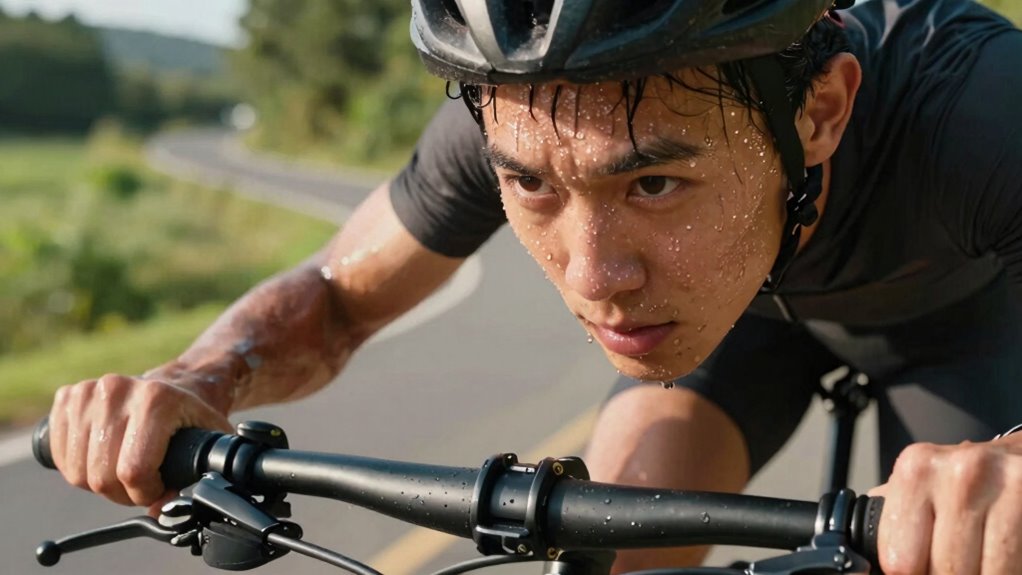
If you’ve ever noticed yourself sweating more while riding an e-bike compared to a traditional bike, you’re not imagining it. Several factors contribute to this unexpected increase in sweat, and understanding them can help you manage your riding experience better. One key aspect is the role of battery power. E-bikes are equipped with batteries that provide motor assistance, which means you’re often engaging less of your own muscular effort than you would on a regular bike. However, this doesn’t necessarily mean you’ll sweat less. The motor’s assistance can cause you to ride faster or tackle steeper inclines than you would otherwise, leading to increased body heat and sweating. The more battery power you use, especially on demanding terrain, the more your body responds with sweat to regulate temperature.
Using more battery power on demanding terrain increases body heat and sweat during your e-bike ride.
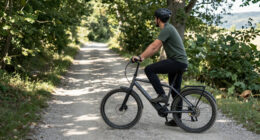
Another factor influencing sweating is your riding posture. Many riders tend to adopt a more relaxed, upright position on e-bikes, especially since they don’t need to lean forward as much to generate power. While this posture might seem comfortable, it can also affect how your body dissipates heat. Sitting upright can restrict airflow around your torso, trapping heat and causing you to sweat more. Conversely, a more aggressive riding posture—leaning forward and engaging your core—can promote better airflow and cooling, reducing sweat. But many e-bike riders, aiming for comfort, stick with a relaxed posture, unwittingly increasing their chances of sweating more than they would on a traditional bike. Additionally, the riding environment**** plays a significant role, as hotter or more humid conditions naturally lead to increased sweating.
Furthermore, the level of motor assistance impacts your sweating. Higher assistance levels mean less effort but can also lead to higher speeds, which generates more heat. If you’re riding on flat terrain with maximum support, you might not feel tired, but your body still produces sweat to cool down from the increased activity level. Conversely, when you pedal manually, even with less assistance, your body works harder, but the slower pace might result in less sweat compared to riding at higher speeds with motor help. Recognizing that riding conditions influence sweating can help you better tailor your ride to stay comfortable. Additionally, understanding how your body’s thermoregulation responds during rides can help you choose the right gear and clothing to stay cooler.
In essence, while e-bikes seem like a way to ride with less exertion, the combination of battery power use, your riding posture, and riding conditions can make you sweat more than you’d expect. It’s a reminder that, even with assistance, your body still reacts to the effort and environment, especially when you’re riding with a relaxed posture and high motor support. Managing your riding style and understanding these factors can help you stay more comfortable and better control how much you sweat during your rides.
Popular right now

Hisense 85 U6 Pro Series Mini-LED ULED 4K UHD HDR Gaming AI Smart Fire TV (85U6SF Pro)

De'Longhi Stilosa Compact Manual Espresso Machine with Milk Frother

TCL 85-Inch QM6K Series QLED Mini LED 4K HDR Smart Google TV
As an affiliate, we earn on qualifying purchases.
Frequently Asked Questions
Do E-Bike Batteries Affect How Much I Sweat?
Yes, e-bike batteries can influence how much you sweat. If your battery’s efficiency is high, your motor operates smoothly and efficiently, often requiring less effort from you, which might lead to less sweating. However, if the motor power is high and the battery pushes more power, you may exert more energy, increasing your body temperature and sweating. So, battery efficiency and motor power directly impact your physical effort and sweating level.
Can Clothing Choices Influence Sweating on E-Bikes?
Yes, your clothing choices can influence how much you sweat on e-bikes. In hot or humid climate conditions, lightweight, breathable clothing made from moisture-wicking materials helps keep sweat away from your skin, keeping you cooler. Avoid heavy fabrics or non-breathable materials, as they trap heat and increase sweating. Choosing appropriate clothing based on climate conditions guarantees you stay comfortable and reduce excess sweating during your ride.
How Does Rider Weight Impact Sweating Levels?
Your rider weight impacts sweating levels because heavier riders generate more body heat, making it harder to stay cool. Even if you stay hydrated, additional body mass increases insulation, trapping heat. To manage this, choose lighter clothing and breathable fabrics, and stay well-hydrated. Adjusting your riding pace can also help, preventing excessive sweating caused by your weight and ensuring a more comfortable, enjoyable e-bike experience.
Does Riding Speed Correlate With Sweating Amount?
Riding speed does influence how much you sweat, especially when you maintain an upright posture or face difficult terrain. When you go faster, your body works harder to control the bike, increasing your core temperature. Tough terrain demands more effort, leading to more sweating regardless of speed. So, your riding posture and terrain difficulty considerably impact sweating levels, alongside your speed, making high-speed or challenging rides more sweat-inducing.
Are There Specific E-Bike Features That Increase Sweating?
Certain e-bike features, like ergonomic design and handlebar style, can boost sweating. Did you know that bikes with aggressive ergonomics or non-breathable materials increase heat buildup? Handlebar design influences airflow around your torso, affecting sweat levels. If you favor a more upright position or a compact handlebar, you might sweat more due to increased heat and reduced ventilation. Choosing bikes with better ergonomics and airflow-friendly handlebar designs can help keep you cooler.
Conclusion
So, next time you hop on your e-bike and notice you’re sweating more than usual, remember it’s not just your effort—it’s the bike’s secret dance with your body. E-bikes can turn a gentle ride into a surprising workout, making your muscles work harder than they seem. Embrace the sweat as a sign you’re getting a little extra boost from your ride, turning what feels like a breeze into a invigorating challenge that keeps you energized and alive.