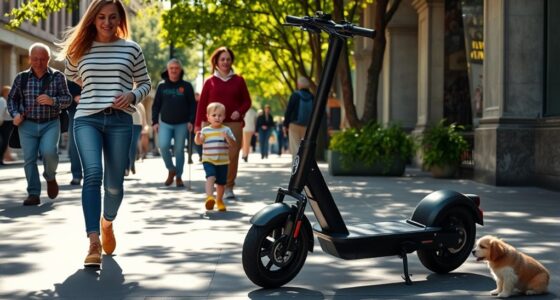
When traveling with a scooter, check airline policies for size, weight, and battery restrictions, and consider disassembling it for easier transport. For trains, foldable scooters usually fit in luggage storage areas, but verify specific policies beforehand. In your car trunk, secure the scooter with straps to prevent movement during trips. Always plan accessible accommodations and transport options at your destination. To learn more about making your journey smoother, keep exploring these travel tips and tricks.
Key Takeaways
- Check airline, train, and vehicle policies for scooter size, weight, and battery restrictions before traveling.
- Disassemble and securely pack your scooter with padding to prevent damage during transit.
- For airlines, confirm battery removal or special handling requirements well in advance.
- Fold or collapse scooters for easier storage in cars, trains, or luggage compartments.
- Ensure your destination has accessible features like ramps and elevators for safe scooter use.

Traveling with a scooter can be a convenient and eco-friendly way to explore new places or navigate your daily commute. Whether you’re heading on a vacation or just making your way around town, knowing how to transport your scooter efficiently can make a huge difference. Airlines, trains, and car trunks each have their own rules and best practices, so planning ahead is vital to guarantee a smooth trip. One key aspect to contemplate is finding accessible accommodations that cater to scooter users, making your stay comfortable and hassle-free.
When flying, check your airline’s policies for transporting scooters. Many airlines allow scooters as carry-on or checked baggage, but restrictions on size, weight, and battery type can vary. It’s wise to contact the airline beforehand to confirm details and avoid surprises at the airport. Properly disassemble your scooter if necessary, and secure all parts to prevent damage during transit. Keep in mind that some airlines may require you to disconnect the battery or remove the seat. Packing your scooter carefully, with padding if needed, can help prevent scratches and dents. Once you arrive, look for accessible accommodations that feature ramps, elevators, and wide doorways—these make it easier to navigate with your scooter and guarantee your safety. Remember to bring along scooter safety tips, such as wearing a helmet, checking your brakes, and being cautious in crowded areas. Additionally, choosing the right scooter for travel can significantly improve your experience and ease of transportation.
On trains, policies tend to be more flexible, and many rail services allow scooters onboard, especially if they fold. If your scooter is foldable, you can often store it in a designated luggage area or under your seat. Always verify train company rules beforehand and consider reserving space if needed. When traveling by train, accessible stations and accommodations are vital for a comfortable experience. Look for hotels or lodges that explicitly state they are accessible, with features like smooth pathways, ramps, and accessible bathrooms. These amenities not only improve your comfort but also help you stay safe while using your scooter. Make sure to plan your route with scooter safety tips in mind—stay alert to your surroundings, avoid uneven surfaces, and be cautious when boarding and disembarking.
Transporting your scooter in a car trunk offers the most flexibility. Fold your scooter if it’s collapsible, and secure it with straps to prevent movement during transit. This method is especially convenient for short trips or day excursions. Before hitting the road, double-check your vehicle’s capacity and any local regulations regarding electric scooters. When choosing accommodations, prioritize those with accessible features, so you can comfortably and safely move around once you arrive. Remember, your safety is paramount; always carry your scooter safety tips with you, and stay vigilant about your surroundings. With a bit of planning, traveling with your scooter becomes straightforward, letting you enjoy new destinations with independence and ease.
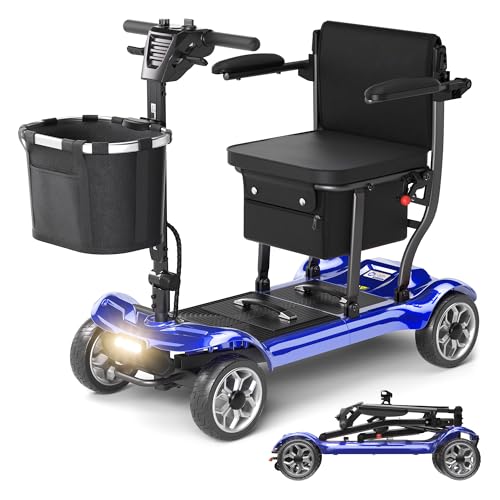
Lightweight Mobility Scooter for Adults & Seniors – Cruise & Airport Approved, 43lb Foldable Portable Motorized Scooters with Removable Lithium Battery for 12.4 Miles Travel, 300lb Capacity, Blue
Upgraded Lightweight: This upgraded mobility scooters features 24V 12AH removable lithium battery weighing just 5 lbs—72% lighter than…
As an affiliate, we earn on qualifying purchases.
As an affiliate, we earn on qualifying purchases.
Frequently Asked Questions
Are There Size Restrictions for Traveling With a Scooter?
Yes, there are size restrictions for traveling with a scooter. You need to contemplate the scooter’s weight and battery regulations, as airlines and other transport modes often limit battery capacity to prevent hazards. Typically, scooters should be compact enough to fit in overhead compartments or trunks, and their weight shouldn’t exceed airline limits—usually around 50 pounds. Always check specific airline or train policies beforehand to avoid surprises.
How Do I Secure My Scooter During Transit?
To secure your scooter during transit, start by removing the battery to guarantee safety and prevent potential hazards. Use straps or bungee cords to firmly fasten the scooter, preventing movement. If possible, disassemble parts for easier handling and added security. Always follow airline or train guidelines regarding battery safety and scooter disassembly. Properly securing your scooter minimizes damage and keeps you safe during your journey.
Can I Travel With a Scooter on International Flights?
You can absolutely take your scooter on international flights, but think of it as steering a maze of rules. Check airline policies first; they often have specific scooter battery regulations to keep everyone safe. Don’t forget to review your travel insurance coverage, ensuring your electric companion is protected. With proper planning, your scooter will be ready to roll across borders, turning your journey into an adventure without a hitch.
What Costs Are Associated With Bringing a Scooter?
When bringing your scooter, you’ll face costs like airline baggage fees, which vary by airline, and potential charges for scooter maintenance or repairs if damaged. You should also consider scooter storage options at your destination, which could involve rental fees or buying accessories. Be prepared for these expenses, and always check with your airline or travel provider beforehand to understand their specific policies and costs.
Are There Specific Insurance Requirements for Traveling With a Scooter?
Think of your scooter as a trusted companion on your journey, and insurance coverage as its shield. You should check if your policy extends liability considerations and protects against damage or theft during travel. Some carriers require specific insurance, like adding riders or purchasing extra coverage. Make sure you’re fully covered to avoid surprises, turning your adventure into a smooth sail rather than a stormy ride.

Ecomobi Light Weight Mobility Scooter for Seniors & Adults, 12–30 Mile Range, Foldable Airline Approved Portable 4 Wheel Motorized Scooter with Removable Lithium Battery, 300 lb Capacity, MS01F Pink
41 lb Lightweight & Foldable for Easy Travel – This lightweight mobility scooter for seniors and adults weighs…
As an affiliate, we earn on qualifying purchases.
As an affiliate, we earn on qualifying purchases.
Conclusion
As you glide through bustling airports, tucked safely in your scooter’s compact frame, or feel the smooth hum of a train beneath you, every journey becomes a seamless adventure. Whether in a car trunk or onboard a plane, your scooter becomes a trusted companion, ready to roll wherever your travels take you. Imagine the open road ahead, the horizon stretching endlessly—your scooter waiting patiently, enthusiastic to carry you into new adventures with ease and freedom.

2 Pack Stroller Hooks, Stroller Straps for Diaper Bags,Adjustable Stroller Carabiner Clip,Baby Stroller Accessories for nuna,Uppababy,Bob,Hook for Bike,Scooter,Wheelchair,Walker Accessories(Black)
【High-quality material】 Made of durable high-performance fabrics, large matte black carabiner with artificial leather,can hang multiple bags at…
As an affiliate, we earn on qualifying purchases.
As an affiliate, we earn on qualifying purchases.

Luggage Straps for Suitcases TSA Approved, Travel Accessories to Connect Two Suitcase, Add Bag Luggage Straps for Carry On Your 3 Luggages Adjustable Buckle Belt, 2Pack Black
GOOD QUALITY MATERIALS – This lightweight luggage straps are made of heavy-duty plastics and polyester webbing material and…
As an affiliate, we earn on qualifying purchases.
As an affiliate, we earn on qualifying purchases.