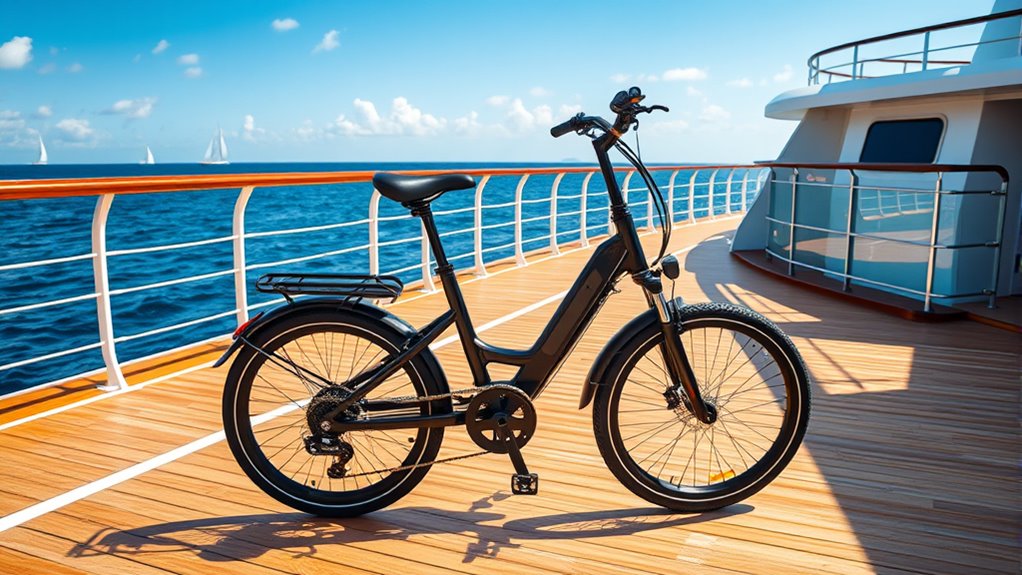

To take your folding e-bike on a cruise ship, check the cruise line’s policies on electric bikes and batteries first. Make sure your bike is properly folded, secured, and stored in a sturdy case to prevent damage. Remove and carry batteries in your hand, ensuring they’re fully charged but well protected. Store the bike in a designated area and follow safety guidelines for batteries. Keep exploring for detailed tips to make your journey smoother.
Key Takeaways
- Verify cruise line policies on transporting and storing e-bikes before booking.
- Fully fold and secure your e-bike in a protective case or bag suitable for travel.
- Remove and separately pack the battery, ensuring it complies with airline and cruise regulations.
- Carry the battery in carry-on luggage, and keep it charged but not at full capacity during transit.
- Store the bike in a designated, dry, and cool area onboard, avoiding obstructing pathways.
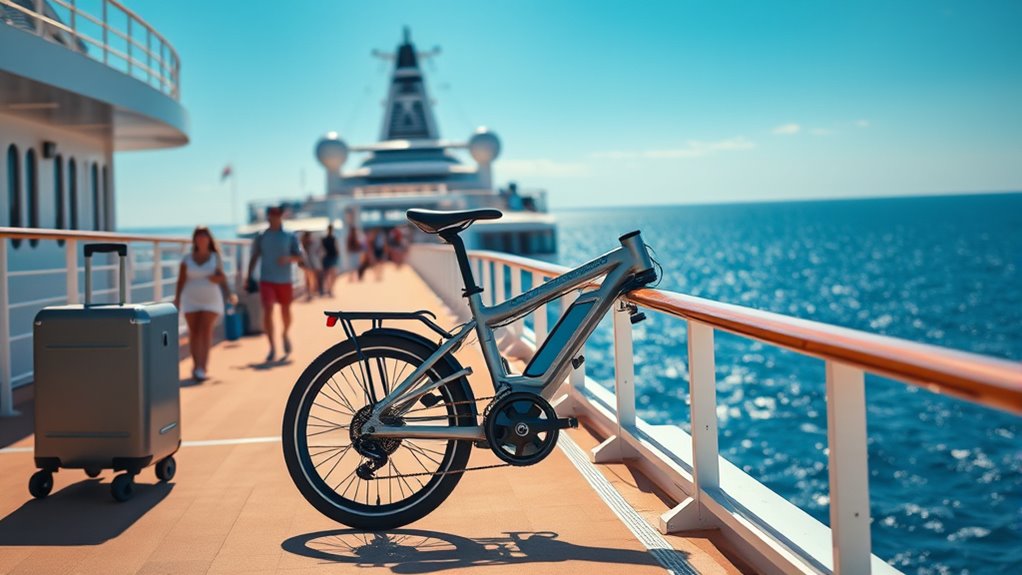
Taking your folding e-bike on a cruise ship can be a convenient way to explore port destinations, but there are important steps to guarantee a smooth process. First, familiarize yourself with the cruise line’s policies regarding electric bikes. Many ships have specific rules about storing and transporting them, so check in advance to avoid surprises. When it comes to storage tips, ensure your e-bike is properly folded and secured. Use a sturdy, protective bag or case to prevent damage during transit. Some cruise lines require bicycles to be stored in designated areas or stowed away in your cabin, so confirm these details beforehand. If you’re storing it in your stateroom, make sure the space can accommodate the folded bike without obstructing pathways or emergency exits.
Battery regulations are vital to consider before packing your e-bike. Lithium batteries, especially those over 100 watt-hours, are often subject to strict airline and transportation regulations, and cruise ships are no exception. Always check the specific guidelines of your cruise line regarding battery capacity, as some only allow batteries up to a certain size. It’s best to carry the battery in your carry-on luggage rather than checked baggage, as this minimizes the risk of damage or fire hazards. Keep the battery fully charged but avoid storing it at 100% capacity for extended periods, which can degrade its lifespan. Additionally, ensure the battery terminals are covered with tape or that the battery is secured in a way that prevents accidental short circuits during transit. Properly understanding high refresh rates and input lag can also help you optimize your e-bike’s performance when exploring on land.
When preparing your e-bike for travel, remove the battery if possible, and pack it separately in compliance with safety regulations. This extra step can help prevent any issues with security checks or damage. Be mindful of the weight and size restrictions for luggage and storage compartments on the ship. Label your bike and battery clearly, so crew members can handle it appropriately and quickly. Once onboard, store your e-bike in a dry, cool place away from direct sunlight and moisture, which can affect the battery’s performance. Regularly check the battery’s charge level during your trip and recharge if necessary, following the manufacturer’s guidelines.
Frequently Asked Questions
Can I Store My Folding E-Bike in My Cabin?
You might wonder if you can store your folding e-bike in your cabin. It’s possible, but consider furniture storage and security concerns. Check if your cabin has enough space for your bike and make sure it doesn’t block pathways or violate safety rules. Keep your bike secure and out of the way to prevent damage. Always confirm with the cruise line’s policies beforehand to avoid any surprises or issues during your trip.
Are There Any Size Restrictions for Bringing an E-Bike Aboard?
You’ll need to check the cruise line’s policies on bike portability and storage requirements, as size restrictions vary. Most cruise ships allow folding e-bikes because of their compact design, but they often have specific size limits. Make sure your bike folds easily and fits in your cabin or designated storage area. Contact the cruise line beforehand to confirm your e-bike meets their size restrictions and storage requirements, ensuring smooth boarding.
Do Cruise Lines Charge Extra for Bringing an E-Bike?
Most cruise lines don’t charge extra for bringing your e-bike, but it’s best to check their cruise ship policies first. You’ll need to consider e-bike maintenance and make sure it meets size restrictions. Some lines may ask you to pack it in a specific way or declare it beforehand. Always review policies to avoid surprises, and pack your e-bike carefully for smooth sailing on your cruise.
How Do I Charge My E-Bike Onboard Safely?
Imagine plugging your e-bike into a power source, with the gentle hum of the ship around you. For charging safety, always use designated outlets and avoid overloading circuits. Make certain your charger is compatible with the ship’s power sources, and keep it away from water or flammable items. Regularly check for damage, and unplug after charging. Following these steps keeps your e-bike safe and ready for your next adventure onboard.
Are E-Bikes Allowed on All Cruise Ship Excursions?
You might wonder if e-bikes are permitted on all cruise ship excursions. It depends on the cruise ship policies and the specific excursion. Always check with the cruise line beforehand, as they may have restrictions for e bike safety and special handling requirements. Some excursions might permit e bikes, while others don’t. Planning ahead ensures you enjoy your ride while following all safety guidelines and cruise policies.
Conclusion
Think of your folding e-bike as your trusty steed, ready to explore new horizons once you dock. By following these simple steps, you’re like a seasoned sailor smoothly steering the busy docks, ensuring your bike’s safe passage. With a little preparation, you’ll open adventures just beyond the ship’s horizon, turning your cruise into a journey of discovery. So, pack wisely and set sail—your two-wheeled explorer awaits its next voyage!