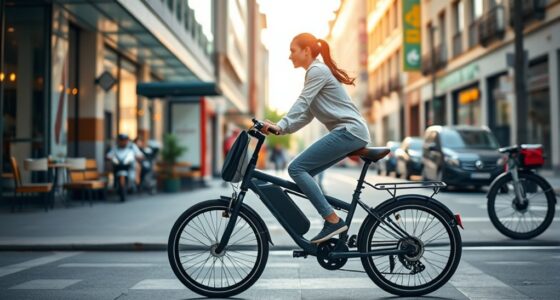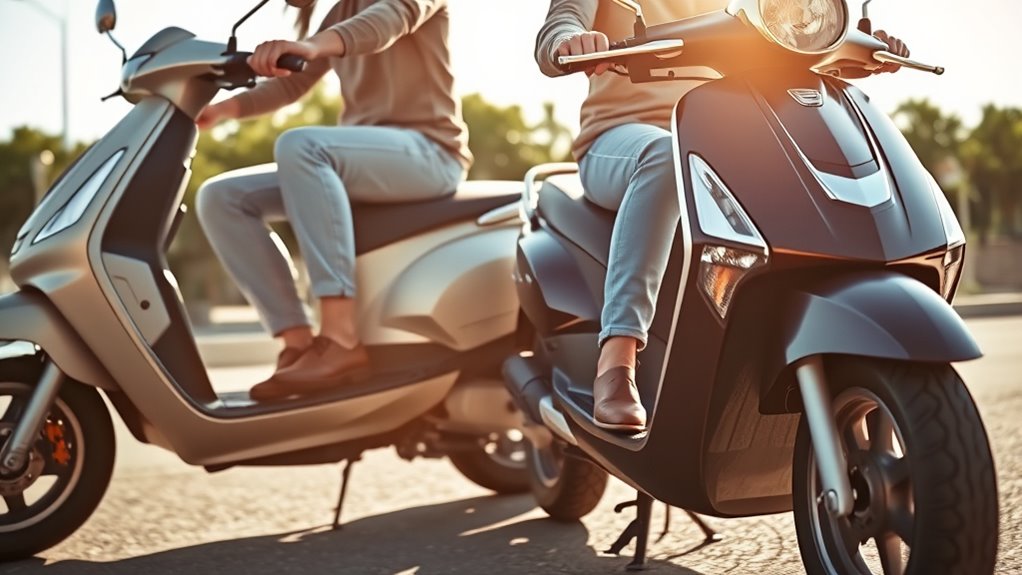

To maintain stability and brake effectively on your scooter, keep your back straight and shoulders relaxed, while gripping the handlebars firmly yet comfortably. Lean slightly forward during braking to distribute your weight evenly, preventing skids. Keep your knees bent and feet flat on the footboard to support control and absorb shocks from uneven surfaces. Proper body and foot positioning help you respond swiftly and confidently; continue ahead to discover more tips for safer riding.
Key Takeaways
- Maintain a straight back and relaxed shoulders to enhance balance and comfort.
- Keep a firm but relaxed grip on handlebars with elbows slightly bent for better control.
- Lean slightly forward when braking to distribute weight evenly and prevent skidding.
- Keep knees slightly bent and feet flat on the footboard for stability and shock absorption.
- Focus eyes ahead, lean into turns, and signal clearly for safe and predictable riding.
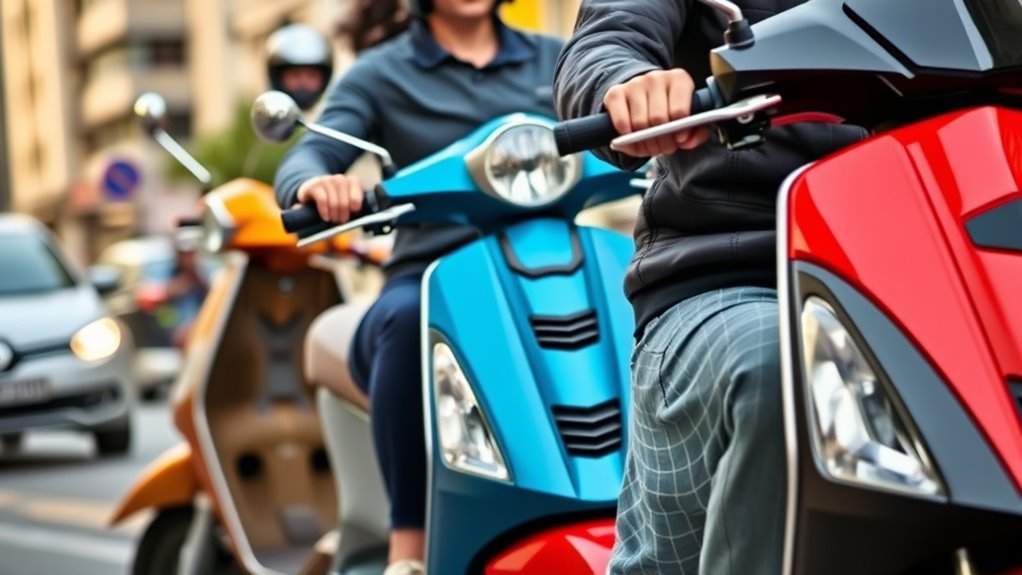
Riding posture on scooters plays a vital role in ensuring your safety, comfort, and riding efficiency. When you sit upright with your back straight and shoulders relaxed, you maintain better balance, which is crucial for stability. Proper posture allows you to react quickly to unexpected obstacles or sudden stops. One of the most important safety measures you can take is wearing a helmet that fits well, as helmet safety cannot be overstated. A well-fitted helmet protects your head in case of falls or collisions, reducing the risk of serious injury. Remember, traffic laws are in place to keep everyone safe, and part of following them involves riding correctly and responsibly. For instance, maintaining a proper posture helps you stay within your lane and signals your intentions clearly to other drivers.
Your grip on the handlebars should be firm but relaxed, avoiding excessive pressure that can cause fatigue. Keep your elbows slightly bent, which offers better control and responsiveness, especially when braking or maneuvering. When approaching a stop or needing to slow down, your riding stance influences how smoothly and safely you can brake. Leaning slightly forward as you brake helps distribute your weight evenly, preventing sudden imbalance or skidding. This position also allows for better leverage on the brake levers, giving you more control over your deceleration. Proper posture during braking enhances your ability to stop quickly and safely, especially in emergency situations. Additionally, using advanced safety features such as reliable brakes and reflective gear can further improve your riding safety.
Stability on your scooter depends greatly on your body positioning. Keep your knees slightly bent and your feet flat on the footboard, which helps absorb shocks from uneven surfaces and maintains your center of gravity. When steering turns or curves, lean your body slightly into the turn while keeping your eyes focused ahead, not down at your front wheel. This technique improves stability and helps you maintain control. Remember, riding with good posture also means being mindful of your surroundings and obeying traffic laws. It’s essential to ride predictably, signaling your turns and lane changes clearly, so others can anticipate your movements. This not only keeps you safe but also promotes a smoother flow of traffic.
Frequently Asked Questions
How Does Rider Weight Distribution Affect Scooter Stability?
Your rider weight directly impacts scooter stability and balance. When you distribute your weight evenly, the scooter maintains better scooter balance, making it easier to control and brake safely. Shifting your weight too far forward or back can cause instability, especially at higher speeds or during turns. To stay stable, keep your rider weight centered over the deck, engaging your core and maintaining a relaxed grip on the handlebars.
What Are Common Mistakes in Scooter Braking Technique?
You often make mistakes in scooter braking by not maintaining proper braking hand position, which can reduce control. Avoid grabbing the brake too harshly; instead, apply steady, even pressure. Also, make certain your foot placement techniques are correct—keep both feet firmly on the deck for balance, especially during braking. Don’t lean back excessively, as it can cause instability. Practicing smooth, controlled braking helps improve safety and prevents accidents.
How Does Terrain Influence Riding Posture Adjustments?
When maneuvering different terrains, you need to adapt your riding posture to maintain stability and control. On uneven or rough surfaces, lean slightly back and keep your knees bent for better balance. On slopes or inclines, adjust your posture by leaning forward to prevent slipping. Always perform posture correction as needed to stay centered and steady, ensuring safe braking and smooth riding across varied terrain.
Can Incorrect Posture Cause Long-Term Injury?
Yes, incorrect posture can cause long-term injury by straining muscles and joints over time. Poor posture affects your comfort and increases rider fatigue, making it harder to control the scooter safely. When you don’t maintain proper posture, you risk developing chronic issues like back or neck pain. To prevent this, focus on maintaining good posture, which enhances comfort and reduces fatigue, ensuring safer riding and long-term health.
What Safety Gear Complements Proper Riding Posture?
Imagine a shield of confidence around you. Wearing protective clothing and visibility gear, like reflective jackets and helmets, works like that shield. They complement your proper riding posture by safeguarding your body during unexpected slips and ensuring you’re seen by others. This combination boosts your safety, helping you maintain control and stability. Always choose gear that fits well, so it moves with you, providing maximum protection and peace of mind.
Conclusion
Maintaining the right riding posture on your scooter is like steering a ship through calm waters—you control the stability and safety of your ride. Keep your weight balanced, stay alert, and position yourself correctly to navigate smoothly and stop confidently. Remember, your posture is the rudder that guides you; with steady hands and good habits, you’ll sail through your journeys with ease and confidence. Ride smart, stay safe, and enjoy the ride!