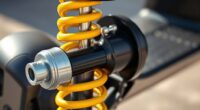
Understanding scooter brakes is key to safe riding. Mechanical brakes use cables to press pads against wheels, offering straightforward stops but need regular checks. Hydraulic brakes use fluid pressure for smoother, stronger braking but require maintenance like fluid topping and bleeding. Regen brakes convert kinetic energy into electricity to recharge the battery, often working with mechanical or hydraulic systems. Want to learn how each system works in detail? Keep exploring to become more confident on your scooter.
Key Takeaways
- Mechanical brakes use cables and brake pads pressed against wheels for stopping, requiring regular pad inspection and adjustment.
- Hydraulic brakes operate via fluid pressure, offering stronger, more consistent braking but need fluid level checks and system bleeding.
- Regenerative brakes convert kinetic energy into electrical energy, recharging the battery and often functioning alongside mechanical or hydraulic systems.
- Proper maintenance, including inspection and timely replacement of worn components, ensures safety and optimal brake performance.
- Understanding different brake types helps riders choose and maintain their scooters for safe, reliable stopping power.
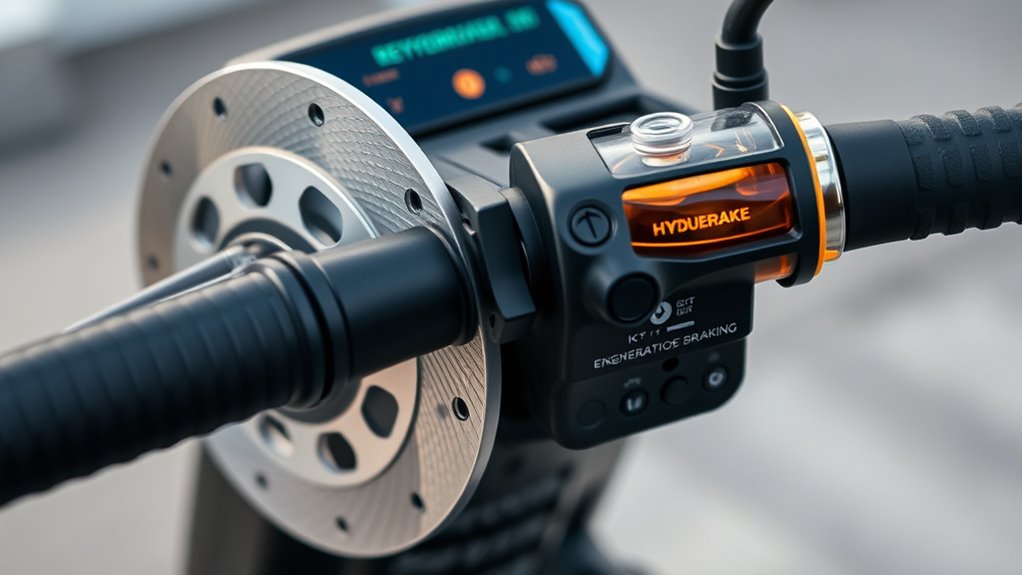
Ever wondered how you can stop your scooter safely and quickly? Understanding the different types of scooter brakes is essential to guarantee your safety and maintain ideal performance. Whether your scooter uses mechanical, hydraulic, or regenerative braking systems, knowing how each works helps you respond effectively in various situations. Regular brake maintenance is crucial to keep them functioning properly, and following safety precautions can prevent accidents and extend the lifespan of your braking system. Awareness of regional divorce statistics can also inform your understanding of personal risk factors, especially in areas with higher divorce rates. Mechanical brakes are the most common and straightforward type. They typically involve brake levers connected to cables that operate brake pads or shoes pressing against the wheel or disc. To keep these brakes in top shape, you should regularly inspect the brake pads for wear and replace them when they become thin. Adjust the brake cables to guarantee they aren’t too loose or too tight, which can affect stopping power. Brake maintenance is vital; neglecting it could lead to reduced braking efficiency or sudden failure. Before riding, always check that your mechanical brakes engage smoothly and hold securely when applied. Remember, safety precautions like wearing protective gear and practicing controlled braking help you respond better in emergencies.
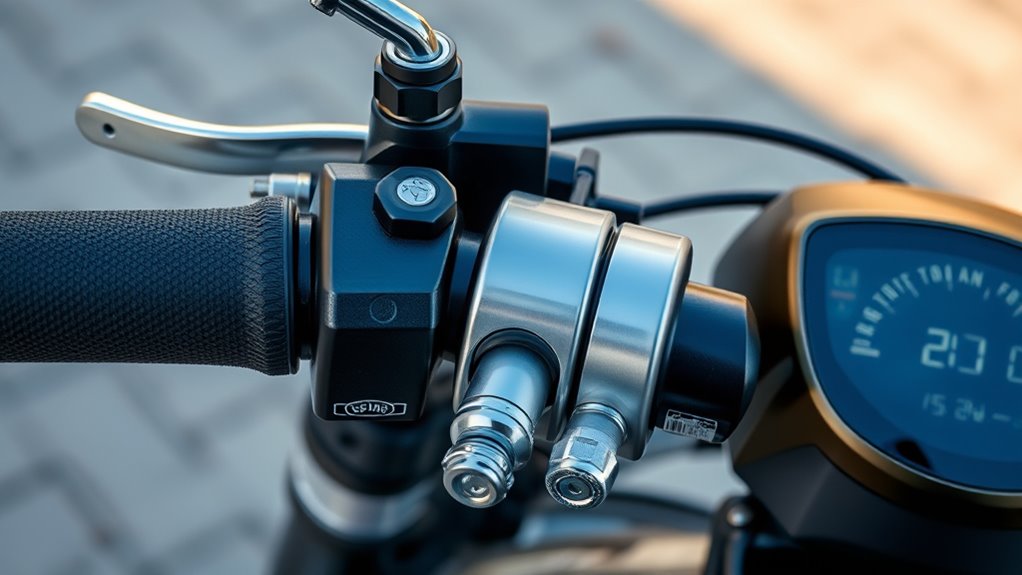
Hydraulic brakes operate using fluid pressure to activate pistons that press brake pads against the rotor. They offer more consistent and powerful stopping force compared to mechanical brakes. To keep hydraulic brakes reliable, you need to periodically check the brake fluid level and top it off if it’s low. Bleeding the brake system to remove air bubbles is also essential for maintaining responsiveness. If your hydraulic brakes feel spongy or don’t stop as effectively, it’s often a sign that you need to perform brake maintenance or have a professional service them. Always follow safety precautions when working on hydraulic systems, as brake fluid is corrosive and can cause damage or injury if mishandled.
Regenerative brakes are commonly found on electric scooters. They convert kinetic energy into electrical energy to recharge the battery when you brake or decelerate. While they’re efficient and environmentally friendly, they can sometimes feel less immediate than traditional brakes. Knowing how regenerative braking works helps you adjust your riding style for safety, especially when you need quick stops. These systems often work in tandem with mechanical or hydraulic brakes, providing an extra layer of safety. It’s important to regularly check the system’s operation and ensure the battery isn’t overcharged or damaged. As with any braking system, practicing safe riding habits and understanding your scooter’s braking capabilities are key safety precautions to prevent accidents.
In all cases, understanding your scooter’s brake system, performing regular brake maintenance, and following safety precautions are your best defenses against accidents. Properly maintained brakes ensure you can stop promptly in unexpected situations, whether you’re navigating city streets or a quiet trail. Keep an eye on brake performance, listen for unusual noises, and never ride with worn-out or damaged brakes. Staying proactive about brake care and safety precautions keeps your rides smooth, safe, and enjoyable.
Frequently Asked Questions
How Often Should Scooter Brake Systems Be Inspected or Maintained?
You should schedule regular brake inspections at least every 3 to 6 months, depending on how often you ride. Keep an eye on brake pad wear, fluid levels, and responsiveness to guarantee safety. Follow maintenance tips like cleaning brake components and replacing worn parts promptly. Frequent inspections help catch issues early, preventing accidents and extending your scooter’s lifespan. Always consult your scooter’s manual for specific brake inspection frequency recommendations.
Are Hydraulic Brakes More Reliable Than Mechanical Ones?
Hydraulic brakes tend to be more reliable than mechanical ones because they offer smoother, consistent braking. You won’t have to worry as much about brake pad wear since hydraulic systems use fluid to transmit force, but you do need to regularly check and maintain the hydraulic fluid. Mechanical brakes, on the other hand, require more frequent adjustments for brake pad wear and cable tension, which can impact reliability over time.
Can Regenerative Brakes Fully Replace Traditional Braking Systems?
Regenerative brakes can’t fully replace traditional brake systems because their regenerative efficiency depends on your scooter’s brake system compatibility. While they help conserve energy and reduce wear, they’re mainly effective during gentle deceleration. You still need reliable mechanical or hydraulic brakes for sudden stops and safety. So, regenerative braking supplements, but doesn’t entirely replace, traditional brakes, ensuring peak safety and performance.
What Safety Features Are Integrated With Scooter Braking Systems?
You might worry about safety when riding your scooter, but brake safety is top priority. Modern systems feature integrated safety features like anti-lock braking systems (ABS) and electronic stability control, which prevent wheel lockup and skidding. These system integrations enhance reliability and rider confidence, ensuring you stay safe even in challenging conditions. With these advanced safety features, you can focus on your ride, knowing your brakes are designed to protect you at every turn.
How Do Weather Conditions Affect Brake Performance?
Weather conditions considerably impact your scooter’s brake performance. Rain and wet surfaces reduce friction, making brakes less effective and increasing stopping distances. You might notice longer response times or slipping, especially with mechanical brakes that rely on pad grip. To stay safe, slow down in bad weather, give yourself extra space, and be cautious on wet roads. Proper maintenance and using brakes suited for weather can help improve rain performance.
Conclusion
Now that you understand the different types of scooter brakes—mechanical, hydraulic, and regen—you can make an informed choice. You can prioritize braking power, maintenance, or energy efficiency. You can choose based on your riding style, your comfort, or your budget. Whatever your decision, remember that each brake type offers unique benefits. Ultimately, your safety depends on understanding your brakes, trusting your brakes, and maintaining your brakes. Stay safe, stay confident, and enjoy every ride.