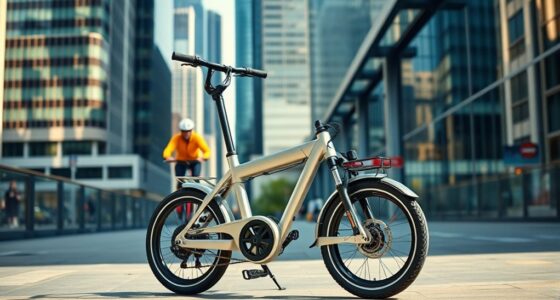
To plan your scooter runs for daily errands, check your battery level beforehand and map out nearby charging stations. Choose routes that are direct and avoid steep hills, busy streets, or detours that drain power. Ride steadily at a consistent speed, avoiding rapid acceleration and harsh braking to conserve energy. Proper planning and riding techniques help prevent unexpected stops and extend your scooter’s range. Keep exploring for more tips to maximize your scooter’s efficiency and reliability.
Key Takeaways
- Check your scooter’s battery capacity and monitor battery levels before trips to ensure sufficient range for errands.
- Plan routes that are direct, avoid steep hills and congested areas to conserve battery life.
- Incorporate nearby charging stations into your route for longer trips or low battery levels.
- Ride at steady speeds, avoid rapid acceleration and harsh braking to maximize energy efficiency.
- Use navigation tools to optimize routes and prevent unnecessary detours or power drain.

Planning the range of your scooter is essential to guarantee reliable performance and avoid unexpected stops. When you’re heading out for daily errands, understanding your scooter’s battery capacity plays a crucial role. Battery capacity determines how far you can go before needing a recharge, so knowing this helps you plan your trips more efficiently. If your scooter has a higher battery capacity, you’ll generally enjoy a longer range, but it’s also important to consider how you use it. For shorter trips, a smaller capacity might suffice, saving weight and cost, but for longer errands, opting for a model with a larger battery ensures you won’t be caught off guard.
Beyond the battery itself, route optimization is another key factor. Planning your route carefully allows you to conserve energy and extend your scooter’s range. By plotting the most direct and least congested path, you minimize unnecessary acceleration and braking, which drain the battery faster. Using navigation apps or mapping tools that highlight bike-friendly or scooter-optimized routes can help you avoid steep hills, busy streets, or detours that could reduce your range. When you optimize your route, you’re not just saving time; you’re also making the most of your scooter’s battery capacity. This means fewer stops to recharge during your errands and more reliability in completing your trips without worry.
It’s also wise to consider your scooter’s current battery level before setting out. If your battery is nearing empty, you should plan your route to include a nearby charging station or a safe place to recharge if needed. This proactive approach prevents the frustration of being stranded mid-trip. Additionally, adjusting your riding style can make a difference—riding at steady speeds, avoiding rapid acceleration, and braking gently all help conserve battery power, effectively increasing your scooter’s range. Being aware of the battery capacity and how it impacts your ride allows you to better manage your trips and avoid unexpected interruptions.
Incorporating these strategies into your routine ensures you make the most of your scooter’s capabilities. By paying attention to battery capacity and practicing route optimization, you can confidently navigate your daily errands without constantly worrying about running out of power. Planning ahead not only saves you time but also extends the lifespan of your scooter’s battery, as proper usage and route management reduce unnecessary strain. Ultimately, understanding these elements empowers you to enjoy a smoother, more reliable riding experience, making your daily trips more convenient and stress-free.
Frequently Asked Questions
How Do Weather Conditions Affect Scooter Range?
Weather conditions considerably impact your scooter’s range by affecting battery efficiency. Cold temperatures can reduce battery performance, making it harder to travel longer distances, while hot weather can cause overheating and drain the battery faster. Rain and humidity increase environmental impact by potentially causing electrical issues, which might force you to reduce your riding distance. To maximize range, ride in moderate weather and keep your battery well-maintained, minimizing environmental impact and ensuring ideal efficiency.
Can Accessories Reduce Scooter Battery Life?
Accessories can reduce your scooter’s battery life if they’re not compatible or used excessively. To conserve your battery, choose accessory compatibility carefully and avoid adding unnecessary gadgets that drain power. For example, extra lights or speakers might look cool but can substantially impact your range. Stick to essential accessories, and ensure they’re designed for your scooter model. This way, you maximize battery conservation and enjoy longer rides on your daily errands.
What’s the Best Way to Extend Scooter Range?
Think of your scooter’s range as a delicate dance—smooth, controlled, and mindful. To extend it, focus on battery maintenance by keeping your battery charged but not overfilled, and avoid extreme temperatures. Adjust your riding habits by accelerating gently, maintaining steady speeds, and reducing unnecessary stops. This rhythm keeps your scooter energized longer, letting you glide farther on each charge and turning errands into effortless journeys.
How Often Should I Charge My Scooter for Optimal Range?
You should charge your scooter after each use or when the battery drops to about 20%. Regularly calibrate the battery and check tire pressure to guarantee ideal performance and extend range. Proper tire pressure reduces rolling resistance, and calibration helps the battery deliver consistent power. By maintaining these, you maximize your scooter’s efficiency and range, making every charge count and ensuring reliable performance for your daily errands.
Are There Specific Scooter Models With Longer Ranges?
Yes, you can find long-range scooters with higher battery capacities, which offer extended travel distances on a single charge. Models like the Segway Ninebot Max and Xiaomi Mi Electric Scooter Pro 2 are popular choices. These scooters feature larger batteries, allowing you to cover more ground without frequent recharging. When choosing, look for models specifically designed with increased battery capacity for longer range, making your daily errands more convenient.
Conclusion
Planning your scooter range is like mapping out a garden before planting—knowing your limits helps your journey flourish. By considering your daily distances, terrain, and battery capacity, you can avoid running out of juice when you need it most. With a little foresight, your scooter becomes a trusty compass guiding you smoothly through your errands. Keep these tips in mind, and your rides will be as reliable as the sunrise, brightening every day with effortless ease.