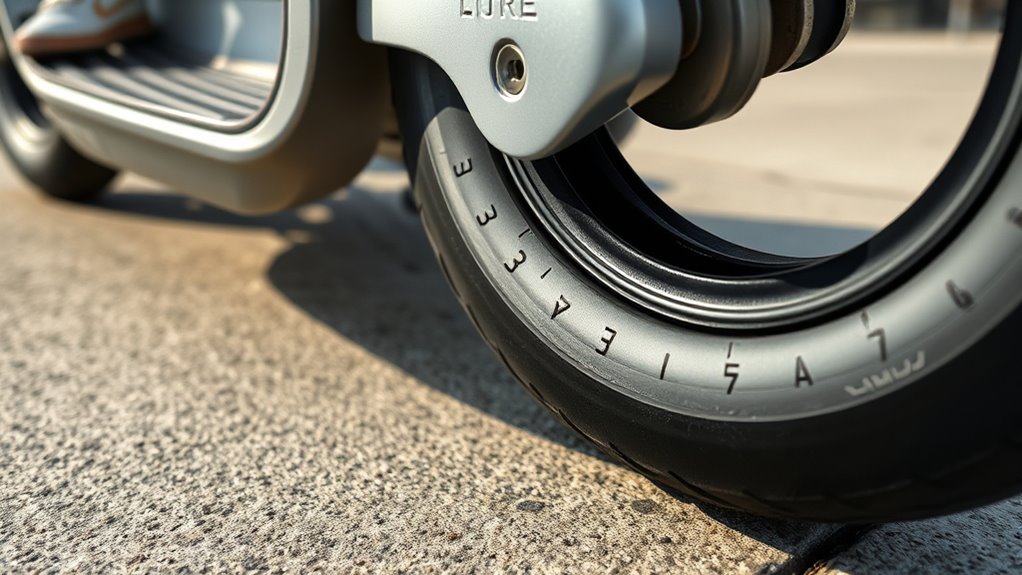
To find the ideal scooter tire pressure based on your weight, start by checking your scooter’s recommended range on the sidewall or owner’s manual. Heavier riders should slightly increase pressure to prevent uneven wear and maintain stability, while lighter riders can stick closer to standard levels. Proper inflation guarantees safe handling, better traction, and longer tire life. Keep in mind that adjusting for your weight can make a noticeable difference in your riding experience—learn more to fine-tune your ride.
Key Takeaways
- Adjust scooter tire pressure based on rider weight to ensure even wear and optimal traction.
- Heavier riders typically need slightly higher tire pressure than standard recommendations.
- Lighter riders can follow manufacturer’s standard pressure guidelines for best performance.
- Regularly check and modify tire pressure when rider weight changes or after long rides.
- Proper inflation tailored to rider weight reduces uneven wear and enhances safety.
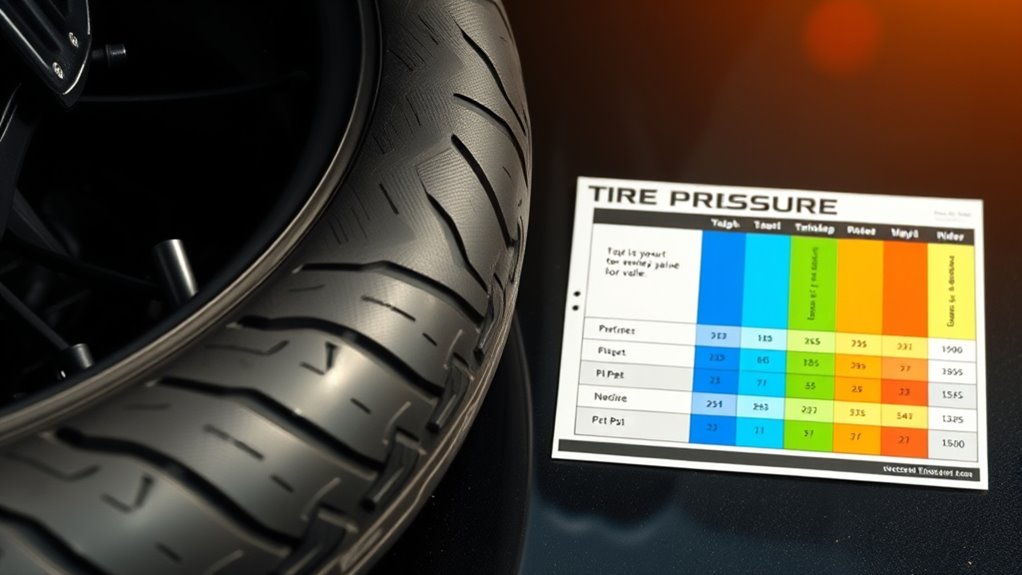
Maintaining the correct tire pressure on your scooter is essential for a smooth, safe ride. Properly inflated tires not only improve your riding experience but also extend the lifespan of your tires. When your tires are underinflated, they tend to wear unevenly, especially on the edges, leading to increased tire wear and the need for frequent replacements. Conversely, overinflation can cause the tire’s center to wear out faster, reducing traction and increasing the risk of a blowout. To avoid these issues, you need to pay attention to inflation tips tailored to your weight and riding style.
Proper tire pressure ensures a safe, smooth ride and longer-lasting tires.
First, check your scooter’s recommended tire pressure, which is usually printed on the sidewall of the tire or listed in the owner’s manual. These specifications are designed to optimize performance and tire longevity. Once you know the correct pressure, use a reliable tire pressure gauge to measure the air in your tires regularly. This should be done at least once a week, especially if you ride frequently or in varying weather conditions. Remember, temperature fluctuations can affect tire pressure—hot days cause the air inside to expand, while cooler days make the pressure drop. Adjust accordingly to keep your tires within the recommended range.
Your weight plays a significant role in determining the appropriate tire pressure. If you’re a heavier rider, you may need to inflate your tires slightly more to prevent excessive tire wear and to maintain proper traction. Lighter riders can usually stick closer to the standard inflation levels. Think of it this way: the more weight your tires support, the more they need to be properly inflated to distribute the load evenly. This prevents uneven tire wear and ensures a safer ride.
In addition to maintaining proper inflation, consider the tire wear pattern you observe over time. Uneven wear signals that your tire pressure might be off or that your tires need realignment. Keeping your tires at the correct pressure minimizes this issue and extends their lifespan. Inflation tips include checking your air pressure before long rides and after any significant temperature change. Also, don’t forget to inspect your tires for any embedded debris or damage that could cause uneven wear or punctures. Regularly monitoring tire pressure can significantly enhance your safety and prolong your tire life.
Frequently Asked Questions
How Often Should I Check My Scooter’s Tire Pressure?
You should check your scooter’s tire pressure at least once a month to guarantee peak performance. Regular checks help with tire rotation, preventing uneven wear and puncture issues. Before each ride, quickly inspect for punctures or damage. Maintaining proper pressure not only extends your tires’ lifespan but also enhances safety and fuel efficiency. Consistent maintenance keeps your scooter running smoothly and prevents unexpected breakdowns.
Can I Use Car Tire Pressure Guidelines for My Scooter?
You shouldn’t use car tire pressure guidelines for your scooter because car tire safety standards differ considerably from scooters. Overinflating or underinflating can cause uneven scooter tire wear and compromise safety. Always check your scooter’s recommended tire pressure, which is tailored for its size and weight. Properly maintained tire pressure guarantees ideal performance, reduces wear, and keeps you safe on the road. Follow manufacturer guidelines for the best results.
What Happens if I Overinflate or Underinflate My Tires?
Imagine your scooter gliding smoothly, but if you overinflate or underinflate your tires, that harmony breaks. Overinflation makes tires stiff, risking blowouts, while underinflation causes uneven wear and poor traction. These are common mistakes that compromise tire pressure safety, affecting handling and safety. Always check your tire pressure regularly, keeping it just right to enjoy a safe, comfortable ride and avoid unnecessary damage.
Does Tire Pressure Affect Scooter Battery Life?
Yes, tire pressure impacts your scooter’s battery life. Properly inflated tires improve battery efficiency by reducing resistance, making it easier for your scooter to move. When tires are underinflated, increased tire wear and rolling resistance force the motor to work harder, draining the battery faster. Conversely, overinflated tires can cause uneven wear and compromise handling. So, maintaining the correct tire pressure helps extend your scooter’s battery life and keeps your tires in good shape.
Are There Specific Tires for Different Rider Weights?
You don’t need superhuman strength to notice that rider weight impacts tire choice. Yes, there are specific tires designed for different rider weights, considering tire material differences like rubber compounds and sidewall strength. Heavier riders require sturdier tires to prevent blowouts, while lighter riders can use softer, more flexible options. Selecting the right tires guarantees your scooter performs like a rocket, giving you a safe and smooth ride every time.
Conclusion
Keeping your scooter’s tire pressure just right is like tuning a finely crafted instrument—it ensures smooth rides and safety. When you adjust your pressure based on your weight, you’re not just maintaining your scooter, you’re caring for your own comfort and confidence. Don’t let under- or over-inflation jeopardize you down; instead, stay attentive and proactive. Think of your tires as the heartbeat of your ride—steady and strong, they carry you with ease and joy every time.