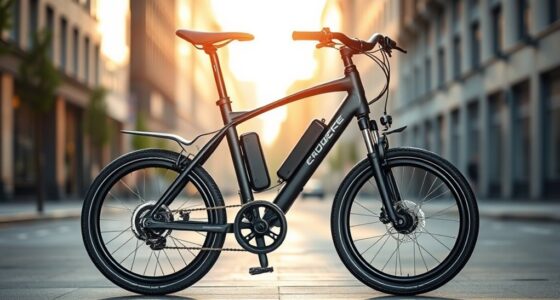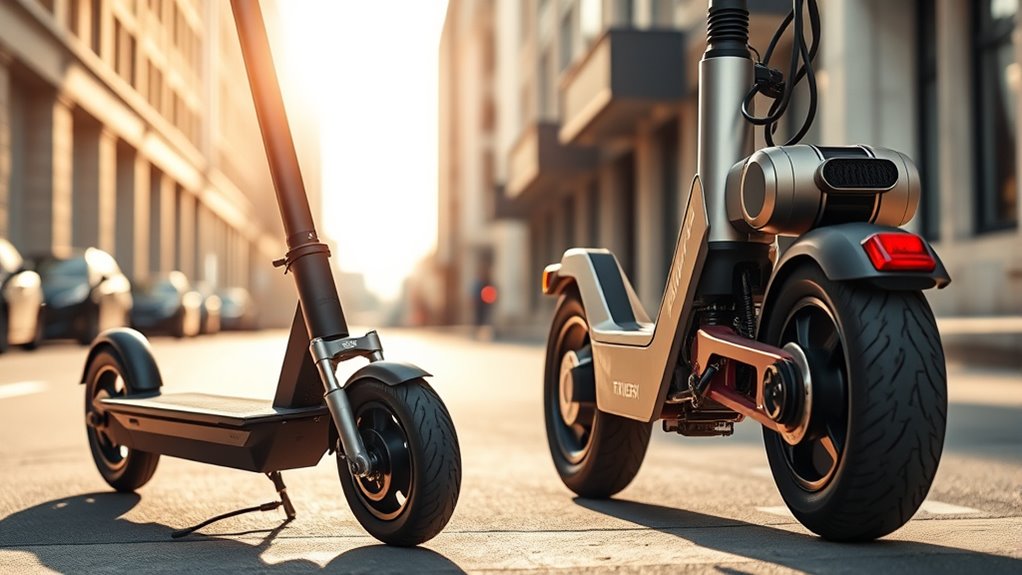

Choosing between single and dual motors on e-scooters depends on your riding needs. Dual motors give you more power and faster acceleration, making them great for hilly terrain or quick rides. Single motors are usually more energy-efficient, helping you go further on a single charge, perfect for daily commuting on flat surfaces. If you’re curious about how each setup impacts performance and efficiency, keep exploring to find what suits your riding style best.
Key Takeaways
- Dual motors offer higher power and better performance on hills, while single motors are sufficient for flat terrains.
- Single motor e-scooters are more energy-efficient, providing longer battery life and extended riding distances.
- Dual motors can cause vibrations if power isn’t synchronized, whereas single motors deliver smoother rides.
- Lighter and easier to handle, single motor scooters are ideal for urban commuting; dual motors excel in demanding terrains.
- Choose based on riding needs: single for efficiency and city use, dual for performance and challenging routes.

Have you ever wondered how different motor configurations impact performance and efficiency? When choosing an e-scooter, understanding whether a single or dual motor setup suits your needs can make a big difference in your riding experience. The motor configuration directly influences factors like battery life and ride comfort, so it’s worth considering how each setup aligns with your daily commuting or leisure rides.
A single motor e-scooter, equipped with one motor usually located in either the front or rear wheel, tends to be more energy-efficient. Because it uses less power, it often offers better battery life, meaning you can travel longer distances between charges. This is ideal if your rides are relatively flat and don’t require a lot of acceleration or hill climbing. With fewer components to power, the scooter’s energy consumption remains lower, which translates into less frequent charging and more consistent performance over time. In terms of ride comfort, a single motor setup generally provides a smoother experience, especially on even surfaces, since the weight distribution is simpler and the scooter tends to be lighter overall. The reduced weight also makes handling easier, giving you a more relaxed ride, especially during extended trips or urban commutes.
On the other hand, dual motor e-scooters, which have motors in both the front and rear wheels, deliver considerably more power. This configuration boosts acceleration, top speeds, and the ability to tackle inclines with ease. If you often ride in hilly areas or need quick acceleration for navigating busy streets, dual motors will give you that extra boost. However, this increased power consumption means your battery might drain faster, reducing the total distance you can travel per charge. That’s an important consideration if you rely heavily on your scooter for daily commuting, as you might need to recharge more frequently. Regarding ride comfort, dual motors can sometimes introduce a bit more vibration or unevenness, especially if the power delivery isn’t perfectly synchronized. Yet, many high-end dual motor models are designed to minimize these issues, providing stable and confident handling even at higher speeds. Additionally, vertical storage solutions can be useful when managing larger or heavier dual motor scooters, helping maintain organization and ease of transport.
Ultimately, your choice depends on what you prioritize most—whether it’s longer battery life and smoother rides with a single motor or enhanced power and performance with dual motors. Think about your typical routes, terrain, and how much weight your scooter needs to carry. This way, you’ll select the configuration that best aligns with your riding style and lifestyle. Both setups have their advantages, but understanding how each impacts performance and efficiency will help you make a smarter, more satisfying choice.
Frequently Asked Questions
How Does Motor Configuration Affect Scooter Durability?
Your scooter’s motor configuration impacts durability by influencing battery lifespan and motor overheating. Dual motors distribute workload better, reducing strain, which helps extend battery life and prevents overheating. In contrast, single motors may work harder, risking quicker wear and potential overheating, leading to reduced durability. So, choosing a dual-motor setup can make your scooter last longer and perform more reliably over time.
Are Dual-Motor Scooters More Energy-Efficient Than Single-Motor Ones?
Dual-motor scooters aren’t always more energy-efficient than single-motor ones because they often consume more power, which can reduce battery life. However, they can provide better performance, especially on steep inclines or rough terrain. If you prioritize cost efficiency and longer battery life, a single-motor scooter might be your best choice. Dual motors can be great if you need extra power, but they may lead to increased energy use.
Can Single-Motor Scooters Handle Steep Inclines Better?
Think of your scooter as a mountain climber. A single-motor setup acts like a determined hiker, handling steep inclines with effort but risking quicker drain on the battery life. Its weight distribution favors agility but can strain on steep ramps. You’ll find it handles moderate slopes well, but for serious climbs, dual motors provide more power and stability, making steep inclines easier without sacrificing too much battery life or balance.
Do Dual-Motor Setups Require More Maintenance?
Yes, dual-motor setups generally require more maintenance because they have extra parts that can wear out or need servicing. This can impact your battery lifespan, as dual motors draw more power, potentially leading to faster battery degradation. Additionally, the increased complexity means higher cost implications for repairs and upkeep. So, if you want a low-maintenance scooter, a single-motor might be a better choice.
Which Motor Configuration Is Better for Off-Road Riding?
For off-road riding, dual-motor setups are better because they offer improved power and traction. You’ll notice better handling on uneven terrain thanks to balanced weight distribution, which enhances stability. Keep in mind, dual motors tend to consume more battery capacity, so plan your rides accordingly. The extra weight might make the scooter slightly heavier, but the added control and performance make it worth it for off-road adventures.
Conclusion
When choosing between single and dual motors on e-scooters, you get what you pay for. Dual motors pack more power and better hill-climbing, but come at a higher price and weight. Single motors are simpler and more affordable, perfect for casual rides. Just remember, you can’t have your cake and eat it too—so weigh your needs carefully. Ultimately, pick what suits your riding style best and enjoy the ride!