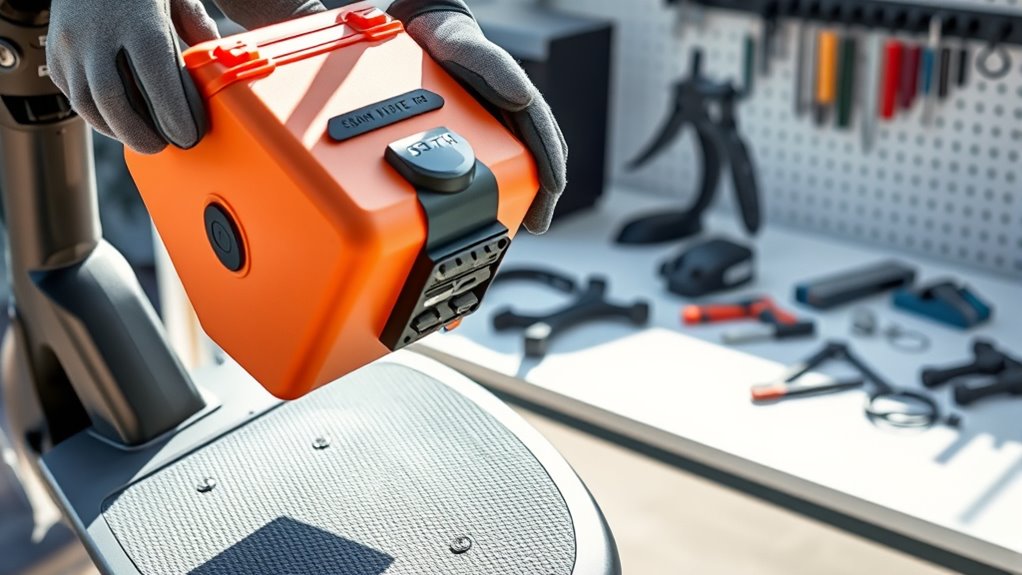

To swap out your scooter’s battery safely, start by turning off the scooter and wearing protective gloves and eye gear. Carefully disconnect the old battery’s terminals, ensuring they’re clean and free of corrosion, and remove the battery securely. Before installing the new one, fully charge it according to the manufacturer’s instructions. Double-check all connections and secure the battery firmly to prevent movement. For detailed tips on each step, keep exploring these essential safety procedures.
Key Takeaways
- Turn off the scooter and disconnect the power before removing the old battery.
- Wear protective gloves and eye gear when handling the replacement battery.
- Ensure all electrical connections are clean, secure, and properly attached during installation.
- Fully charge the new battery according to manufacturer instructions before installation.
- Conduct a visual inspection and test the scooter for proper operation after replacing the battery.
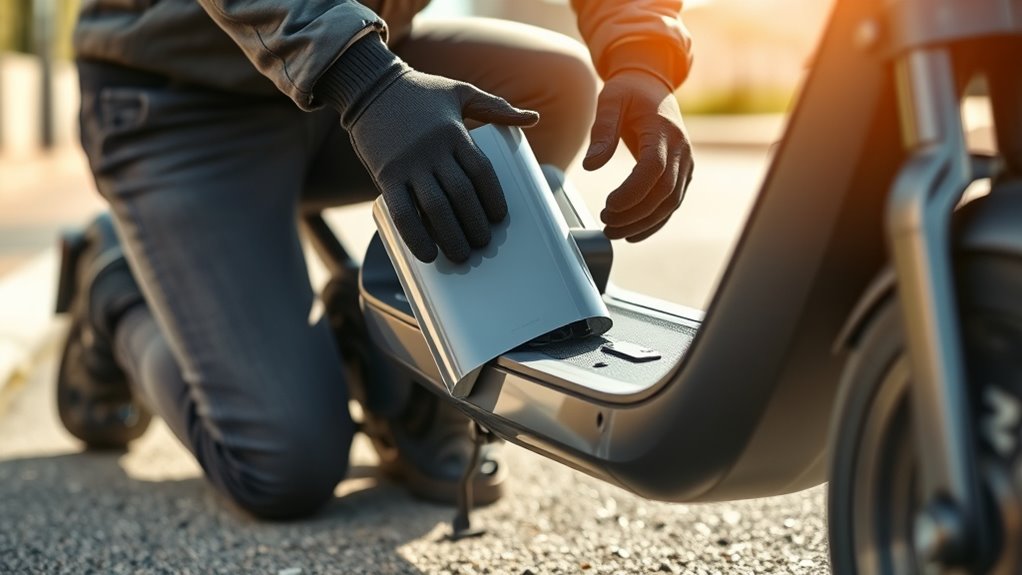
Swapping out your scooter’s battery might seem straightforward, but doing it safely is vital to prevent damage or injury. Before you begin, confirm you have the right replacement battery compatible with your scooter model. Handling batteries improperly can lead to leaks, fires, or even chemical exposure. Always wear protective gloves and eye protection to guard against potential acid spills or sparks. Remember, safety isn’t just about avoiding harm—it’s also about protecting the environment. Proper battery recycling is essential; never throw old batteries in the trash. Instead, take them to a designated recycling center or an authorized drop-off point. Many communities offer battery recycling programs, so check local guidelines to dispose of your used battery responsibly. Implementing proper battery safety measures can further reduce risks during handling and disposal.
Next, focus on charging safety to prevent accidents. Before installing the new battery, fully charge it according to the manufacturer’s instructions. Use only the charger supplied with your scooter or one recommended by the manufacturer. Avoid overcharging—leaving the battery plugged in beyond the recommended time can cause overheating or damage. When charging, do so in a well-ventilated area away from flammable materials, and never leave the process unattended. This reduces the risk of overheating or fire caused by faulty connections or defective chargers. Once the new battery is installed, double-check all connections. Loose or corroded terminals can cause poor performance or sparks. Make sure the battery is securely fastened and that the terminals are clean and free of debris.
When you’re ready to power up, do a quick safety check. Turn on your scooter and observe for any irregularities, such as unusual sounds or sparks. If something seems off, disconnect the battery immediately and troubleshoot. Also, remember that proper handling during this process helps prolong the lifespan of your new battery. Avoid dropping or jarring it, as impacts can damage internal components. After use, maintain good charging habits—avoid letting the battery discharge completely and always store it in a cool, dry place. If your scooter will be unused for an extended period, disconnect the battery and store it properly to prevent deterioration.

Autel MaxiCharger Level 2 Electric Vehicle (EV) Charger, up to 80 Amp Fast Charging EV Charger Level 2, Integrated Cloud with AI, Indoor/Outdoor Charging Stations J1772, Hardwired
- AI-Integrated Smart Charging: Schedule and control via app
- High-Speed 80A Charging: Up to 19.2 kW, 70 miles/hour
- Fast Recharge for EVs: Charges overnight or between visits
As an affiliate, we earn on qualifying purchases.
Frequently Asked Questions
Can I Swap My Scooter Battery Outdoors in Bad Weather?
Swapping your scooter battery outdoors in bad weather isn’t recommended. Weather precautions are essential to make certain outdoor safety—wet conditions can cause electrical shorts or damage your scooter. It’s best to wait for clear, dry weather before changing the battery. If you must do it in bad weather, use protective gear, cover the scooter, and ensure the area is dry. Prioritizing safety helps prevent accidents and keeps your scooter in good shape.
Is It Necessary to Wear Gloves During Battery Replacement?
Wearing gloves during battery replacement isn’t always necessary, but it’s highly recommended for your safety. Using protective gear, like gloves, helps prevent contact with corrosive acid and reduces the risk of electric shocks. Always follow handling precautions, such as disconnecting the power and avoiding metal tools that could cause sparks. Prioritize safety to avoid potential injuries or damage, especially if you’re working in less-than-ideal conditions.
What Tools Are Essential for Swapping the Battery?
Imagine your toolkit as a trusty sidekick ready for the adventure. You’ll need a wrench or socket set to loosen and tighten bolts, screwdrivers for any screws, and possibly pliers for stubborn connectors. Guarantee your tools match the battery’s size and type, avoiding mishaps. Keep your tools well-maintained to prevent slipping, and double-check battery compatibility before swapping. A prepared toolkit makes the process smooth and keeps your scooter humming happily.
How Do I Dispose of the Old Battery Properly?
When disposing of your old battery, prioritize battery recycling to protect the environment. Find a certified recycling center or local hazardous waste facility that accepts scooter batteries. Always handle the battery carefully to guarantee disposal safety, avoiding punctures or leaks. Don’t throw it in regular trash. Proper recycling prevents harmful chemicals from contaminating soil and water, and it ensures valuable materials are reused responsibly.
Can I Upgrade to a Higher Capacity Battery Easily?
Back in the day, upgrading was a breeze, and today it’s no different. You can definitely upgrade your scooter’s battery capacity, but it’s not always a simple plug-and-play. Check your scooter’s specifications and compatibility for the upgrade process. Confirm the new battery fits physically and matches the voltage. If you’re unsure, consulting a professional can save you from potential damage or safety issues, making your upgrade smoother and safer.

E-Bike Tester, 24V 36V 48V 60V 72V E-bike Scooter Brushless Car Motor Controller Tester, Quick Battery Powered Spared Device Controller for Teste Motor Coil
- Temperature Range: -20°C to 50°C
- Device Dimensions: 10.5x7.5x2.5cm
- Voltage Compatibility: 24V to 72V
As an affiliate, we earn on qualifying purchases.
Conclusion
Remember, just like Icarus carefully adjusted his wings before taking flight, you must handle your scooter’s battery with care. Respect its power, follow safety steps, and stay alert. A well-executed swap keeps your journey smooth and safe, preventing mishaps that could ground your adventures. By treating your scooter’s battery with the same diligence as a craftsman, you’ll guarantee your ride remains a symbol of freedom—flying high, but always grounded in safety.

XuYelora Brushless MotorTester, Electro Scooter Motor Controller Tester 24V 36V 48V 60V 72V E-Bike T-Ester for Teste Moto-r Coil (Color:White)
- Motor Coil Testing: Quickly check motor coil condition
- Controller Testing: Rapidly assess controller functionality
- Phase Sequence Check: Verify ABC phase sequence and colors
As an affiliate, we earn on qualifying purchases.

Sumsoctober Level Indicator Module for Lithium Batteries 1S-16S DIY Voltage Tester Waterproof PCB with Red Flashing Charging Compact 3.9x1.5cm for E-Bike RC Monitoring(3S)
- Compact Size: 3.9x1.5cm level indicator module
- Waterproof Design: Resistant to moisture and outdoor conditions
- Wide Voltage Range: Supports 1S to 16S lithium batteries
As an affiliate, we earn on qualifying purchases.