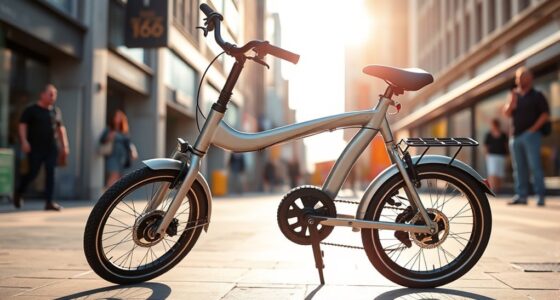
To improve traction on your scooter in wet and cold conditions, check your tire tread regularly and replace worn tires promptly. Use tires designed for wet weather with deep tread patterns and specialized rubber compounds. Adjust your riding posture to keep weight balanced, and ride at lower speeds with smooth, deliberate movements. Applying gentle throttle and brakes helps prevent slips. For more tips on staying safe in challenging weather, keep exploring how proper technique and gear can boost your grip.
Key Takeaways
- Use tires with deep, specialized treads and rubber compounds designed for wet and cold conditions.
- Regularly check and replace worn tires to maintain optimal traction on slippery surfaces.
- Maintain a balanced, upright riding posture to ensure consistent contact and better grip.
- Reduce speed and make smooth, deliberate movements to prevent tire slip in adverse weather.
- Avoid abrupt acceleration or braking, and adjust riding techniques to enhance safety in wet and cold environments.

Have you ever wondered why some scooters grip the road better than others? It often comes down to a few key factors, with tire tread and riding posture playing essential roles. When riding in wet or cold conditions, these elements become even more important because they directly influence your safety and control. The tire tread determines how well your tires channel water away from the contact patch, reducing the risk of hydroplaning. Scooters equipped with tires featuring deep, well-designed tread patterns are better at maintaining traction on slick surfaces. If your tires are smooth or worn down, the rubber can’t effectively grip the road, making slides and slips more likely. That’s why it’s critical to regularly check your tire tread depth and replace tires when they lose their pattern. Proper tire maintenance guarantees you have maximum traction, especially when the weather turns grim. Additionally, maintaining mindful riding techniques can significantly enhance your grip and safety. But even with good tires, your riding posture can make or break your grip. When conditions are wet or cold, your body position influences how evenly your weight is distributed across the scooter’s contact patches. Leaning too far forward or backward shifts your center of gravity, which can cause uneven pressure on the tires and decrease traction. Instead, aim for a balanced, upright posture that keeps your weight centered over the scooter. This position helps your tires maintain consistent contact with the road, giving you better control. Keeping your knees slightly bent and your arms relaxed allows for smoother adjustments, especially if you hit patches of ice or puddles. In cold weather, your muscles might tense up, so consciously relaxing your riding posture can improve your ability to respond quickly and maintain grip. Your riding technique, combined with the right tire tread and posture, plays a pivotal role in maintaining traction. When riding in wet or cold conditions, reduce your speed and be extra cautious around turns. Slow, deliberate movements prevent sudden shifts that could cause your tires to lose grip. Remember to avoid abrupt acceleration or braking, as these actions can cause your tires to slip. Instead, apply gentle, consistent pressure to the throttle and brakes to keep your traction stable. Additionally, choosing tires designed specifically for wet and cold weather can give you an added layer of security. These tires often feature specialized rubber compounds and tread patterns that perform better in less-than-ideal conditions. In essence, maintaining ideal traction in challenging weather involves paying attention to your tires and your riding posture. Regularly inspect your tire tread and replace worn tires promptly. Adopt a balanced riding posture to keep your weight distributed evenly, and adjust your riding style to match the conditions. By doing so, you’ll stay safer, more confident, and better prepared to handle wet and cold roads on your scooter.
Frequently Asked Questions
How Do Tire Pressures Affect Traction in Wet Conditions?
You should keep your tire pressure maximized because it directly impacts your wet surface grip. Underinflated tires increase the contact patch, helping you grip wet surfaces better, but too much pressure reduces traction and increases the risk of slipping. Proper tire pressure ensures ideal traction, especially in wet conditions, giving you better control and safety. Regularly check and adjust your tire pressure to maintain the best grip on wet surfaces.
What Are the Best Techniques for Braking on Slippery Surfaces?
Remember, slow and steady wins the race. When braking on slippery surfaces, use gentle, progressive braking techniques to avoid skidding. Apply both brakes evenly and avoid sudden, hard stops. Practice emergency stopping in a controlled environment to build confidence. Keep your weight centered and look ahead to anticipate hazards. This way, you maintain control and reduce the risk of falling, especially in wet or icy conditions.
Can Tire Tread Patterns Improve Grip in Cold Weather?
Yes, tire tread pattern variations and rubber compound choices can improve your grip in cold weather. Opt for tires with deeper, more aggressive tread patterns that channel water and snow away, enhancing traction. Additionally, choose tires made from rubber compounds designed for cold conditions; these stay softer and more pliable, increasing grip. Combining the right tread design and rubber will help you maintain control and safety on slippery, cold surfaces.
How Often Should Scooter Tires Be Replaced for Optimal Traction?
You should replace your scooter tires when tread depth drops below 2/32 inch, or every 3,000 to 5,000 miles—whichever comes first. Don’t forget tire rotation to guarantee even wear, especially in challenging weather. Ignoring this means risking your grip in wet or cold conditions, turning your ride into a slip-and-slide. Keep an eye on tread depth and rotate tires regularly for ideal traction and safety.
Are There Specific Tires Recommended for Icy Scooter Rides?
Yes, for icy rides, you should consider winter tire options designed for cold conditions. Look for tires with enhanced ice grip techniques, such as textured treads or embedded studs, to improve traction. These features help you stay stable and safe on icy surfaces. Always check compatibility with your scooter model and replace worn tires promptly to maintain peak grip in winter conditions.
Conclusion
To stay safe on wet and cold days, trust your tires and technique. Proper tires with good tread grip better in slippery conditions, while smooth, controlled riding prevents slips. Believe it or not, your riding style makes a huge difference—slow down and stay alert. When you combine quality tires with cautious riding, you’ll enjoy your scooter rides more and reduce the risk of accidents. Confidence and preparation truly make all the difference.