
Tubeless scooter tires are easier to set up since they seal directly to the rim and often need sealant for airtightness, reducing flats and maintenance. Tubed tires require installing an inner tube, which is simpler but more prone to flats. Proper inflation, rim compatibility, and regular checks are essential for both types. If you want to learn more about how to optimize setup and care, keep exploring these techniques for a safer, smoother ride.
Key Takeaways
- Tubeless tires offer easier repair with sealant, while tubed tires require patching or inner tube replacement.
- Proper rim compatibility and sealing are essential for tubeless setup; tubed tires fit most rims more easily.
- Maintaining correct inflation pressure is vital for both, but tubeless tires need sealant for optimal airtightness.
- Tubeless tires reduce flats from small punctures and pinch flats, whereas tubed tires are more prone to punctures and pinch flats.
- Routine inspection of rim, bead, and tire condition ensures safety and longevity for both tire types.

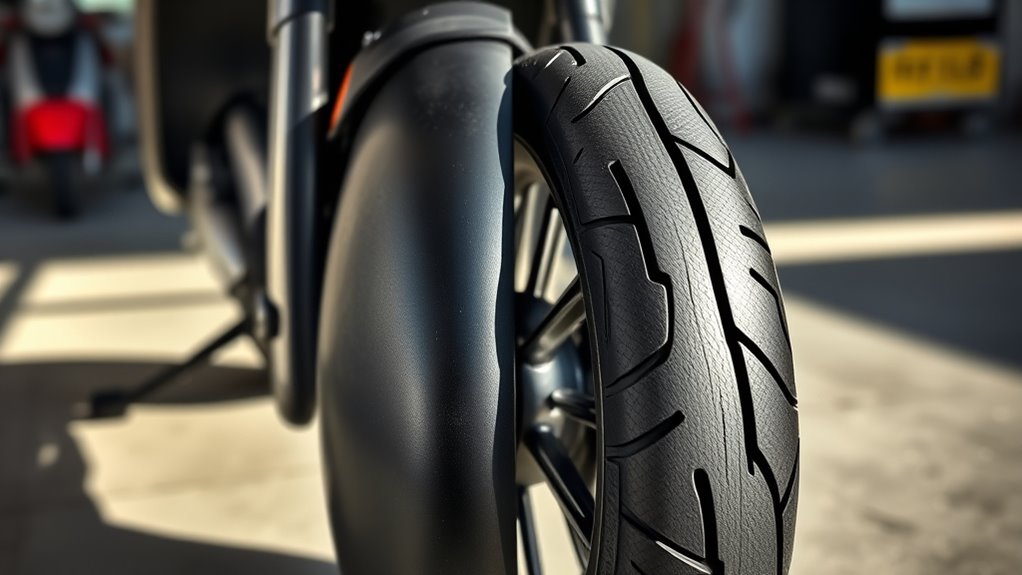
When choosing between tubeless and tubed scooter tires, understanding their differences can help you make an informed decision. One of the key factors to take into account is how each setup affects tire puncture prevention and wheel rim compatibility. Tubeless tires are designed to seal directly against the rim, which generally reduces the likelihood of flats caused by small punctures. Since there’s no inner tube to pinch or puncture separately, you benefit from fewer instances of sudden deflation and easier repair options. However, this advantage hinges on proper wheel rim compatibility. Not all rims are built to seal tightly with tubeless tires, so paying attention to your wheels are compatible is essential to prevent leaks or mounting issues. If your rims aren’t designed for tubeless use, you might need to invest in rim tape or specialized sealing strips, adding to setup complexity.
On the other hand, tubed tires rely on an inner tube that sits inside the tire, which can be more forgiving if your rims aren’t compatible. Tubed setups are typically easier to install and repair since you can replace or patch the tube if a puncture occurs. This makes them a practical choice for riders who prefer straightforward maintenance or who frequently encounter rough terrains where punctures are more common. Yet, tubed tires are more susceptible to pinch flats, where the tube gets pinched between the rim and the tire during impact, increasing the risk of flats. Proper inflation pressure is critical here, as over- or under-inflation can compromise puncture prevention efforts. Regularly inspecting and maintaining correct pressure can significantly reduce flat risks.
Setup and care are straightforward once you understand these differences. For tubeless tires, you’ll need to make sure your wheels are sealed properly, often requiring specific rim tape and sealant compounds that help maintain airtightness. Regularly check for leaks or damage, especially after riding over debris or rough patches. For tubed tires, focus on maintaining correct inflation pressure and inspecting the tube for punctures or wear. Both setups benefit from routine cleaning and inspection of the rim and tire bead to ensure a secure fit. Proper maintenance not only prolongs your tire’s lifespan but also enhances safety by reducing the chance of sudden flats. Understanding the importance of wheel rim compatibility and tire puncture prevention will help you enjoy a smoother, safer ride with fewer interruptions.
Frequently Asked Questions
How Often Should I Check Tire Pressure on Tubeless Versus Tubed Tires?
You should check your tire pressure at least once a week for both tubeless and tubed tires. Regular tire pressure monitoring helps prevent flats and maintains ride quality. For tubeless tires, keep an eye out for puncture repair techniques in case of leaks, as they’re easier to fix on the spot. Tubed tires may need more frequent pressure checks since they’re more prone to slow leaks over time.
Are Tubeless Tires More Prone to Punctures Than Tubed Tires?
They say “prevention is better than cure,” and with puncture frequency, tubeless tires usually fare better than tubed ones. Tubeless tires tend to be more durable and resist punctures, thanks to their sealant that quickly seals small holes. However, they aren’t completely immune. While tubed tires might puncture more often, they’re easier to repair on the go. Overall, tubeless tires generally offer better durability, but it’s always wise to check regularly.
Can I Convert My Tubed Tire Scooter to Tubeless Easily?
Yes, you can convert your tubed tire scooter to tubeless, but the process involves some steps. First, you need to check compatibility considerations, ensuring your rim can support tubeless tires. The converting process includes removing the tube, cleaning the rim, applying tubeless sealant, and fitting a tubeless-compatible tire and rim tape. If your rim isn’t compatible, the conversion might not be successful or safe.
What Are the Best Tools for Installing Tubeless Scooter Tires?
To install tubeless scooter tires, you need the right tools. Start with a valve removal tool to easily detach the valve stem. Use a tire lever to break the bead and seat the tire. Apply sealant evenly inside the tire for a proper seal and puncture protection. A high-quality floor pump with a pressure gauge helps guarantee correct inflation. These tools streamline your setup process and ensure a secure, long-lasting tubeless fit.
Do Tubeless Tires Require Different Maintenance Routines Than Tubed Tires?
Think of tubeless tires as delicate dance partners that demand a slightly different routine. You’ll need to regularly check and refresh the tire sealant to keep leaks at bay, much like tending a garden. Valve maintenance becomes essential to prevent air from sneaking away. Unlike tubed tires, these need less frequent patching but more attentive sealing and valve upkeep, ensuring your ride remains smooth and secure.
Conclusion
Choosing between tubeless and tubed scooter tires depends on your riding style and maintenance preferences. Did you know that tubeless tires can reduce flats by up to 50%? With proper setup and care, they offer a smoother, more reliable ride. Whether you prioritize convenience or performance, understanding these differences helps you make the best choice. Stay attentive to tire pressure and regular checks, and you’ll enjoy safer, longer-lasting scooter journeys.