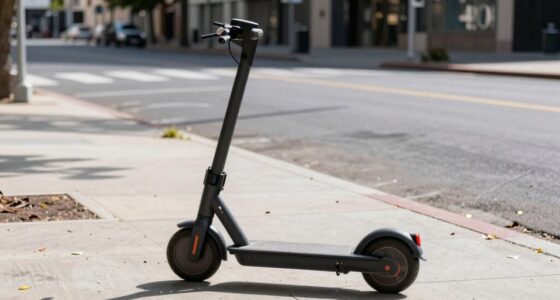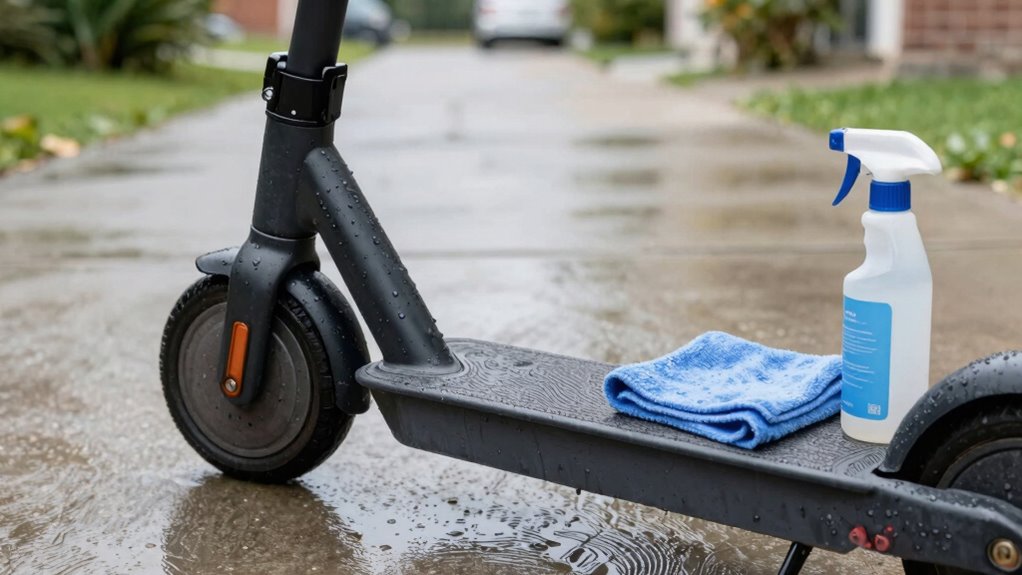

After a wet commute, turn off your e-scooter and disconnect the battery if possible. Wipe down the frame and battery compartment with a dry cloth, using isopropyl alcohol sparingly on contacts if needed. Avoid soaking any parts, especially electrical connections. Clean tires with a damp cloth or soft brush, and inspect for damage. Dry everything thoroughly and apply lubricant to moving parts. For more tips on maintaining your scooter after water exposure, keep exploring.

Get bike and ride gear delivered free — and shop member deals
- Fast, free delivery on millions of items
- Access to Prime Big Deal Days deals on October 6–7
- Prime Video, Amazon Music and more included
Key Takeaways
- Turn off the scooter and disconnect the battery, then wipe down the compartment with a dry cloth.
- Use a damp cloth to clean the frame, avoiding electrical parts and ensuring thorough drying afterward.
- Inspect tires for debris, punctures, and proper pressure; clean with a soft brush and check for embedded stones.
- Check electrical connections for moisture or corrosion; apply isopropyl alcohol sparingly if needed.
- Lubricate moving parts with a silicone spray and perform safety checks on bolts, rust, and worn components.

After a wet commute, your e-scooter can quickly accumulate mud, water splashes, and grime that may affect its performance. To keep it running smoothly, you need to clean it properly. Start by turning off the scooter and disconnecting the battery if possible. Battery maintenance is vital, especially after exposure to moisture. Wipe down the battery compartment with a dry cloth to remove any water or dirt that might have seeped in. If you notice corrosion or residue, consider using a small amount of isopropyl alcohol to clean the contacts, but avoid soaking the battery or its connections. Ensuring the battery is dry and free of grime helps prevent electrical issues and prolongs its lifespan. Regular inspection of electrical components helps identify potential issues early and keeps your scooter in top shape. Additionally, inspecting electrical wiring and connectors for signs of moisture or damage can help prevent future malfunctions.
Next, focus on the tires. Tire inspection is indispensable after riding through wet conditions because mud and water can hide potential damage or embedded debris. Check the tires thoroughly for any cuts, punctures, or embedded stones that could compromise your safety. Also, examine the tire pressure, as it may have dropped due to water exposure or rough terrain. Proper inflation ensures maximum grip and ride quality. If the tires are dirty, use a damp cloth to wipe off mud and grime. For stubborn dirt, a soft brush can help dislodge debris without damaging the rubber. Maintaining good tire condition not only improves performance but also reduces the risk of flats or accidents. Additionally, inspecting the tire condition regularly helps ensure optimal safety and longevity. Incorporating proper maintenance practices can further extend the life of your tires and improve overall safety. Checking for moisture accumulation around electrical areas and other components can help prevent future problems and ensure your scooter remains in top condition.
Once you’ve addressed the battery and tires, move on to cleaning the scooter deck and other components. Use a damp cloth or sponge to wipe the frame, avoiding excessive water contact with electrical parts. Never spray water directly onto the scooter, especially around joints and connectors. Dry all parts thoroughly to prevent rust and corrosion, focusing on areas prone to moisture buildup. Applying a light coat of lubricant or silicone spray to moving parts can help maintain smooth operation and protect against future water damage. Proper cleaning and lubrication help keep your scooter running reliably, especially after exposure to wet conditions. Regularly inspecting electrical components and other vulnerable parts ensures long-term durability and safe operation.
Regular maintenance after wet rides is key. Besides cleaning, periodically check your scooter for any signs of rust, loose bolts, or worn-out parts. Keeping your battery well-maintained and inspecting tires ensures your scooter stays safe and reliable. With proper care, your e-scooter can handle wet conditions better and serve you longer. Remember, a quick but thorough cleaning after each wet commute preserves your investment and helps you enjoy a smooth, safe ride every time.
electric scooter battery cleaner
As an affiliate, we earn on qualifying purchases.
As an affiliate, we earn on qualifying purchases.
Frequently Asked Questions
Can I Wash My E-Scooter With a Hose?
You shouldn’t wash your e-scooter with a hose, especially if it has an electric motor. Water resistance varies between models, and high-pressure water can damage sensitive components. Instead, use a damp cloth to wipe down the scooter, avoiding the motor and electrical parts. If you need a deeper clean, carefully use a mild cleaner and a soft brush, but always keep water away from areas that could be compromised.
How Often Should I Clean My E-Scooter After Rain?
Don’t wait until the wheels fall off—clean your e-scooter after every rain to keep it in top shape. After wet rides, it’s best to wash off rain residue and mud right away, preventing corrosion and buildup. Regular cleaning prevents long-term damage, so aim for once a week if you ride frequently in wet conditions. Keeping up with maintenance now saves headaches later and keeps your ride smooth as silk.
Is It Safe to Use a Pressure Washer?
Using a pressure washer on your e-scooter isn’t safe, as high-pressure water can damage waterproof coatings and compromise electrical safety. Instead, opt for a gentle hose spray or a damp cloth to clean it. Focus on avoiding sensitive electrical parts and connectors. Regular cleaning keeps your scooter in top shape, but always be cautious around electrical components, ensuring you don’t force water into areas that might cause damage or safety issues.
Should I Remove the Battery Before Cleaning?
Think of your scooter like a delicate garden; removing the battery before cleaning guarantees you don’t drown its roots. Yes, you should remove the battery for cleaning safety, especially after a wet commute. This prevents water from damaging the electrical components and avoids short circuits. Always follow the manufacturer’s instructions for battery removal, and confirm it’s completely dry before reinserting, keeping your scooter safe and functional.
What Cleaning Products Are Safe for E-Scooters?
You should use eco-friendly cleaning solutions like mild soap and water or specially designed scooter cleaners, avoiding harsh chemicals. Always follow proper drying techniques by wiping the scooter with a dry cloth and letting it air dry completely before riding again. These methods protect your e-scooter’s components and guarantee safety, while eco-friendly products keep the environment safe. Remember, gentle cleaning and thorough drying maintain your scooter’s performance and longevity.
As an affiliate, we earn on qualifying purchases.
Conclusion
Now, you’ve braved the rain and dirt, only to give your e-scooter a good scrub. Honestly, it’s funny how a little mud can turn into a full-blown spa day for your ride. But hey, a clean scooter not only looks sharp but also keeps you rolling smoothly. So next time, embrace the mess—and don’t forget, even your e-scooter deserves a little pampering after its wet adventure!
As an affiliate, we earn on qualifying purchases.
electric scooter maintenance tools
As an affiliate, we earn on qualifying purchases.
As an affiliate, we earn on qualifying purchases.
Halloween Picks
halloween
As an affiliate, we earn on qualifying purchases.