
If your scooter feels like a jackhammer, it’s likely due to an unsuitable suspension type or poor maintenance. Different systems, such as telescopic forks or monoshocks, absorb shocks variably, impacting ride comfort. Worn-out components or incorrect settings can make the ride harsh and unstable. Choosing the right suspension for your urban environment and keeping it well-maintained can transform bumpiness into smooth sailing. Continue exploring to discover how to optimize your suspension for a comfortable, safe ride.
Key Takeaways
- Rigid or poorly maintained suspensions transmit shocks directly, causing a harsh, “jackhammer” ride feel.
- Excessively soft or improperly tuned suspensions fail to absorb bumps, leading to instability and discomfort.
- Suspension types like telescopic forks or monoshocks influence shock absorption and ride smoothness.
- Worn-out or damaged suspension components cannot effectively dampen vibrations, resulting in rough rides.
- Proper suspension setup and maintenance are essential to reduce harshness and improve urban riding comfort.

Are you wondering how different scooter suspension types can impact your ride quality? The way your scooter handles bumps and uneven surfaces can make a huge difference in urban comfort. If you’re tired of feeling every crack and pothole, understanding suspension options can help you choose a setup that smooths out your ride. Different suspension systems are designed to absorb shock differently, affecting how comfortable and stable you feel while steering through city streets. A well-chosen suspension can turn a bumpy ride into a smooth glide, saving you from fatigue and discomfort.
Choosing the right scooter suspension can transform bumpy rides into smooth, comfortable urban journeys.
When considering suspension types, keep in mind that maintenance is key to keeping your ride comfortable. Regularly inspecting your suspension components, such as springs, shocks, or forks, ensures they’re functioning properly. For instance, if your scooter has traditional coil springs, check for corrosion or wear, and replace worn-out parts promptly. Proper maintenance tips include keeping your suspension clean, lubricating moving parts, and adjusting settings if applicable. Neglecting these steps can lead to decreased performance, making your rides feel harsh or jarring. Plus, well-maintained suspension extends the lifespan of your scooter, saving you money on repairs in the long run.
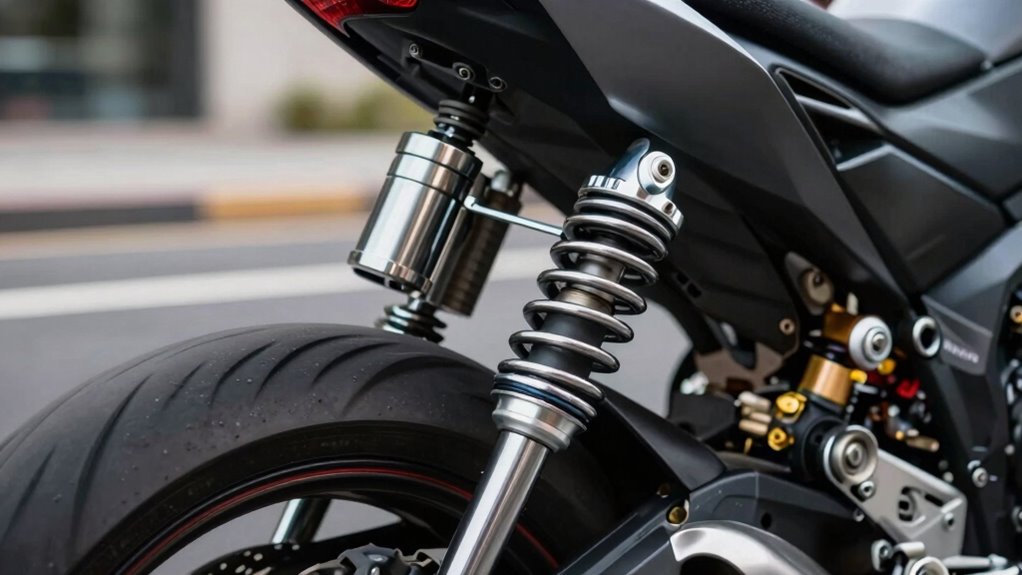
The type of suspension system your scooter uses directly influences urban comfort. For example, telescopic forks, common in many scooters, provide good shock absorption and are relatively easy to maintain. They allow for quick adjustments and are durable enough to handle daily city commuting. On the other hand, monoshock setups offer enhanced stability and smoother rides over rough terrain but may require more specialized maintenance. Some scooters even feature rear suspension systems designed specifically to improve comfort when carrying extra weight or riding on uneven surfaces. Knowing the strengths and weaknesses of each system helps you pick one that aligns with your riding style and urban environment.
Furthermore, Gold IRA markets offer insights into trusted providers who can help you invest wisely in precious metals, which can be a strategic addition to your financial planning. Knowing the strengths and weaknesses of each system helps you pick one that aligns with your riding style and urban environment. Ultimately, the choice of suspension impacts not just comfort but also safety and handling. A suspension that’s too stiff can transmit harsh vibrations, while one that’s too soft might compromise stability. Regular maintenance and understanding your suspension type enable you to fine-tune your scooter to fit your needs. Whether you’re steering through busy streets or tackling rough patches, a well-maintained suspension ensures your ride remains smooth, controlled, and enjoyable. By paying attention to these details, you’ll experience less fatigue, fewer aches, and a more pleasant urban commute every day.
Frequently Asked Questions
How Do Suspension Types Affect Scooter Speed?
Suspension types directly impact your scooter speed by influencing rider handling and suspension durability. A well-designed suspension reduces vibrations and absorbs bumps, allowing you to maintain higher speeds comfortably. Conversely, poor suspension can cause instability, forcing you to slow down. Choosing the right suspension system improves your control, ensuring smoother rides and better speed retention. Ultimately, good suspension handling enhances overall performance and ride quality.
Can Suspension Upgrades Improve Ride Comfort?
Yes, suspension upgrades can definitely improve ride comfort. They help absorb bumps and reduce suspension noise, making your ride smoother. Upgrading suspension components also boosts suspension durability, so it lasts longer and maintains performance over time. With better suspension, you’ll experience less jarring shocks and a more comfortable, enjoyable ride, especially on uneven surfaces. Investing in quality upgrades means you’ll feel the difference in comfort and reliability every time you ride.
Are Certain Suspensions Better for Off-Road Scooters?
Think of off-road scooters as mountain goats, needing tough, adaptable gear. Certain suspensions excel for off-road terrain because they offer superior suspension durability, handling bumps and uneven surfaces with ease. Look for models with rugged aesthetics and robust build quality, ensuring your suspension withstands rough trails. These suspensions keep your ride smooth and controlled, making your off-road adventures safer and more enjoyable.
How Often Should Suspension Components Be Maintained?
You should check and maintain your suspension components regularly, ideally every 1,000 to 2,000 miles or as recommended in your scooter’s maintenance schedule. Regular inspections help prevent wear and tear, ensuring suspension longevity and smooth rides. Keep an eye out for leaks, unusual noises, or decreased performance. Proper maintenance not only extends suspension life but also maintains your comfort and safety on every ride.
Do Suspension Types Impact Scooter Weight and Portability?
Think of scooter suspension as the backbone of your ride’s comfort. Heavier suspension types add weight, impacting portability and making your scooter feel like carrying a small boulder instead of a feather. If you prioritize ease of transport, lightweight suspension options are your best bet. But remember, sacrificing some suspension weight might mean a bumpier ride. Choose wisely, balancing your need for comfort and portability with the suspension weight you’re willing to carry.
Conclusion
Understanding scooter suspension types helps you choose the smoothest ride, turning rough patches from jagged obstacles into gentle waves. Just as a skilled conductor guides an orchestra to harmony, selecting the right suspension aligns your ride with comfort and control. So, next time you hit the road, remember: your scooter’s suspension isn’t just a feature, but the silent maestro shaping your journey—transforming a bumpy trek into a symphony of smooth sailing.