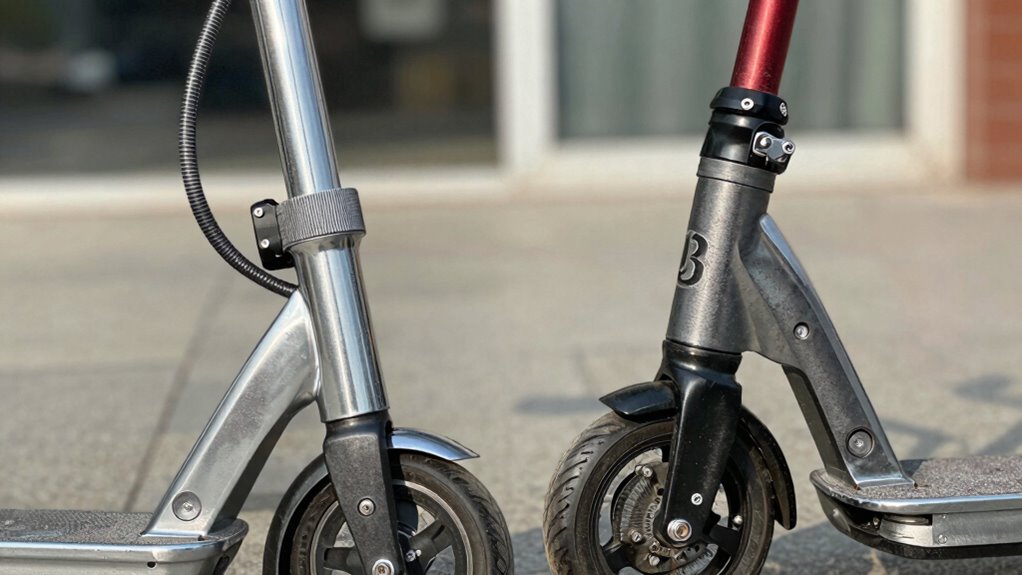

In emergencies, hydraulic scooter brakes respond more smoothly and with greater power, giving you better control during sudden stops. Mechanical brakes, relying on cables, may feel less refined and require more force, which can affect your reaction speed. Proper maintenance makes a big difference for both types. If you keep these differences in mind, you’ll better understand how each system affects your ability to act quickly when it counts. Keep going to learn more about how to optimize your brake response.
Key Takeaways
- Hydraulic brakes offer more precise, smoother modulation, allowing better control during emergency stops.
- Mechanical brakes may require stronger pulls, increasing the risk of skidding or delayed response in urgent situations.
- Hydraulic systems respond faster and more consistently, improving reaction times in emergencies.
- Mechanical brakes depend on cable condition; stretched or frayed cables can hinder quick, reliable stops.
- Proper maintenance and emergency technique practice are crucial for both systems to ensure safety during unexpected events.
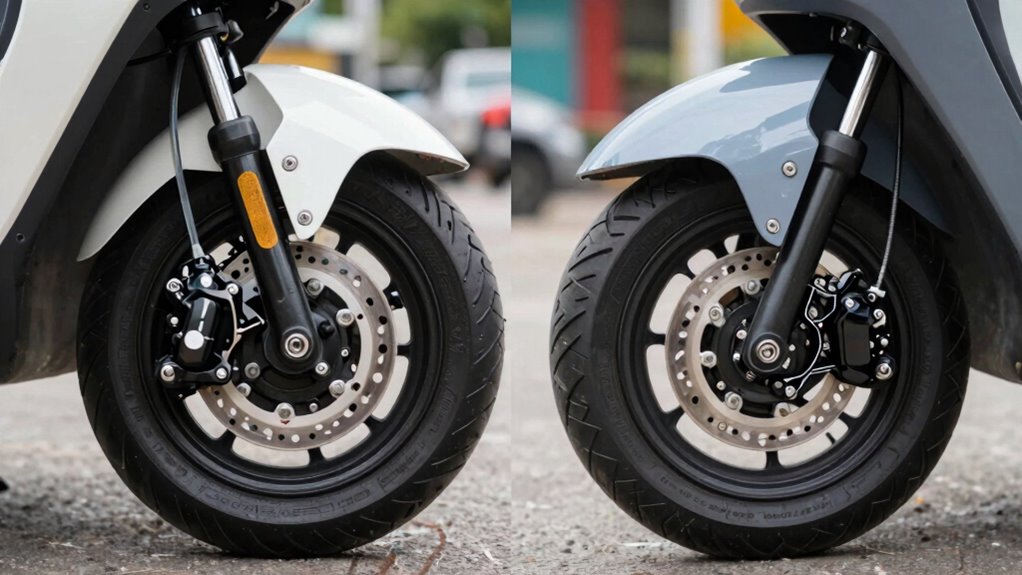
When choosing between hydraulic and mechanical brakes for your scooter, understanding the key differences can help you make an informed decision. Both systems play a fundamental role in your safety, especially during emergencies. Hydraulic brakes use fluid pressure to activate the brake calipers, offering smoother and more powerful stopping power with less effort. Mechanical brakes, on the other hand, rely on cables and levers to engage the brake pads. While they are generally simpler and easier to maintain, they might not deliver the same consistent performance under intense conditions.
Hydraulic brakes offer smoother, more powerful stopping compared to mechanical systems relying on cables and levers.
In emergency situations, your ability to respond quickly depends heavily on how well your brakes perform and how familiar you are with their operation. Hydraulic brakes tend to provide more precise control, allowing you to modulate braking force smoothly, which can be essential when you need to avoid obstacles suddenly. This responsiveness can give you a better chance to react appropriately, especially on steep or unpredictable terrain. Mechanical brakes, although less sensitive, can still be dependable if properly maintained. However, their response might feel less refined, especially if the cables stretch or become dirty, which can delay your reaction time during critical moments.
Brake maintenance is indispensable regardless of the system you choose. Hydraulic brakes require regular checks for fluid levels, leaks, and caliper condition to ensure peak performance. If you neglect maintenance, you risk reduced braking power or even failure during emergencies. Mechanical brakes need periodic cable adjustments, lubrication, and pad replacements. Over time, cables can stretch or fray, diminishing braking efficiency. Staying on top of brake maintenance ensures your scooter responds predictably when you need it most, providing peace of mind during sudden stops. Additionally, newer models often incorporate advanced braking technology to enhance safety features.
Your emergency response techniques also depend on understanding how your brakes function. With hydraulic brakes, you might find that feathering the brake lever allows for smoother, controlled stops, which can be essential when riding in traffic or on slippery surfaces. Mechanical brakes may require you to pull harder or more suddenly, which could lead to skidding if not applied carefully. Practicing controlled braking in safe environments helps you develop muscle memory, enabling quicker, more effective responses during real emergencies. Being familiar with your brake system’s nuances ensures you can react instinctively and confidently when seconds count.
Ultimately, choosing between hydraulic and mechanical brakes involves weighing performance, maintenance needs, and your comfort with emergency response techniques. Hydraulic systems offer superior modulation and power, making them ideal for riders seeking high responsiveness and smoother control. Mechanical brakes, while simpler and easier to service, still provide dependable stopping power when properly maintained. Whichever system you select, staying vigilant about brake maintenance and practicing emergency response techniques will enhance your safety on the road, helping you stay prepared for any unexpected situations.
Frequently Asked Questions
How Do Brake Types Affect Scooter Maintenance Costs?
You’ll find that hydraulic brakes generally have higher repair costs because they require brake fluid maintenance and more complex parts. Mechanical brakes tend to be cheaper to repair, with fewer components needing regular upkeep. When comparing repair costs, a hydraulic system may cost more over time, but it offers better stopping power. Mechanical brakes are simpler, making maintenance easier and less expensive, especially if you’re on a budget.
Are Hydraulic Brakes More Environmentally Friendly Than Mechanical?
Are hydraulic brakes more environmentally friendly than mechanical? They often are, because they use brake fluid instead of cables, reducing metal waste. Hydraulic systems typically cause less wear and tear, meaning fewer replacements and less environmental impact over time. Plus, brake fluid is generally non-toxic and biodegradable, making hydraulic brakes a greener choice overall. So, when you brake, you’re also helping reduce your eco footprint.
Can Hydraulic Brakes Be Installed on All Scooter Models?
Hydraulic brakes can’t be installed on all scooter models due to installation compatibility issues. You might face retrofit challenges because many scooters are designed specifically for mechanical brakes, making conversion difficult or costly. Before upgrading, check your scooter’s specifications and consult a professional to guarantee proper fit and safety. If compatibility isn’t possible, consider models that already feature hydraulic brakes for ideal performance and reliability.
What Is the Typical Lifespan of Each Brake Type?
Hydraulic brakes usually last around 1,000 to 2,000 miles, thanks to their superior wear resistance and brake durability. Mechanical brakes tend to wear out faster, often needing replacement after 500 to 1,000 miles. Your riding habits, maintenance, and brake quality influence these lifespans. Regular inspections and proper adjustments help extend the lifespan of both brake types, ensuring safer rides and better performance over time.
Do Brake Types Impact Scooter Resale Value?
Your scooter’s brake type can influence its resale value, as buyers prioritize brake safety and reliable brake installation. Hydraulic brakes often appeal more due to their superior stopping power and smoother operation, boosting resale potential. Mechanical brakes, while simpler and cheaper, may be less attractive. When selling, emphasizing well-maintained brakes and proper installation reassures buyers about safety, positively impacting your scooter’s value regardless of brake type.
Conclusion
In emergencies, hydraulic brakes offer smooth, powerful stopping, giving you confidence when it matters most. Mechanical brakes, meanwhile, are simpler and more direct, providing quick response without complex maintenance. While hydraulic systems feel like a luxury, mechanical brakes feel more reliable and straightforward. Ultimately, your choice depends on what you value more: effortless control or simplicity. Both have their strengths; it’s about matching the brake type to your riding style and safety priorities.