
To prevent your scooter charger from wearing out early, handle it carefully and avoid frequent disconnections to reduce port wear. Always use the correct, high-quality charger designed for your scooter and make sure connections are secure. Avoid charging in extreme temperatures and unplug it promptly once charging is complete. Regularly inspect your charger and battery for signs of damage, and store them properly. Staying mindful of these habits can extend your charger’s life—discover more tips if you keep exploring.

Get bike and ride gear delivered free with Prime
- Fast, free delivery on millions of items
- Prime Video, Amazon Music and more included
- Member-only deals all year
Key Takeaways
- Use the correct charger specified for your scooter to avoid compatibility issues.
- Unplug the charger promptly after the battery is fully charged to prevent overheating.
- Store chargers in a cool, dry place away from extreme temperatures and moisture.
- Inspect chargers regularly for damage or wear and replace if necessary.
- Avoid frequent disconnecting and reconnecting to minimize port wear and connection issues.
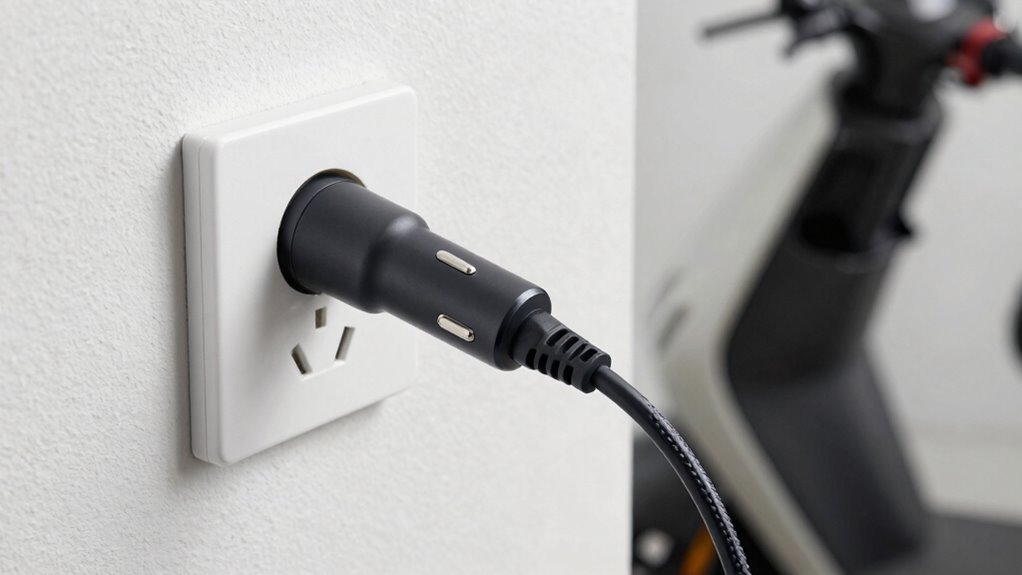
If you want your scooter charger to last longer, understanding how improper handling can lead to premature wear is crucial. One key factor is how you manage your battery maintenance and your charging habits. Your charger isn’t indestructible, and frequent misuse can cause it to degrade faster than necessary. To extend its lifespan, you need to adopt proper charging routines and be mindful of how you handle both the charger and the scooter’s battery.
First, focus on good battery maintenance. A well-maintained battery reduces the stress on your charger by ensuring it isn’t overworked or subjected to unnecessary strain. Keep an eye on the battery’s health, avoid letting it completely drain before recharging, and don’t leave it plugged in for extended periods after it’s fully charged. Overcharging can generate excess heat, which can harm the charger over time. Regularly inspecting your battery for signs of wear or damage helps you catch potential issues early, preventing undue strain on your charger. Additionally, understanding the importance of proper charger maintenance can help prevent common issues and extend its operational life. Proper storage of the charger when not in use also plays a role in maintaining its effectiveness. Being cautious with charging cycles can further help preserve the longevity of your equipment.
Your charging habits play a vital role in preserving your charger’s longevity. Always use the correct charger specified for your scooter. Using incompatible chargers can cause fluctuations in power, which may damage the charger or shorten its life. When charging, connect the charger securely and ensure the connection is stable—loose or faulty connections can cause sparking or irregular charging cycles. Avoid charging your scooter in extreme temperatures, as excessive heat or cold can impact both the battery and the charger’s internal components. Instead, charge in a cool, dry place to promote steady, safe charging conditions. Proper handling of the charger can also help prevent damage and prolong its lifespan.
Another tip is to avoid frequently unplugging and plugging in your charger unnecessarily. Constantly disconnecting and reconnecting can wear out the charging port and strain the cord connections. When the charging cycle completes, unplug the charger promptly; leaving it plugged in for long periods after full charge can lead to overheating and wear. Additionally, refrain from using cheap, low-quality chargers or adapters that aren’t designed for your scooter, as these often don’t regulate power properly and can cause damage to the charger’s internal parts.
Popular right now

Dyson Car+Boat Cordless Handheld Vacuum

De'Longhi La Specialista Touch Espresso Machine with Coffee Grinder

Bose QuietComfort Wireless Noise-Cancelling Headphones, Cypress Green
As an affiliate, we earn on qualifying purchases.
Frequently Asked Questions
Can Using Third-Party Chargers Damage My Scooter?
Using third-party chargers can damage your scooter if they aren’t compatible with its battery and charging system. Poor charger compatibility may lead to improper charging, which affects battery calibration and shortens battery life. Always check if the third-party charger matches the original specifications. By ensuring compatibility, you protect your scooter’s battery health and avoid costly repairs. It’s better to invest in a reliable charger designed specifically for your scooter model.
How Often Should I Replace My Scooter Charger?
Think of your scooter charger like a trusty pen—you don’t replace it after a single use. Usually, you should replace your charger every 2-3 years, depending on usage. Regular battery maintenance and charging safety extend its life. If you notice slow charging or overheating, it’s time for a new one. Staying attentive helps keep your scooter running smoothly and prevents unexpected breakdowns.
Do Temperature Changes Affect Charger Lifespan?
Yes, temperature changes do affect your charger’s lifespan. When battery temperature fluctuates, it can accelerate wear during charging cycles, causing the charger to degrade faster. Extreme cold or heat can damage internal components or reduce efficiency. To protect your charger, keep it in a cool, dry place and avoid exposing it to temperature extremes. Proper storage helps maintain ideal charging cycles and extends your charger’s overall lifespan.
Is It Safe to Leave the Charger Plugged in Overnight?
It’s generally safe to leave your scooter charger plugged in overnight if you follow proper battery maintenance and charging safety guidelines. Modern chargers often have automatic shut-off features, preventing overcharging. However, it’s best to unplug once your battery is fully charged to avoid potential risks or damage. Regularly check your charger and battery, and always use the manufacturer’s recommended charging equipment to guarantee safe, efficient charging habits.
What Are Signs of a Failing Scooter Charger?
A stitch in time saves nine, so recognize signs of a failing scooter charger early. If your charger overheats, produces a burning smell, or takes longer to charge, these are warning signs. For charging safety and battery maintenance, monitor charging times and avoid overcharging. Also, check for loose connections or damaged cords, which can indicate a charger’s decline. Address these issues promptly to prevent further damage and extend your scooter’s lifespan.
Conclusion
In the grand saga of scooter charging, you now hold the secret to eternal battery life—just kidding, but seriously, treat your charger with a little respect. Avoid yanking the cord, keep it cool, and don’t turn your scooter into a charger-hungry monster. Follow these tips, and you’ll prolong its life, saving you from the tragic heartbreak of a dead charger. Because, after all, who doesn’t want their trusty charger to survive the ages?