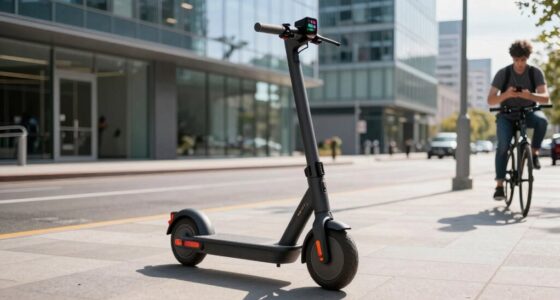
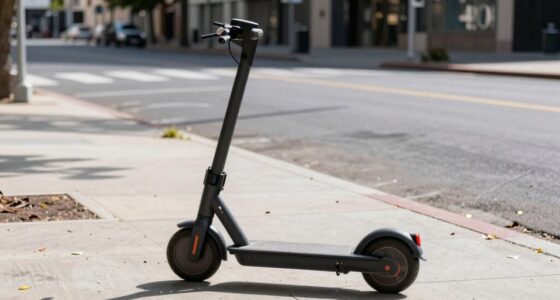
Before riding your scooter at night, check that all lights, including headlights, tail lights, and turn signals, work properly and aren’t dim or flickering. Make sure your tires are properly inflated, free of damage, and have good tread for traction. Keep your helmet visor clean and wear reflective or bright clothing to stay visible. Regularly inspect these elements and consider upgrades like LED lights for better visibility. Keep going to discover more tips for safe nighttime riding.

Get bike and ride gear delivered free — and shop member deals
- Fast, free delivery on millions of items
- Access to Prime Big Deal Days deals on October 6–7
- Prime Video, Amazon Music and more included
Key Takeaways
- Verify all lights, including headlights, tail lights, and turn signals, are functioning properly and are clean.
- Check tire pressure and inspect tires for damage, debris, or uneven wear for optimal grip and stability.
- Ensure helmet visor is clean and clear to maintain unobstructed vision.
- Wear reflective or bright clothing to enhance visibility to others.
- Conduct a quick overall inspection for any damage or loose parts before riding.

Riding a scooter at night can be enjoyable, but it also requires extra precautions to stay safe. Before you hit the road, take a moment to check your scooter’s lighting. Proper lighting isn’t just about visibility; it’s about making sure others can see you clearly. Start with your headlights. Verify they turn on properly and aren’t dim or flickering. If your scooter has a tail light, confirm it’s working and bright enough to alert drivers behind you. Don’t forget about your turn signals or indicator lights, if your scooter is equipped with them. These signals are vital for communicating your intentions to other drivers, especially in low-light conditions. In addition to functional lights, clean your light covers regularly to maximize brightness. Dirt and grime can considerably reduce visibility, making it harder for others to see you and for you to see your surroundings.
Check and clean your scooter’s lights before riding at night for better visibility and safety.
Another essential aspect to check is your tire pressure. Properly inflated tires improve your scooter’s handling, stability, and braking performance, which is paramount when riding at night. Use a reliable tire pressure gauge to measure the pressure in each tire. Refer to your scooter’s manual for the recommended PSI. Under-inflated tires can lead to poor traction, increased wear, and a higher risk of flats, especially on uneven or poorly lit roads. Over-inflated tires, on the other hand, can reduce grip, making your ride more unpredictable. Maintaining the correct tire pressure ensures your scooter responds accurately to steering inputs and helps avoid accidents caused by tire issues. Regularly inspecting your tires for damage or debris can prevent unexpected flats and improve safety during nighttime riding. Additionally, ensuring your tires are free from wear and tear helps maintain optimal grip and safety. Checking your tires for proper tread depth is also crucial, as worn tires can significantly diminish traction on slick or uneven surfaces. A well-maintained scooter not only performs better but also reduces the likelihood of mechanical failures during your ride.
Lighting maintenance extends beyond just checking your lights before riding. Regularly inspect your scooter’s headlight and tail light for damage or burnouts. Replace bulbs immediately if they’re not functioning properly. Consider upgrading to brighter, energy-efficient LED lights if your scooter supports it, which can enhance visibility during nighttime rides. Also, check the condition of your tires, looking for cuts, embedded debris, or uneven wear. Properly maintained tires with adequate pressure will give you the confidence needed to navigate dark streets safely. Lastly, ensure your visor or helmet shield is clean and clear. Dirt or smudges can impair your vision, especially under streetlights and headlights from other vehicles. Keep your riding gear in good condition, and always wear reflective or brightly colored clothing to increase your visibility. By paying attention to these details—lighting maintenance and tire pressure—you set yourself up for a safer, more enjoyable night ride. Taking these simple precautions guarantees you’re prepared to handle the challenges of riding when it’s dark outside.
Frequently Asked Questions
Are Reflective Clothes Necessary for Night Riding?
Reflective gear and visibility accessories are highly necessary for night riding. They help guarantee you’re seen by others, especially drivers, reducing the risk of accidents. Wearing reflective clothes or adding visibility accessories like reflective tape or ankle bands makes you more noticeable in low-light conditions. You should always prioritize your safety by using these items, so you can ride confidently and avoid potential hazards on dark roads.
How Do I Handle Low Battery on My Scooter?
When your scooter’s battery is low, you should prioritize charging it as soon as possible to avoid getting stranded. Practice good battery maintenance by regularly checking your battery’s health and keeping it clean. Follow charging tips like using the proper charger, avoiding overcharging, and charging in a cool, dry place. This way, you guarantee your scooter stays reliable and ready for your night rides, keeping you safe and prepared.
Can I Use My Phone as a Navigation Tool?
Think of your phone as a lighthouse guiding your journey—yes, you can use navigation apps, but prioritize phone safety. Keep your screen bright enough to see, but not so much that it distracts others or drains your battery. Use hands-free features and mount your phone securely. Always stay alert, and never rely solely on your device; it’s a helpful guide, but your awareness keeps you safe.
What Should I Do if My Scooter’s Lights Fail?
If your scooter’s lights fail, you should quickly pull over to a safe spot and turn on your emergency flashers to alert others. Prioritize scooter maintenance by checking your lights regularly to prevent this. Carry an emergency kit with a flashlight for such situations, and consider having a backup light source. Being prepared helps you stay safe at night and guarantees you’re ready for unexpected issues.
Is It Safe to Ride on Poorly Lit Roads?
Riding on poorly lit roads isn’t very safe because of limited road visibility, which makes it harder to see obstacles or hazards. You also risk not noticing pedestrians or other road users, reducing pedestrian awareness. If you must ride in such conditions, slow down, wear reflective gear, and use your scooter’s lights to improve visibility. Always stay alert and cautious to guarantee your safety and that of others around you.
Conclusion
Before you hit the road at night, remember to check your lights, wear visible gear, and inspect your brakes. Stay alert, stay safe, and stay prepared. Make sure your scooter is in top condition, your visibility is clear, and your route is planned. By doing so, you’ll ride confidently, avoid surprises, and enjoy your nighttime journey. Stay vigilant, stay cautious, and keep safety your top priority every time you ride after dark.
Fall Picks
fall essentials
As an affiliate, we earn on qualifying purchases.