
To ride a scooter in wind without tensing up, keep a firm but relaxed grip on the handlebars and stay loose in your arms and shoulders. Adjust your posture as gusts shift by leaning slightly into the wind and making gentle steering moves to maintain balance. Slow down in exposed areas to feel the wind better and avoid sudden turns. Staying relaxed and adaptable will help you handle gusts smoothly—continue for more tips on mastering wind ride skills.

Get bike and ride gear delivered free with Prime
- Fast, free delivery on millions of items
- Prime Video, Amazon Music and more included
- Member-only deals all year
Key Takeaways
- Keep a relaxed grip on the handlebars and avoid gripping too tightly to maintain fluid control.
- Maintain a loose, centered stance to absorb gusts naturally and stay balanced.
- Adjust your posture slightly into the wind and steer gently to counteract side pushes.
- Slow down before entering open areas to enhance control and reduce the impact of gusts.
- Stay alert for obstacles and react with smooth, subtle movements to prevent overreacting.

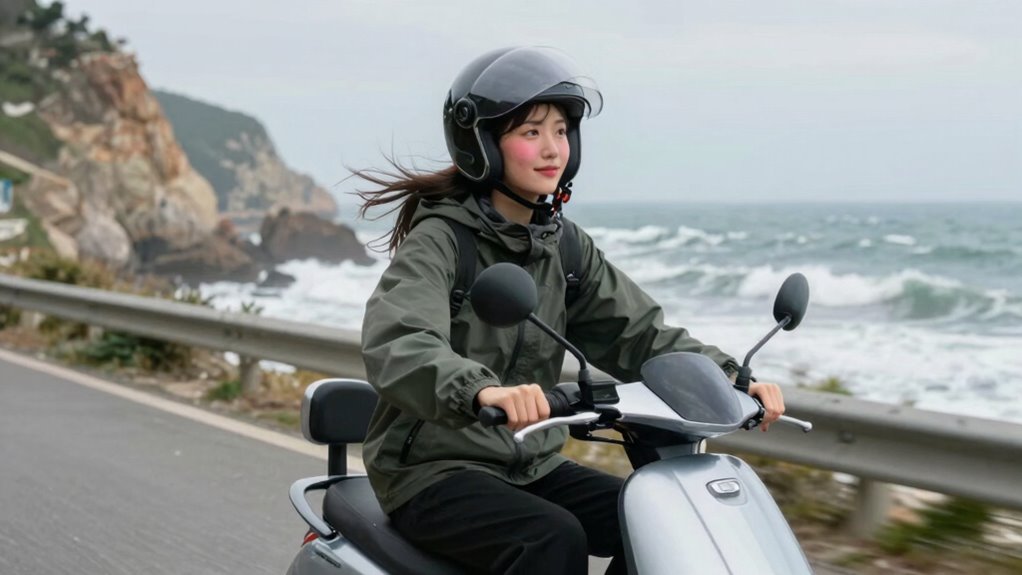
Riding a scooter in strong wind can be intimidating, but staying relaxed is key to maintaining control and safety. When the wind picks up, it creates added wind resistance that can make steering feel unpredictable. Your first priority should be to focus on maintaining good scooter safety by keeping a firm but gentle grip on the handlebars. Tensing up or gripping too tightly can actually make it harder to respond smoothly to gusts, increasing your risk of losing control. Instead, try to stay loose and flexible, allowing your arms and shoulders to absorb sudden gusts naturally. This relaxed stance helps you react more fluidly to changing conditions, keeping your movements precise and controlled.
As you ride, pay attention to how the wind shifts and adapt your posture accordingly. When facing a strong gust, lean slightly into the wind rather than fighting against it. This position helps balance your weight and reduces the impact of wind resistance on your scooter. If you notice the wind pushing from one side, steer gently into it rather than overcorrecting. Overreacting can cause your scooter to wobble or veer off course, which is especially dangerous in windy conditions. Keep your body relaxed and centered, and use subtle movements to maintain your trajectory. Developing a good sense of wind resistance management can greatly improve your ability to handle windy conditions with confidence.
It’s also important to anticipate gusts, especially in open areas or on exposed routes. Slow down before reaching sections with more wind, giving yourself more control and reducing the effects of wind resistance. Lowering your speed allows you to better feel how the wind is affecting your scooter and respond accordingly. Being aware of environmental factors such as open spaces and obstacles can help you prepare better for sudden gusts. Additionally, understanding how weather conditions influence wind patterns can help you plan safer routes and riding times. Avoid sudden turns or sharp movements, as these can be amplified by the wind and compromise your scooter safety. Instead, make gradual adjustments to your direction and speed, ensuring you stay stable. Recognizing the importance of proper riding techniques can greatly enhance your experience and safety in challenging conditions.
Finally, be mindful of your surroundings. Wind can cause debris or leaves to fly into your path, so stay alert and ready to react. Wearing protective gear, especially a helmet, adds a layer of safety if you do encounter unexpected gusts or obstacles. Remember, the key to riding in wind without tensing up is to stay relaxed, be adaptable, and focus on controlled, smooth movements. By doing so, you’ll not only improve your safety but also make your ride more comfortable despite the challenging conditions.
Popular right now

Sony WH-1000XM6 Wireless Noise-Canceling Over-Ear Headphones, Blue, Bundle

Vitamix Propel Series 750 Professional-Grade Blender, 4 Programs, Black

Ninja Luxe Café Mini Plus Espresso and Drip Coffee Machine with AutoFroth, Stainless Steel, ES351
As an affiliate, we earn on qualifying purchases.
Frequently Asked Questions
What Safety Gear Should I Wear in Windy Conditions?
You should wear protective clothing like a helmet, gloves, and sturdy jacket to stay safe in windy conditions. Visibility accessories such as reflective vests or lights are vital to guarantee you’re seen by others. These gear pieces help protect you from the elements and enhance safety. Always check your gear before riding, and consider wind-resistant clothing to reduce the impact of gusts, keeping you more comfortable and secure.
How Do I Handle Sudden Gusts Unexpectedly?
When sudden gusts hit, stay relaxed and keep a firm grip on the handlebars. To handle wind resistance and gust anticipation, look ahead and anticipate changes in the wind. Slightly lower your center of gravity by bending your knees, which improves stability. Maintain a steady speed and avoid sharp turns, allowing you to react smoothly. Staying calm and focused helps you navigate unexpected gusts safely and comfortably.
Is There a Best Time of Day to Ride in Windy Weather?
Think of wind speed as a mischievous guest; it’s best to invite it during calmer times. The early morning or late evening often bring lower wind speeds, making these times safer for riding. Midday winds tend to be stronger and more unpredictable. Riding during these calmer periods helps you stay relaxed and confident, reducing the risk of losing control. So, choose your riding time wisely for a safer, smoother experience.
Can Wind Damage My Scooter or Affect Its Performance?
Wind can affect your scooter’s performance and stability, especially during strong gusts. Wind resistance may make steering more challenging, and sudden gusts can cause instability or even tip you over if you’re not cautious. While minor wind usually won’t damage your scooter, persistent or powerful winds can strain its components over time. Always ride carefully in windy conditions, adjusting your speed and grip to maintain stability and reduce the impact of wind resistance.
How Should I Adjust My Riding Technique for Crosswinds?
To handle crosswinds, you should adopt balancing techniques like leaning into the wind slightly and keeping your body relaxed. Use your core to stabilize yourself and maintain control. Adjust your riding posture to reduce wind resistance by staying low and steady, avoiding stiff movements. Keep your eyes ahead and anticipate gusts, so you can respond smoothly. These techniques help you stay balanced, confident, and safe even in strong crosswinds.
Conclusion
As you glide through the breeze, imagine yourself as a leaf softly dancing on the wind’s gentle current. Embrace the rhythm and let your body flow with the gusts, rather than fighting against them. With each smooth motion, you’ll find yourself more in tune with the air’s playful whispers. Soon, riding in the wind will feel like a graceful, effortless glide—an artful dance where tension melts away, leaving only the joy of the ride.