
Slips happen on your scooter deck grip mainly because it wears out over time or gets slick from dirt, moisture, or repeated use. When the grip becomes smooth or develops cracks, it loses its traction—making slips more likely. To fix this, you can replace the damaged grip, clean the deck thoroughly, and guarantee the new grip is securely attached. Continuing this guide will show you how to keep your grip safe and effective for longer rides.
Key Takeaways
- Slips occur when the grip wears out, becomes slick, or is contaminated with dirt or moisture.
- Regularly inspect the grip for signs of wear, such as cracks or smooth surfaces, to prevent slipping.
- Clean the deck and grip thoroughly to remove dirt, moisture, and debris that can reduce traction.
- Replace worn or damaged grips promptly to restore proper grip and safety.
- Use high-quality, durable grips and proper adhesives during replacement for longer-lasting traction.

A scooter deck grip is a essential component that directly impacts your riding experience by providing traction and stability. Without a good grip, your control over the scooter diminishes, increasing the risk of slips and falls. Making sure your deck grip maintains its grip durability is necessary for rider safety. Over time, the grip can wear out or become slick due to dirt, moisture, or repeated use, which makes slipping more likely. That’s why understanding how to spot and fix grip issues is crucial for maintaining safety on every ride. Regularly inspecting your grip helps catch wear early before it leads to accidents.
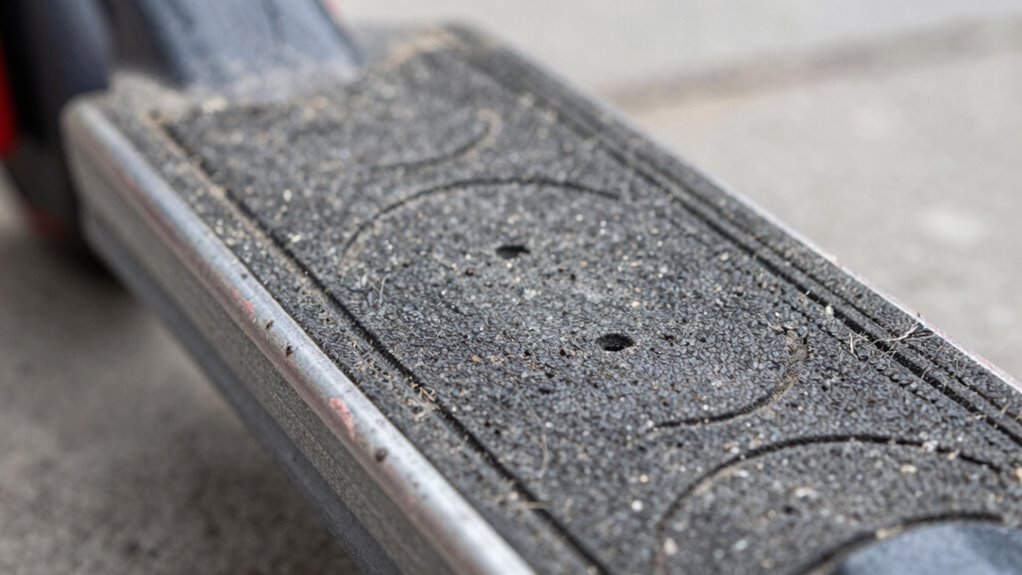
When your scooter deck grip starts to lose its effectiveness, you might notice a few signs. The surface feels smoother, or you might see visible wear and tear, such as cracks or peeling. These issues compromise grip durability, making it easier for your foot to slide unexpectedly. Slips can happen suddenly, particularly during sharp turns or quick stops, which can lead to injuries. To prevent this, regularly inspect your grip. If it feels less sticky or looks worn, it’s time to replace it. Don’t wait until an accident happens; proactive maintenance keeps you safe.
Replacing a worn-out grip is straightforward, but it requires attention to detail. Start by removing the old grip carefully, making sure to clean the deck thoroughly afterward. Dirt and debris can hamper the adhesion of a new grip, so a clean surface is essential. When applying a new grip, make sure it’s aligned properly to cover the entire deck area and provide consistent traction. Some grips come with adhesive backing, while others may require additional glue. Using a strong, rider-safe adhesive ensures the grip stays firmly in place, maintaining grip durability through many rides.
To extend the life of your scooter deck grip, consider a few simple tips. Keep your deck clean by wiping it down regularly, especially after riding in wet or muddy conditions. Avoid riding through puddles or on slick surfaces that can accelerate grip wear. When not in use, store your scooter in a dry, cool place to prevent moisture from degrading the grip material. These small precautions help preserve the grip’s traction, so you stay safer longer. Additionally, choosing high-quality grips made from durable materials can significantly improve grip longevity.
Ultimately, investing in a high-quality grip and maintaining it properly is the best way to prevent slips. Regular inspections and timely replacements safeguard rider safety and ensure your riding experience remains smooth and controlled. Remember, a good scooter deck grip isn’t just about comfort—it’s your primary defense against slips and falls. Prioritize grip durability and keep it in top shape for safer, more confident rides every time.
Frequently Asked Questions
How Often Should I Replace My Scooter Deck Grip?
You should replace your scooter deck grip when you notice it’s losing grip durability or becoming worn out, usually every 2 to 6 months depending on usage. Regularly check for smooth, slick spots or tears, and don’t wait too long to replace it. Staying attentive to the replacement frequency guarantees your grip remains secure, preventing slips and maintaining control during rides. Proper maintenance keeps you safe and your scooter performing at its best.
Are There Specific Grips for Different Weather Conditions?
Imagine slipping at every turn—sounds terrifying, right? That’s why you need weather-specific grips! Seasonal grip options are designed to handle extreme conditions, like rain or heat, giving you maximum grip when you need it most. Different weather calls for different grips, so check out seasonal grip options tailored for wet, cold, or hot days. Stay safe, stay confident, and keep riding smoothly no matter the weather!
Can I Install Grip Tape Myself or Need Professional Help?
You can definitely handle DIY installation of grip tape on your scooter, and it’s often straightforward with the right tools and instructions. Just make sure to clean the deck thoroughly and follow the steps carefully to avoid bubbles or misalignment. However, if you’re unsure or want a perfect finish, seeking professional assistance guarantees a secure, clean application. Either way, you’ll improve your grip and riding safety.
What Is the Best Way to Clean Dirty Scooter Grips?
Think of your grips as the handshake of your scooter—clean and firm. To clean dirty scooter grips, start with a damp cloth and mild soap, gently wiping away dirt and grime. For stubborn spots, use a soft-bristled brush in circular cleaning techniques. Regular grip maintenance keeps your ride safe and secure, preventing slips. Keep your grips fresh and sticky, and your riding experience remains smooth and confident.
Do Certain Grips Improve Riding Performance?
Yes, certain grip materials can improve your riding performance. For example, rubber grips offer better comfort and control, ideal for casual riding, while silicone grips provide enhanced grip and responsiveness for aggressive styles. Your riding style influences the best choice—if you prefer tricks or fast maneuvers, choose grips that maximize grip and precision. Upgrading to the right grip material tailored to your riding style helps you stay secure and perform better.
Conclusion
Think of your scooter deck grip as the foundation of your ride. When it slips, it’s like building on shaky ground—you can’t reach your full potential. But with the right fixes, you’ll regain solid footing and ride smoothly again. Keep your grip in top shape, and you’ll stay balanced and confident, no matter what terrain you face. Remember, a secure grip isn’t just about control; it’s the anchor that keeps your ride steady and your journey strong.