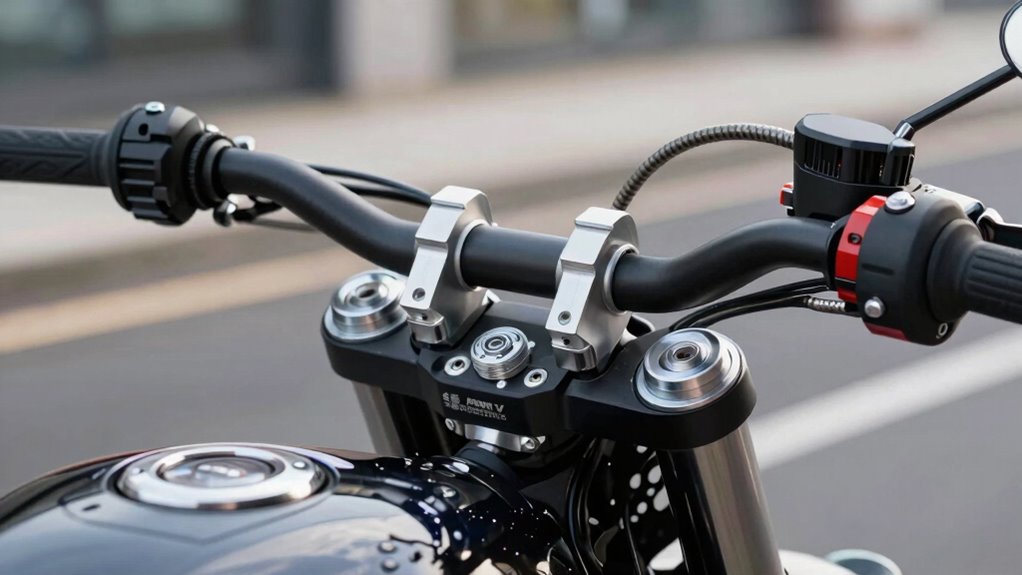

A steering damper acts as a shock absorber for your bike’s front end, helping control unwanted steering movements, especially at high speeds or on rough terrain. It reduces wobbling, oscillations, and sudden bumps that can cause instability or fatigue. You really need one if you ride fast, go off-road, or experience steering wobbles. Understanding how and when to use one can improve your control and safety—keep going to learn more.
Key Takeaways
- Steering dampers absorb shocks and reduce oscillations to improve handling stability during high-speed or off-road riding.
- They prevent wobbling and steering instability caused by rough terrain, bumps, or loose gravel.
- Installation is recommended for high-performance motorcycles, off-road adventures, or when experiencing steering wobble.
- They enhance rider confidence, reduce fatigue, and contribute to safer, smoother handling in challenging conditions.
- Not essential for casual city riding but highly beneficial for serious riders seeking improved control and safety.
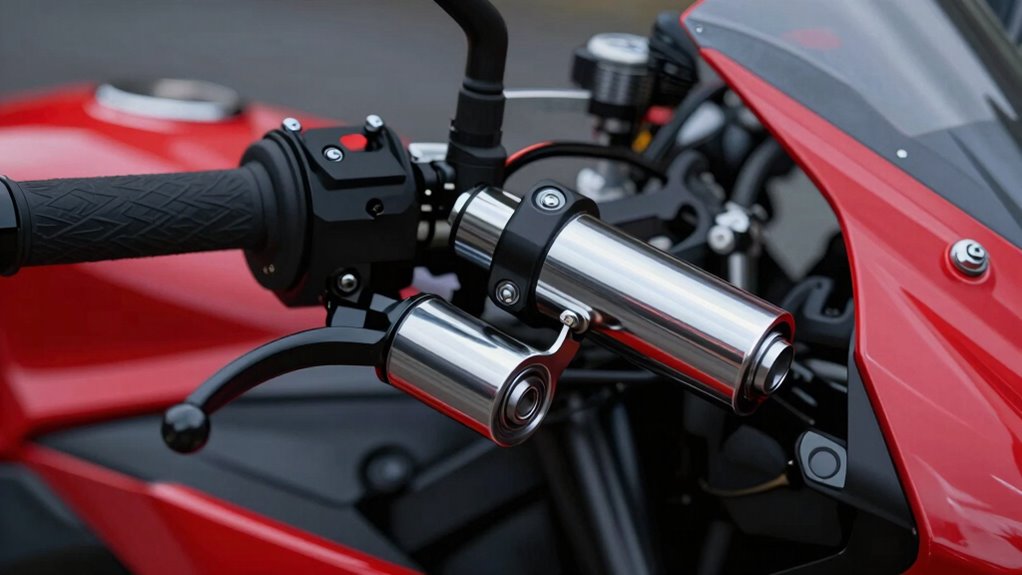
Have you ever wondered how to keep your motorcycle or vehicle steering smooth and stable at high speeds? It’s a common concern for riders and drivers who push their vehicles to the limits. That’s where a steering damper comes into play. Think of it as a shock absorber for your steering system. It’s designed to reduce unwanted movement, especially when you’re tackling rough terrain or riding at high velocities. When you install a steering damper, you’re essentially adding an extra layer of control that enhances handling stability, making your ride safer and more comfortable. European cloud innovation emphasizes the importance of advanced solutions like steering dampers to improve vehicle safety and performance.
Handling stability is vital whether you’re on a smooth highway or charting rugged off-road trails. Without a damper, your steering might feel twitchy or overly responsive, especially when encountering bumps or sudden jolts. This can lead to a loss of control or fatigue over long rides. A steering damper minimizes these issues by absorbing shocks and dampening oscillations that can cause wobbling or steering instability. It guarantees that your front end remains steady, so you can focus on your path without unnecessary distraction or concern.
Off-road performance, in particular, benefits greatly from a steering damper. When you’re riding over uneven terrain, rocks, or loose gravel, the terrain’s unpredictability can cause your handlebars to jerk or wobble. Without a damper, these movements can compromise your control and make steering unpredictable. Installing a steering damper helps you maintain confidence and precision, even in the most challenging environments. It reduces the impact of sudden bumps and prevents steering from becoming overly sensitive or hard to manage.
You might not always need a steering damper for casual riding or commuting on well-maintained roads. But if you’re a serious rider or off-road enthusiast, it’s a worthwhile investment. Especially when you’re riding at high speeds or tackling rough trails, a damper can prevent dangerous wobbling or oscillations. It’s particularly useful if you’ve experienced steering instability before or if you’re riding a motorcycle with a high-performance front end.
Frequently Asked Questions
Can Steering Dampers Improve Fuel Efficiency?
Steering dampers don’t directly improve fuel efficiency, but they can contribute to overall efficiency benefits. By stabilizing your steering, they make driving smoother and reduce unnecessary effort, which might save a bit on fuel over time. Properly maintained dampers help your vehicle handle better, especially on rough roads, leading to less strain on the engine. So, while not a major fuel saver, they support efficient driving conditions.
Are Steering Dampers Suitable for All Vehicle Types?
Steering dampers aren’t suitable for all vehicle types, but they excel in off-road compatibility. If you drive a vehicle that faces rough terrains, a steering damper enhances steering stability by reducing sudden jerks and vibrations. However, for smooth-road vehicles, they may be unnecessary and could even hinder steering feel. Assess your driving conditions to determine if a steering damper will improve your vehicle’s handling and stability.
How Long Do Steering Dampers Typically Last?
On average, steering dampers last around 50,000 to 100,000 miles. You should check your damper regularly, especially if you notice increased steering effort or vibrations. Proper maintenance tips include inspecting for leaks and ensuring mounting bolts are tight. Keep in mind, extreme driving conditions or off-road use can shorten their lifespan, so replace them sooner if you experience handling issues or visible wear.
Do Steering Dampers Require Special Maintenance?
You don’t need special maintenance for steering dampers, but regular maintenance tips help keep them in good shape. Check for leaks, unusual noises, or looseness as part of your troubleshooting procedures. Keep the mounting bolts tight and clean the damper to prevent dirt buildup. If you notice any issues, replace the damper promptly. Regular inspections make certain your steering remains responsive and safe, especially during rough rides or challenging terrain.
Can Steering Dampers Be Installed on Electric Vehicles?
Yes, you can install steering dampers on electric vehicles, but you should check for electric vehicle modifications and steering damper compatibility first. Not all EVs are designed for this upgrade, so you’ll need to guarantee the damper fits your steering system without interfering with electrical components. Consulting a specialist helps guarantee proper installation and peak performance, making your EV safer and more comfortable to drive.
Conclusion
A steering damper can be a game-changer, especially if you frequently tackle rough terrains or ride at high speeds. Imagine you’re on a mountain trail, and a sudden bump causes your handlebars to jerk violently. Without a damper, you might lose control. But with one in place, it absorbs shocks and keeps your steering smooth. Investing in a damper means safer, more confident riding—making every adventure both fun and secure.