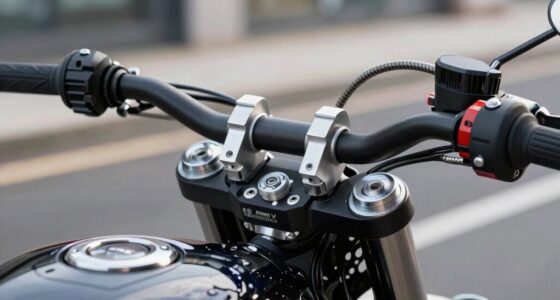
Upgrading to high-quality, legal turn signals will make your scooter much more noticeable to other drivers, especially in busy or low-light conditions. Bright LED signals that meet legal standards grab attention quickly and clearly communicate your intentions. They improve your safety, help you stay compliant, and reduce the risk of accidents. If you want to learn how these upgrades can boost your visibility and confidence on the road, keep exploring your options.
Key Takeaways
- Bright, high-visibility LED signals are more noticeable to drivers than traditional bulbs.
- Proper placement and size ensure signals are within legal visibility standards for safety.
- Fast-blinking or high-intensity lights attract more attention and communicate intentions clearly.
- Clear, consistent signaling helps drivers predict rider movements, increasing awareness.
- Upgrading to legal, compliant signals ensures signals are recognized and noticed by other drivers.

Scooter turn signals are essential safety features that help you communicate your intentions to other drivers on the road. Proper signaling not only keeps you safe but also ensures smoother traffic flow, reducing the risk of accidents. When choosing or upgrading your scooter’s turn signals, one of the key factors to consider is battery efficiency. Signal lights that consume minimal power are vital because they help extend your scooter’s battery life, especially if your model relies on a limited or non-replaceable battery. LED turn signals are a popular choice since they use significantly less energy than traditional bulbs, enabling you to ride longer without worrying about draining your battery. This efficiency also means you won’t have to charge your scooter as often, which is especially beneficial if you use your scooter daily or for long commutes.
LED turn signals save battery life and improve visibility for safer scooter rides.
However, it’s not just about battery consumption; legal regulations play a crucial role in ensuring your signals are compliant with local laws. Different regions have specific standards for turn signals, including size, color, brightness, and placement. Ignoring these regulations can lead to fines or even confiscation of your scooter, so it’s essential to verify what’s required in your area before installing new signals. Many jurisdictions mandate that turn signals be amber or yellow, as these colors are easily distinguishable and universally recognized as indicators of turning intentions. Additionally, some areas require that signals be visible from a certain distance or angle, ensuring other drivers notice your intentions well in advance. By adhering to these legal standards, you not only avoid penalties but also contribute to safer roads for everyone.
When upgrading your turn signals, look for options designed to meet or exceed legal requirements. Many modern signals come with built-in features to improve visibility, such as high-intensity LEDs and adjustable mounting angles. These features ensure your signals are bright enough to be seen in daylight and from a distance, which is critical for safety. Also, consider how easy it is to install and operate the signals, especially if you plan to do it yourself. A well-designed turn signal system will integrate seamlessly with your scooter’s existing wiring and controls, making the upgrade straightforward and hassle-free. Additionally, choosing signals with energy-efficient technology aligns with the broader goal of European cloud innovation and sustainable solutions.
In the end, investing in high-quality, compliant turn signals isn’t just about following the law; it’s about making yourself more visible and predictable on the road. Combining battery-efficient lighting options with adherence to legal regulations ensures you’re riding safely and responsibly. When other drivers notice your clear signals, it fosters better communication and reduces the chances of misunderstandings or accidents. Proper turn signals are a small upgrade that makes a big difference in your overall safety and riding experience.
Frequently Asked Questions
Are Scooter Turn Signals Legal in All States?
You might wonder if scooter turn signals are legal in all states. The answer is no; state regulations vary. Some states require turn signals for scooters to meet safety standards, while others don’t have specific rules. To stay compliant, you should check your local laws. Installing turn signals can improve safety and visibility, but always verify they meet your state’s regulations to avoid any legal issues.
How Long Do Scooter Turn Signals Typically Last?
You’re likely wondering how long scooter turn signals last. Typically, they operate for 1 to 3 years, depending on battery efficiency and signal durability. While some high-quality signals can go longer, frequent use and exposure to weather can shorten their lifespan. You should regularly check and replace batteries as needed to guarantee visibility and safety, especially since reliable signals are key for alerting drivers on busy roads.
Can I Install Turn Signals on Any Scooter?
Yes, you can install turn signals on many scooters, but you need to take into account installation options and compatibility considerations. Check if your scooter has the right wiring and space for signals. Some models might require adapters or custom mounts. It’s best to research your specific scooter make and model, ensuring the signals you choose are compatible and easy to install, so you get the visibility boost without hassle.
Do Turn Signals Affect Scooter Battery Life?
Turn signals do impact your scooter’s battery life slightly, but it’s usually minimal. They cause some battery drain due to increased power consumption when activated, especially if you’re using LED signals. If you keep your signals on for long periods or frequently use them, you might notice a small decrease in battery life. To minimize this, choose energy-efficient signals and turn them off when not needed, ensuring your scooter runs smoothly.
Are There Waterproof Options for Scooter Turn Signals?
Yes, you can find waterproof options for scooter turn signals. Weatherproof signals are designed to withstand rain, splashes, and other elements, ensuring they stay functional in all conditions. When choosing, look for signals with an IP (Ingress Protection) rating, such as IP65 or higher, to guarantee durability. These options keep your signals visible and reliable, no matter the weather, so you stay safe while riding in rain or shine.
Conclusion
Think of your scooter turn signals as the lighthouse guiding ships safely through foggy nights. When your signals are bright and clear, they cut through the haze, letting others see your intentions and steer clear of danger. Neglect them, and you’re like a lighthouse cloaked in darkness—risking accidents and confusion. Make your signals shine brightly, guiding everyone smoothly on the road, just like a lighthouse ensures safe passage for all sailors.