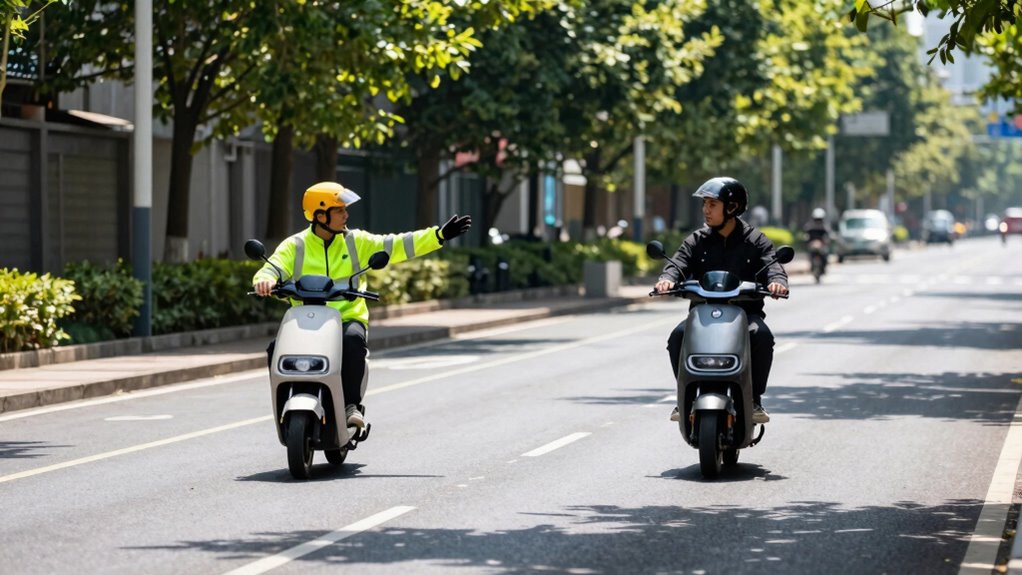

To share paths safely on a scooter, signal your intentions clearly with hand signals early, so pedestrians and riders can react in time. Respect signage, lane markings, and designated zones, slowing down in crowded or narrow areas. Keep a safe distance from others, avoid sudden moves, and stay alert for obstacles or pets. Always wear a helmet and stay focused, avoiding distractions. Following these tips helps everyone stay safe—continue exploring to learn even more about road-sharing.

Get bike and ride gear delivered free with Prime
- Fast, free delivery on millions of items
- Prime Video, Amazon Music and more included
- Member-only deals all year
Key Takeaways
- Use clear hand signals well in advance to indicate turns or lane changes.
- Maintain a safe speed and distance, especially around pedestrians and in crowded areas.
- Follow signage, markings, and route etiquette for responsible navigation.
- Stay alert to surroundings, obstacles, and weather conditions to react promptly.
- Always wear a helmet and avoid distractions like phone use or loud music while riding.

Equally important is mastering signaling techniques. Clear communication with others on the path helps prevent accidents and confusion. When you’re turning or changing lanes, use hand signals to indicate your intentions. Extend your arm straight out to the side or at a specific angle, depending on the direction you plan to go. Signaling well in advance gives pedestrians and fellow riders time to react, making your movements predictable and safe. Practice these signals regularly so they become natural and quick to execute, especially in crowded areas. Recognizing proper signaling techniques is essential for maintaining safety and harmony on shared routes. Additionally, understanding and observing shared route etiquette can further enhance safety and cooperation among all path users. Being familiar with local rules and signage helps you navigate shared paths responsibly and avoid unnecessary conflicts. Staying aware of your surroundings is also crucial in anticipating others’ actions and preventing potential hazards. Keeping an eye on environmental conditions such as weather or obstacles can also help you adapt your riding behavior for safer sharing.
Master signaling early for clear, safe communication and smoother riding experiences.
Speed control is another key aspect of sharing paths responsibly. Keep your speed appropriate for the environment—slower in crowded or narrow spaces, and faster where it’s safe to do so. Avoid sudden accelerations or braking, which can surprise others and lead to falls or collisions. Always maintain a safe distance from pedestrians and other riders; it’s better to be cautious than to risk bumping into someone. Be especially mindful in areas with children or pets, who may unpredictably cross your path.
Pay attention to signage and designated paths. Many shared routes have markings or signs indicating where scooters and bikes are expected to be, as well as pedestrian zones. Respect these cues to keep everyone safe. If you need to pass others, do so politely and at a safe distance, giving them plenty of space. Use your voice or a gentle ring of your bell if available, to alert others of your presence. Remember, a calm and respectful attitude fosters a safer environment for everyone.
Finally, always stay aware of your own limitations and avoid distractions. Keep your focus on the path—don’t talk on your phone or listen to loud music while riding. Being attentive allows you to react quickly to unexpected situations, ensuring your safety and the safety of those sharing the route. Sharing paths on a scooter is a shared responsibility; by practicing helmet safety, signaling techniques, and respectful riding habits, you help create a safer, more enjoyable experience for everyone involved.
Popular right now

Dyson Car+Boat Cordless Handheld Vacuum

De'Longhi La Specialista Touch Espresso Machine with Coffee Grinder

Bose QuietComfort Wireless Noise-Cancelling Headphones, Cypress Green
As an affiliate, we earn on qualifying purchases.
Frequently Asked Questions
Are There Specific Laws for Scooter Sharing in Different Cities?
Yes, there are specific laws for scooter sharing in different cities. You need to follow legal regulations and city-specific rules to stay safe and legal. These may include helmet requirements, speed limits, and designated riding areas. Always check local laws before riding, as they can vary widely. Staying informed helps you avoid fines and accidents, ensuring a smoother, safer experience on shared paths.
How Should I Handle Pedestrians Who Ignore Scooter Safety Rules?
Like a cautious captain steering through choppy waters, you handle pedestrians ignoring scooter safety rules with patience and clear safety communication. Make eye contact, use your bell or horn to alert them, and slow down to give ample space. Remember, pedestrian awareness is a shared responsibility. If they don’t respond, remain calm, keep a safe distance, and signal your intentions politely—your composed approach keeps everyone safe and the journey smooth.
What Gear Is Recommended for Safe Scooter Riding?
You should wear protective gear like a helmet, knee pads, and gloves to stay safe. Use proper riding techniques, such as maintaining a steady speed and being alert to your surroundings. Always check your scooter before riding, keep your hands firmly on the handlebars, and stay visible by wearing bright clothing. These precautions help prevent injuries and keep you confident while sharing paths with pedestrians and other riders.
How Do Weather Conditions Affect Safe Scooter Sharing?
Weather can turn your scooter ride into a wild dance on a slippery stage. Rain hazards make paths slick and unpredictable, so you’ll need to slow down and stay alert. Wind challenges can push you off course or cause instability. Always check the forecast before riding, wear appropriate gear, and be extra cautious. When weather’s rough, it’s best to wait until conditions improve—safety should always lead your journey.
Can I Share a Scooter With Multiple Riders at Once?
You shouldn’t share a scooter with multiple riders at once. Scooter etiquette emphasizes rider responsibilities, which include ensuring safety and comfort for everyone. Overloading a scooter can cause instability, accidents, and damage. Always ride solo unless the scooter’s design explicitly allows multiple riders. If you’re with friends, take turns or consider alternative transportation options. Staying responsible helps keep everyone safe and respects local rules and fellow path users.
Conclusion
Sharing paths safely on your scooter isn’t just about being courteous; it’s about preventing accidents. Remember, over 30% of scooter-related injuries happen because of neglecting proper sharing etiquette. By staying alert, giving way when needed, and using clear signals, you help create a safer environment for everyone. Keep these tips in mind, and you’ll enjoy your ride while protecting yourself and others. Safe scooting!